
With climate change accelerating, should we build in fire-prone areas? | Opinion
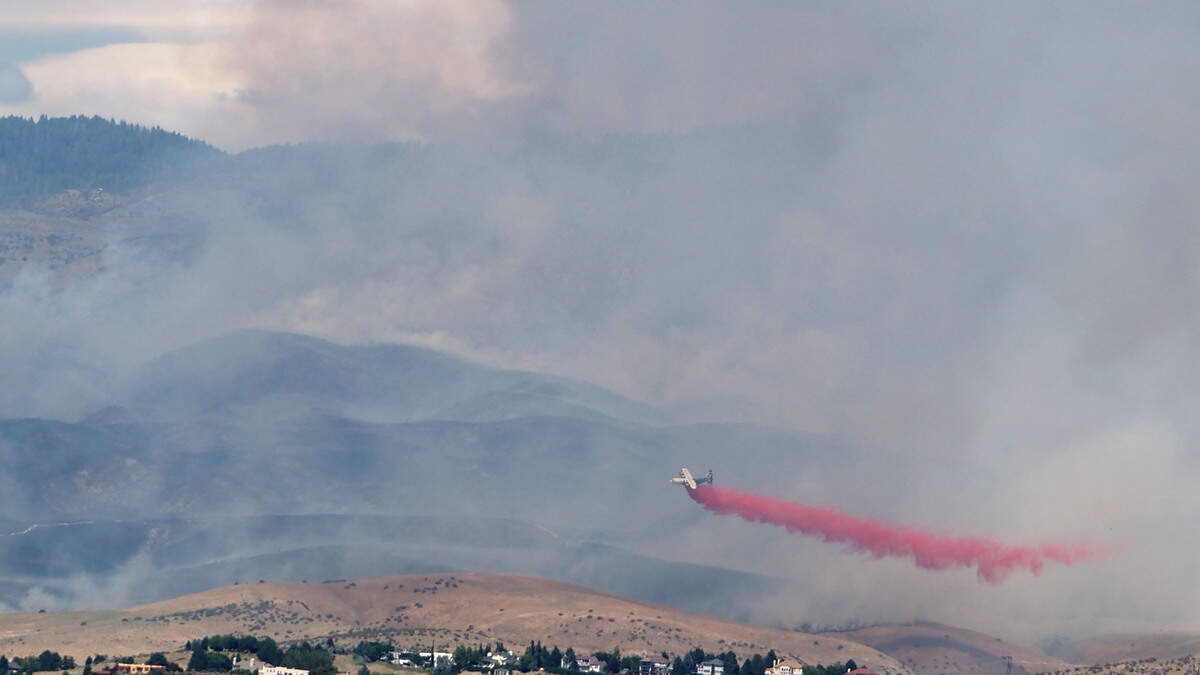
On the afternoon of July 6, I looked toward the foothills from the Boise Bench and saw smoke. Just the day before, I thought how glad I was that the Fourth of July fireworks hadn’t started a fire, given our current severe drought. With all the other fires burning in the West, wondered when our turn would come.
Eighty-five percent of wildfires are human caused — and while the cause of the Claremont Fire has yet to be determined, it is certain that human activity played an important role.
Science journalist and meteorologist Bob Henson writes that “extreme heat is among the most studied consequences of human-caused climate change, and the connections between a warming planet and amplified, localized extreme heat are not only intuitive but well-documented.” Try searching for a peer-reviewed study stating humans are not warming the planet. Idaho is getting warmer, and droughts increase the risk of both natural and human-caused wildfires.
Despite the rapid spread of the Claremont Fire in its first three days, ground and air firefighters successfully defended the Claremont neighborhood inside the Wildland-Urban Interface (WUI). They also held the containment lines that threatened the Rocky Canyon and Robie Creek neighborhoods, also located inside the WUI.
Protecting the WUI in the U.S. ranks among the top reasons wildfires are fought today. At the federal level, we spend an average of $3 to $4 billion a year fighting wildfires. The overall annual economic costs incurred by wildfires are in the $400 to 900 billion range including health impacts, income loss, property values, watershed and ecological loss.
FEMA estimates that every dollar invested in prevention saves $6 in recovery costs. Still, we spend a much smaller fraction on preventive actions, such as prescribed burns and forest and sagebrush steppe restoration.
What is built in the WUI is already built, but still, we continue to build new construction in this high-risk terrain. For example, the Red Ridge application for Valley County proposes to build a small city of 722 homes and a village center, right inside McCall’s WUI. A county map identifies many homes already existing in the WUI there.
The proposed Red Ridge development would be built in a heavily forested area — and even if structures are built to resist fire, there is no guarantee that the proposed development would not burn and serve as fuel for a forest wildfire, which could spread to other neighborhoods.
Daniel Mathews, in his book “Trees in Trouble,” writes: “It’s hardly a coincidence that firefighting costs explode while the number of homes in the WUI also explodes.”
In Idaho’s WUI, housing density is notable: 30,026 residences are located in this interface, with about 31% being seasonal homes and cabins. Retrofitting existing homes in the WUI to make them more fire-resistant is a solution, as are firewise policies. Rezoning and limiting development in high-risk WUI zones is an option we should consider in Idaho, as the warming trends will only increase.
By July 14 — eight days later — 6,800 acres, an area equivalent to 5,151 football fields, has burnt. Many of my beloved trails are now blackened and scarred. Many neighborhoods and lives were saved, but I also think about the costs rarely factored into a wildfire. It is difficult to put numbers on a charred landscape; lost native plants, trees and wildlife; and the runoff and possible flooding that will make its way to our waterways, many of which are already impaired.
Or the human health costs of smoke. A 2013 NASA study found that smoke from megafires is three times worse than previously estimated, especially in the sub-micron particulate fraction, which is the most hazardous to human health. We luckily did not experience the even more toxic smoke from burning buildings, but researchers have also found that naturally harmless chromium-3 found in soil and rocks can change to chromium-6, a carcinogen, during some wildfires. It can remain airborne in smoke or dust after a fire is out and can persist in the burn scar for years, leaching into groundwater and posing health risks.
I won’t discuss all the complex issues of the wildfire debate in this commentary, because climate and wildfire, both past and present, have been examined from every angle in many books, articles and documentaries. But the overwhelming body of scientific evidence shows that humans are responsible for warming the planet.
Professor Friederlile Otto of Climate Science at Imperial College London writes, “We remain on a one-way trip towards a more dangerous future, and it’s time we hit the brakes.”
If we ask ourselves what our forests are worth, what a neighborhood is worth, and, more importantly, what lives and our health are worth, then we must step on the brakes — meaning all parties must collaborate to adapt, embrace limits on building in the WUI, and implement solutions to protect our health and the health of the place we call home.
.