
Don’t handcuff Idaho nonprofits that house those in need | Opinion
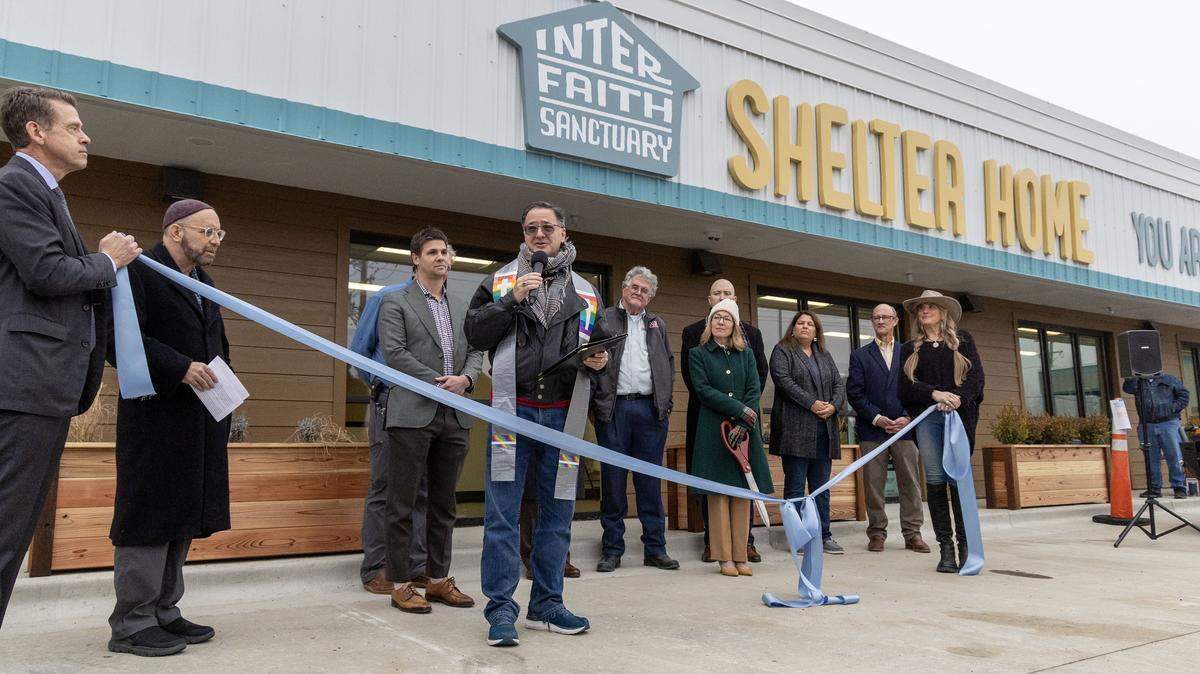
There is a critical need for all types of housing in America. However, America has delegated housing its most vulnerable to nonprofit entities, many of which are faith-based. When nonprofits seek to provide these services, they are subjected to intrusive, unnecessary and ad hoc regulations. Why? If we have made this choice, then why do we constrain willing nonprofits?
When the U.S. Supreme Court found zoning constitutional in 1926, it unfortunately endorsed the specious claim that only “detached residences” protect children, reduce traffic, manage noise and are safe.
The court observed that people seeking those benefits would “utterly destroy” residential neighborhoods if they were housed in anything other than single-family homes, being “a mere parasite” to the community.
Those requiring supportive services face the most critical housing shortage. They seek shelter, transitional housing, shared rooms, co-housing, dormitories or apartments, not single-family homes. However, owners of single-family homes regularly hijack the review and approval process for these applications. These homeowners, individually and by association, make ad hoc discriminatory demands in the guise of safety and neighborhood protection.
Zoning codes that require discretionary review empower these homeowners to proffer the most extreme demands. These demands injure the most fragile members of our community. These demands deny them needed resources. These demands, if accepted, frequently violate federal law.
The Religious Land Use and Institutionalized Persons Act prohibits land use regulations that impose a substantial burden upon religious exercise. Religious exercise includes the “use, building, or conversion of real property for the purpose of religious exercise.” Religious exercise includes housing and caring for the least among us.
“For there will never cease to be poor in the land. Therefore I command you, ‘You shall open wide your hand to your brother, to the needy and to the poor, in your land.’” Deuteronomy 15:11.
Regulations on religious land use must have a “compelling governmental interest” and be the “least restrictive means of furthering” such. When faith-based nonprofits seek to house the unhoused, opponents invariably seek conditions on operational control that are imposed on no other housing provider and which cannot be justified by a “compelling state interest.”
Members of Boise’s planning commission reviewing a social service dormitory on the property of the Church of the Brethren recently cautioned that intrusion into the church’s operations as requested by opponents approaches this limit.
The Fair Housing Act prohibits discrimination on the basis of familial status, handicap and other specified classifications in both housing and “the provision of services or facilities in connection therewith.” Yet, opponents to faith-based nonprofits providing shelter and transitional housing also demand intrusive conditions upon operations.
In approving Interfaith Sanctuary’s application, the Boise City Council appropriately recognized the importance of the Fair Housing Act and the judicial rejection of arbitrary population regulations and intrusive oversight of services provided by nonprofits providing housing. The council excluded the most discriminatory demands of opponents: population caps beyond building code restrictions, exclusions from utilizing public services and facilities, denial of service to those with prior criminal citations and elimination of existing uses.
We should all remember that in 2007, Boise County acquiesced to the arbitrary demands of neighboring homeowners in denying permits to the operators of drug and alcohol treatment residences. Thereafter, a jury found the county violated the Fair Housing Act, awarded a multimillion-dollar judgment, and Boise County attempted to file for bankruptcy.
In 2005, after the city of Boise instituted a “Men Only” policy, evicting women and children from the Community House homeless shelter, a jury found the Act had been violated and awarded the nonprofit $1 million in damages. That was one of the events leading to faith leaders creating the Interfaith Sanctuary.
Universal standards legitimately relating to safety and operations should be applicable to all housing and social service uses. Communitywide compliance should be expected of all providers. All housing types and social services should be allowed by right in appropriate zones subject to consistent standards established in the zoning and building codes. If oversight of the operation and security of shelter, transitional housing, shared rooms, co-housing, dormitories or apartments is appropriate, then it must be imposed upon all types of housing and all types of social services. It must not be the demand of discriminatory public clamor.
Land use regulations embolden the cruelest voices in our community under the guise of safety. Acquiescence to ad hoc demands of those opposing faith-based nonprofits providing housing and social services will result in our local governments violating the law to the detriment of all. Everyone benefits from the Religious Land Use and Institutional Persons Act and the Fair Housing Act. If we demand nonprofits care for the most vulnerable, then we must allow them to act, as services delayed are services denied.
Howard Belodoff and Geoffrey Wardle are Idaho attorneys working to ensure everyone in the community is housed.