
The Idaho Supreme Court should toss the redistricting maps for dividing counties
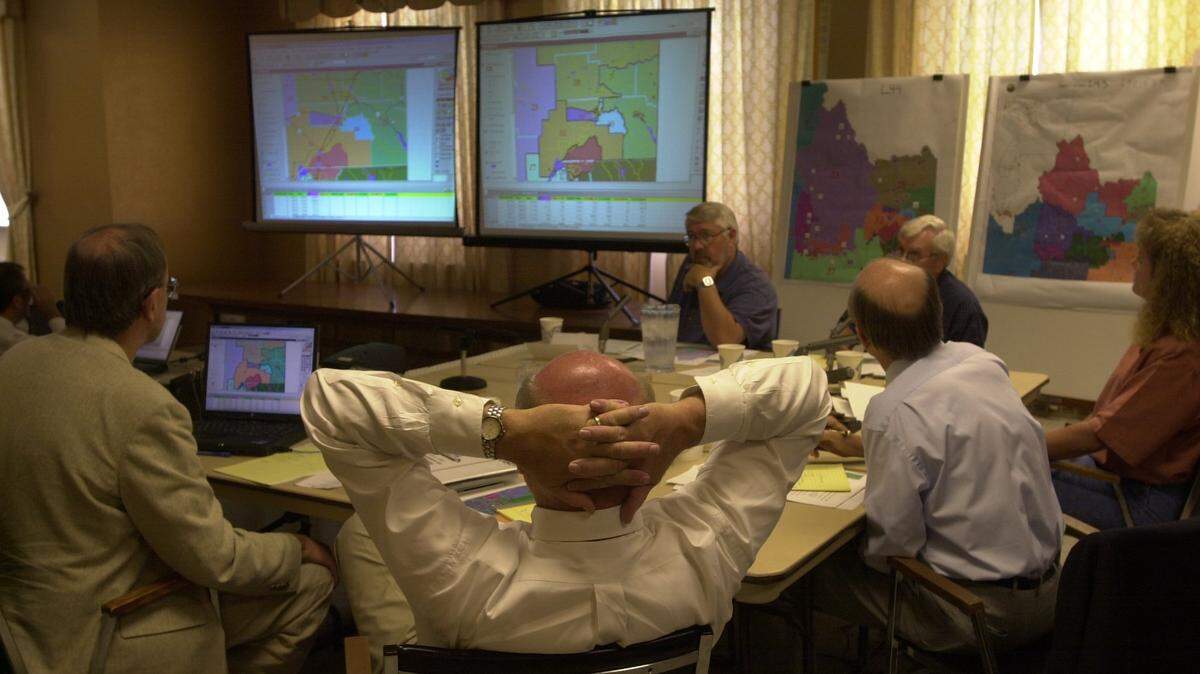
The Idaho Supreme Court will soon render a decision on lawsuits challenging the congressional and legislative district maps drawn by the Idaho Redistricting Commission. Both maps should be rejected for violating Idaho Constitutional and statutory requirements.
Redistricting is subject to several legal requirements. First and foremost, the equal protection requirement of the 14th Amendment to the U.S. Constitution, which underpins the principle of one person one vote, must be honored. Courts have recognized that there are other facts of life in drawing legislative districts that make absolute perfection in population sizes functionally unworkable, and a certain amount of leeway is legally permissible.
Through a series of court decisions, a de facto national standard has been created for state legislative districts. If districts have a population disparity of less than 10% they are presumed constitutionally permissible. A U.S. Supreme Court decision set the legally permissible disparity for congressional districts at 1%.
The Idaho Constitution and statutes require that when districts are drawn counties must be kept intact as much as possible. In its zeal to honor one person one vote, the commission went far beyond the accepted population disparity standards, arbitrarily applying new standards chosen for no discernible reason beyond being the standard they wanted to use. In so doing they divided more counties than is constitutionally permissible, claiming it a necessary defense of one person one vote.
If we are to be a nation of laws, public actions cannot be governed by the whim of public officials, as happened in this case. Official acts must be governed by properly established legal authority
It’s worth noticing that the commission actually only went partway down the path they chose. If the commitment to evenly populated districts were paramount, those districts could readily be created by simply ignoring county lines. Instead, the commission divided some counties but not others. While some counties’ populations require that they be divided, the selection for division of the other counties that were divided appears to have been arbitrary
No one with any knowledge of the redistricting process disputes the difficulty of drawing new legislative districts. That said, the robust public participation in the drawing process produced several alternatives that both honor the one person one vote principle and divide fewer counties than the commission’s final maps. Clearly, such an outcome is achievable.
That is what the Idaho Supreme Court should require.