
A nuclear renaissance in Idaho? Not without the people to do it | Opinion
AI-generated summary reviewed by our newsroom.
- Private sector demand, not subsidies, now drives nuclear project resurgence.
- Nuclear regulators face hiring freezes, vacant seats and rising reactor workloads.
- Workforce shortages in skilled trades and regulation threaten nuclear momentum.
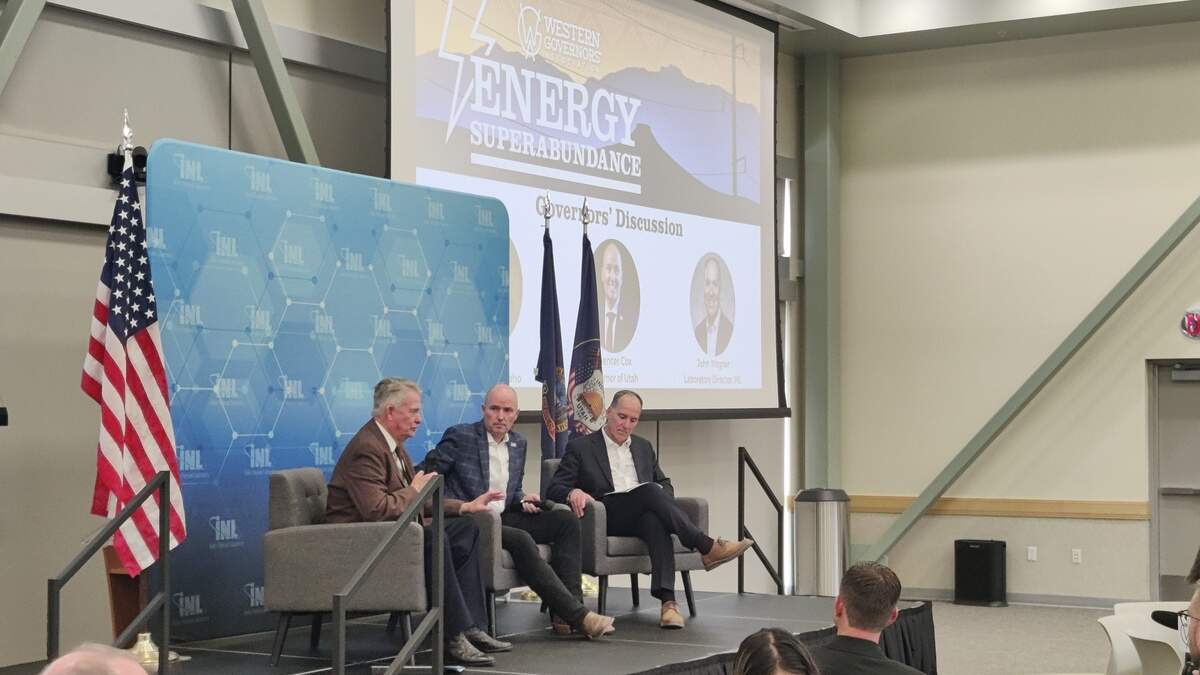
At a conference of the Western Governor’s Association at Idaho National Laboratory this week, regulators, members of the nuclear industry, government scientists and politicians welcomed what could be a renaissance in nuclear energy. But amid all the enthusiasm, there was one clear message that policymakers will have to heed: There aren’t enough people to get the work done, particularly but not only in the government agencies working to regulate nuclear energy.
INL Director John Wagner said he was a bit shellshocked by talk of a “nuclear renaissance,” having seen several come and go over his career without materializing. But this time, he said, is different. The boom isn’t being led by government incentives but by private-sector demand. Wagner noted that after five decades with no new reactors built in the region, ground was being broken on two at INL and one nearby in Wyoming.
“Things are very, very different now,” he said.
The underlying driver of this projected boom is an enormous spike in electrical demand for data centers, particularly for artificial intelligence, an enormous consumer of electricity.
“Utilities are at a loss about how they are going to meet this demand growth,” Wagner said. “You’re seeing urgency come out of that sector.”
Big nuclear hopes
Idaho Gov. Brad Little and Utah Gov. Spencer Cox emphasized how abundant energy produced by new nuclear reactors could solve a host of problems in the West. Ramping up desalination in large cities on the West Coast could seriously reduce demand on rivers.
“If we could get California desalinating water, it would solve the Colorado River problem overnight,” Cox said.”
Electrical shortages have led to brownouts and blackouts in some cities around the West during times of high demand, and AI could lead to a quick additional 30% demand, Little said.
“There’s not a utility in the United States that knows … where they’re going to get that 30%,” Little said.
Nuclear technology is relatively clean when compared to other ways of generating electricity, and it’s also relatively safe. That makes it a uniquely attractive form of electric generation, both to replace more dangerous and polluting forms of power like coal and natural gas, and to offer new sources of electricity.
But none of that is new.
“The trick is going to make this one a meaningful and lasting renaissance instead of some of the false starts in the past,” said Nuclear Regulatory Commissioner Bradley Crowell.
The renaissance that never was
The history of nuclear reactor construction is mostly quite old. A burst of reactor construction that began in the late 1970s tapered off to nothing in the late 1980s. There is a pretty strong case to be made that the end of the nuclear construction era was due, in significant part, to changes in the regulatory regime following the Three Mile Island meltdown.
Things went deadly quiet until the early 2000s, the last time there was talk of a “nuclear renaissance.”
Everyone at the conference pretty much agreed on the end date: March 11, 2011, when an earthquake and then a tidal wave hit the Fukushima Daiichi Nuclear Power Plant in Japan, resulting in a major release of radioactive contaminants. No deaths have been attributed to the radiation release, which is probably the thing you remember most about Fukushima, while around 20,000 people were killed directly by the earthquake and tidal wave.
But because of the unique fear nuclear accidents tend to generate, what followed was a sharp decline in nuclear generation, particularly in Asia and Europe, and a period of stagnation in North America.
Another nuclear push
But as concerns about climate change have continued to mount, bipartisan support for nuclear energy has been growing.
A new mission statement which states the NRC’s job is “enabling the safe and secure use and deployment of civilian nuclear energy,” was part of the bipartisan Advance Act, signed into law by former President Joe Biden. President Donald Trump has likewise supported quicker nuclear deployment through Executive Order 14300, hailed as a major advance by those in attendance.
But the raft of recent cuts across the federal government — from the roving DOGE firings to budget cuts — have hit nuclear regulators, as well. A consistent emphasis from those at the conference was that a nuclear renaissance will require an adequate workforce.
“That’s workforce both for trades, scientists, engineers, etc. in the private sector — there’s not enough there; they’re hiring actively — and on the government side, at (the Department of Energy) and the NRC, we have serious current workforce shortcomings that are going to be exacerbated going forward and are going to be a real struggle,” NRC Commissioner Crowell said.
The NRC is under a hiring freeze, as has been most of the federal government for nearing 10 months, after Trump repeatedly extended it. Two of the five seats on the board of the nuclear regulatory commission (which, as Utility Dive noted, requires three members for a quorum) are also currently vacant after Trump fired Commissioner Christopher Hanson without cause. So as it stands, one person gets sick, and no votes can be taken.
All this comes at a time when the demands on regulators reviewing potential reactors are growing rapidly, both because there’s a push to build new reactors and because there’s been a burst of reactor design innovation.
Most reactors around the country are large light water reactors. While many individual reactors of this kind have unique individual considerations, this renaissance has been driven by a flurry of advanced reactor designs — many of which, like Oklo’s sodium-cooled fast reactor, which broke ground this week, are based on old technology but have not seen widespread commercial deployment in the U.S.
And regulation is something you want to get right.
When regulation fails
The Fukushima disaster — the worst nuclear disaster since Chernobyl and the only other nuclear accident to reach Level 7 — was preventable but not prevented, as a number of post-facto reviews concluded.
“Had the plant’s owner, Tokyo Electric Power Company (TEPCO), and Japan’s regulator, the Nuclear and Industrial Safety Agency (NISA), followed international best practices and standards, it is conceivable that they would have predicted the possibility of the plant being struck by a massive tsunami,” the Carnegie Endowment for International Peace concluded. “The plant would have withstood the tsunami had its design previously been upgraded in accordance with state-of-the-art safety approaches.”
And Idaho and the Intermountain West have had no shortage of fishy nuclear energy schemes, from the merely unserious to the out-and-out fraudulent. This isn’t a case where you can just sweep the regulators aside.
If you want a nuclear renaissance, you want regulation and review to be efficient, but you also want it to work.
Fukushima led to such pervasive antinuclear sentiment that France, long a world leader in nuclear energy, for a time set its sights on closing plants. Japan went from generating nearly a third of its electricity with nuclear to none a few years later (accompanied by a surge in its carbon footprint). The consequences of failing to prevent an accident are the likely end of this renaissance.
So if you want a nuclear renaissance — and I do — you’re going to need a whole lot more highly skilled and motivated people working in these regulatory agencies. You want them to catch real safety concerns and have them addressed in meaningful ways. And you want them to do it fast so costs don’t spiral and projects don’t fold.
Cutting government is easy. Send people their walking papers, and it’s done. The paychecks stop and the work doesn’t get done.
Making government efficient is much harder and more serious work, and it requires standing up to the administration in meaningful ways. The question is: Is that a task that nuclear advocates in government, like U.S. Rep. Mike Simpson, are equal to?
Bryan Clark is an opinion writer with the Idaho Statesman.
This story was originally published September 25, 2025 at 4:00 AM.