
Now we know exactly what public land Idahoans could lose | Opinion
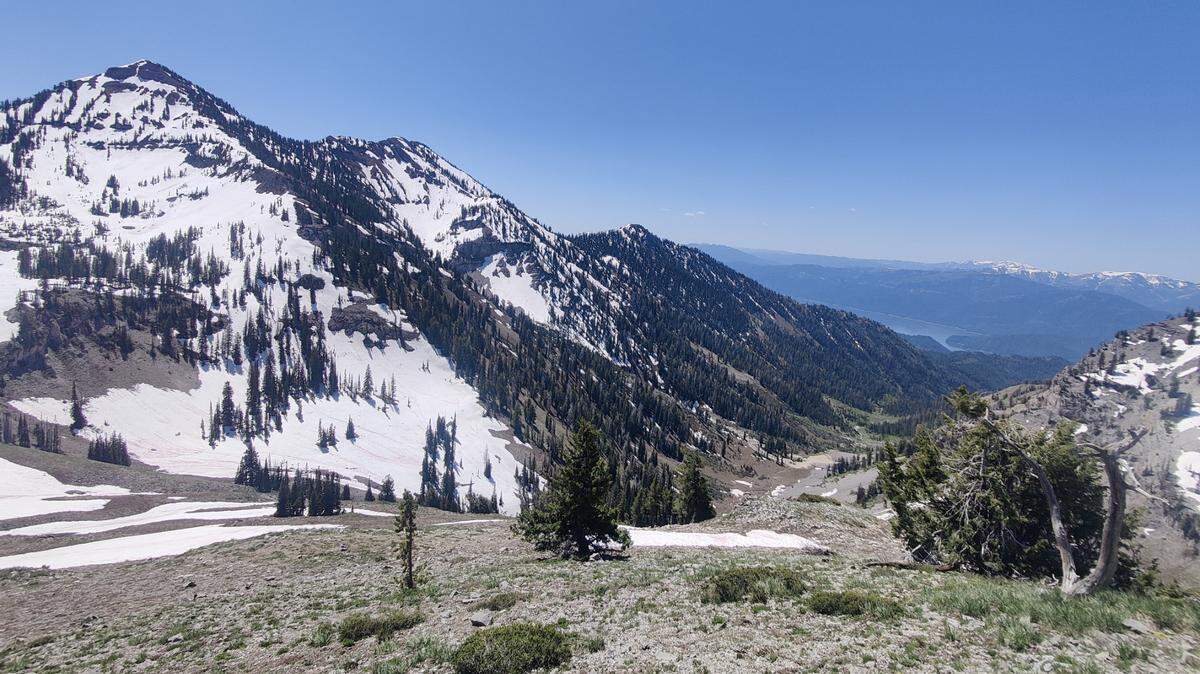
A couple of weeks ago, I hiked toward the summit of Mount Baird, the highest peak in Bonneville County, to build early-season conditioning for harder peaks in the Lost River, Lemhi and Teton ranges planned for later this year. I got shut down by snow short of the summit as expected, but it was a beautiful hike, one I’ve made several times over the years.
Then, late last week, I looked at a map compiled by The Wilderness Society, detailing exactly what portions of land could be “disposed of” under an amendment Sen. Mike Lee, R-Utah, made to the “One Big Beautiful Bill.” The bill is a budget for the federal government, which hasn’t yet gotten a full vote in the Senate. The bill originated in the U.S. House, where Rep. Mike Simpson, R-Idaho, was one of the Republicans who stripped mandatory public land sales from the budget. Lee put them back in.
The Wilderness Society took Lee’s language — which outlines specific exclusion criteria for land sales in 11 Western states, including land that is subject to rights of way, certain leases and mining claims, and special designations like national monuments and national recreation areas — and mapped out the remaining areas. Of those, the bill mandates that the Forest Service and Bureau of Land Management sell a set percentage.
Under that language, land required to access the trailhead, major sections of the trail and the summit of Mount Baird itself could be sold off, according to the map.
That’s not unique. The lands we could lose are not obscure. They aren’t isolated patches of scrubby ground on the borders of big cities. They are some of the most beautiful places in Idaho.
Just a few examples: One of the major objectives for Idaho peakbaggers is to summit all of Idaho’s 12ers, the nine peaks in Idaho over 12,000 feet high. The “One Big Beautiful Bill” could open to sale the main access to and/or summits of at least six of them — Leatherman, Church, Donaldson, Breitenbach, Lost River and Hyndman peaks — making that objective a memory. Other classic peaks like Bell Mountain in the Lemhi Range also could be sold off, along with huge sections of the Centennial, Beaverhead, Lemhi, Lost River, Pioneer and Boulder ranges.
Idaho’s world-class sport climbing at a crag near Howe called The Fins, home to Idaho’s hardest and some of its most beautiful climbing, also could hit the auction block.
As I look back through the pictures I’ve taken over my years in Idaho’s backcountry, it’s hard to find many that would be safe from the reconciliation bill. If you look at The Wilderness Society’s map, I’d bet you’ll find the same thing.
Significant portions of the Boise Foothills that lie on BLM land could be sold. So could major areas past Lucky Peak Lake, including the area around the Trinity Mountains. Near McCall, most of the mountains to the north and east would be susceptible to sale as well.
In North Idaho, it’s difficult to find national forest land that wouldn’t be susceptible to sale. Huge portions of the Clearwater, St. Joe and Coeur d’Alene national forests are eligible for the auction block. So is much of the massive area of wilderness straddling the Montana border known as The Great Burn.
In eastern Idaho, where I live, the potential losses are unimaginable.
Idahoans could lose almost all access to the Idaho side of the Tetons — land that is technically in Wyoming but only accessible from Idaho. Popular hikes like Table Mountain, Darby Wind Cave, The Devil’s Staircase, Alaska Basin and Moose Creek could all be lost as land required to access them would be eligible for sale. Backcountry skiers could lose most of the area near Teton Pass.
Also at risk: many popular hikes and fishing access in the area near Swan Valley, like Lower and Upper Palisades Lakes, Bear Creek, Big Elk Creek and Little Elk Creek. Also up for sale could be hot spots for motorized users, like big portions of the St. Anthony Sand Dunes, areas of the vast desert east of Big Southern Butte, and parts of the Snake River and Big Hole ranges popular with mountain and dirt bikers.
We won’t lose access to all of these places if Lee’s amendment becomes law, or all of the millions of acres that would be up for “disposal” across the West.
But we would lose some, and we will have no real say about any of it. The secretary of the interior will designate some land for sale, and it will go to auction.
You’ll wake up one day, head out to your favorite place — some place your parents or grandparents brought you — and find a no-trespassing sign. You’ll have photos and memories, and that’s it.
In the face of this threat to Idaho’s basic way of life, Republican Sens. Mike Crapo and Jim Risch have so far been as silent as stones.
Sen. Steve Daines, R-Montana, at least secured a payoff for his constituents: All of Montana would be exempt from public land sales. Montanans would lose none of their public land.
But that means a greater burden would fall on places like Idaho.
If you care about public land, give Risch and Crapo a call and ask them why they haven’t fought as hard for you as Daines has for his constituents.
This story was originally published June 17, 2025 at 4:00 AM.