
This simple policy fix could put a huge dent in Boise’s housing affordability problem
It’s becoming nearly impossible for many people to live in Boise. With home prices and rents skyrocketing, some families are reporting they have to utilize homeless shelters, despite being employed, as Sally Krutzig reported this week.
The situation is unsustainable and unacceptable. It is the outcome of population migration patterns and employment trends and speculators, and many factors beyond policymakers’ control. But it is also the outcome of city policy, policy that can be changed.
At bottom, the problem is that it costs too much to build new housing units. As Rachel Spacek reported last week, when developer Clay Carley put down $7.5 million to build The Lucy, he found he was still out $1 million three years later. So rents had to go up for him to make a profit.
One option for providing more affordable housing is using state subsidies to build more of it. If there’s no way for a developer to make a profit building affordable housing, state support might be the only way to get it done.
But there’s a big problem with subsidies: If Boise were to wait for the Idaho Legislature to set aside the dollars required to finance the stock of affordable housing that’s needed, the heat death of the universe might arrive first.
There is a more direct way Boise could attack the problem, one that doesn’t require funds or the assent of the state legislature.
Carley told Spacek that in the last 10 years, construction costs have risen 40%. That’s a lot. But land costs have risen a staggering 250% in the same period.
The obvious solution to more expensive land is to build up. If you have a two-story building with 10 units per floor on land that costs $1 million, that’s $50,000 in land costs per unit. Make that a 10-story building, and suddenly it’s only $10,000 per unit.
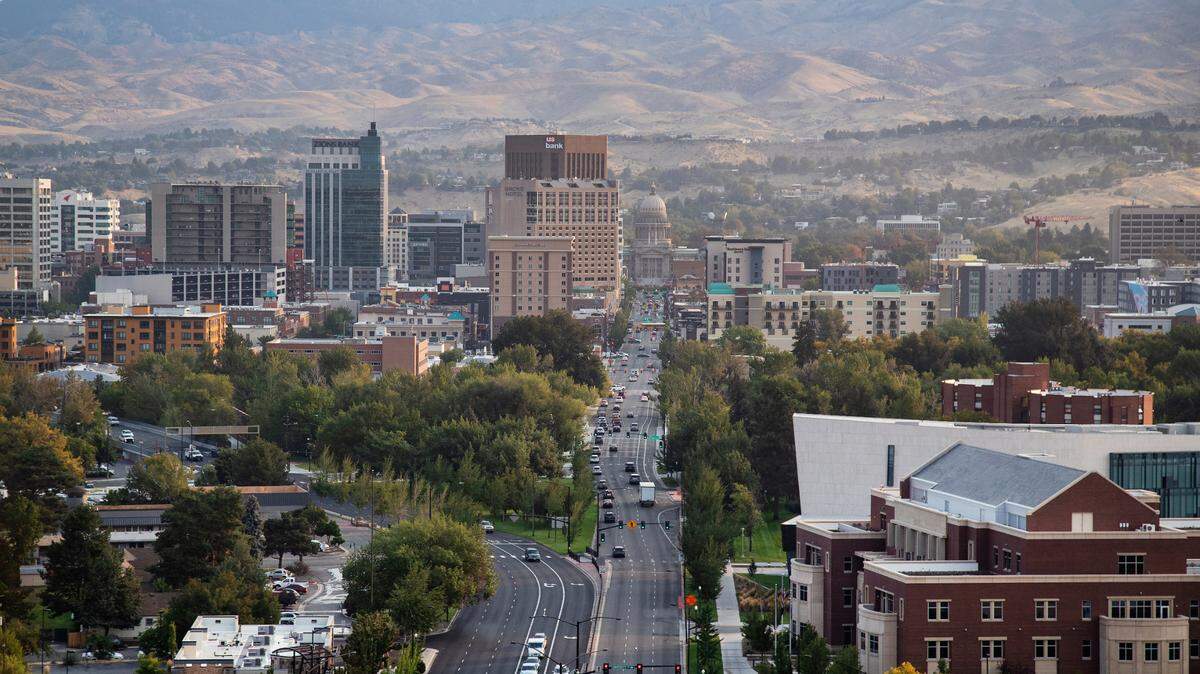
But in the vast majority of Boise, building up is not a serious option. Height restrictions in the city’s zoning code caps buildings at 35 feet in most residential zones and at 45 feet even in the multifamily residential zone.
A working group has been developing a draft rewrite of Boise’s zoning codes. These include some welcome steps, like lowering the minimum lot size in some residential areas, allowing more homes to be packed into smaller areas.
But height limits are largely untouched in the latest draft of the zoning ordinance.
Ultimately, it will be up to the City Council to adopt a new ordinance. And that presents them with an opportunity.
What if the city doubled all of its height limits? What if developers could locate medium-rise apartment buildings in areas currently zoned for single-family housing?
In a subsequent interview, Carley said loosening height restrictions could be a game-changer.
“It has tremendous positive impact (on) lowering the cost of housing,” Carley said. “The more residents you can fit into a geographic area, the lower the cost will be to the community and to the individual buyer.”
Carley said the zone where such development would make economic sense, if permitted, is generally in areas anywhere within a quarter-mile of a main arterial street.
There’s reason to believe this simple policy fix, which wouldn’t cost taxpayers anything, could make a major dent in the long-term affordable housing supply problem.
Though a policy fix would be relatively simple, the politics would not.
Lots of Boiseans express interest in providing greater access to affordable housing when it’s an abstract proposition, Carley said.
“Then when a project is proposed near their home, it’s immediately, ‘Not here,’” Carley said.
Will Boise City Council members be willing to face down the “Not In My Back Yard” political impulse? If they want renters to be able to continue living here, they may have to.