She brought her family to Idaho from Ukraine. They might have to go back | Opinion
AI-generated summary reviewed by our newsroom.
- Humanitarian parole brought Ukrainians to Idaho; renewals stalled since Trump took office.
- Processing delays revoke work authorization and licenses, forcing family returns.
- Local legal clinics handle dozens of Ukrainian cases; nonprofits press for policy clarity.
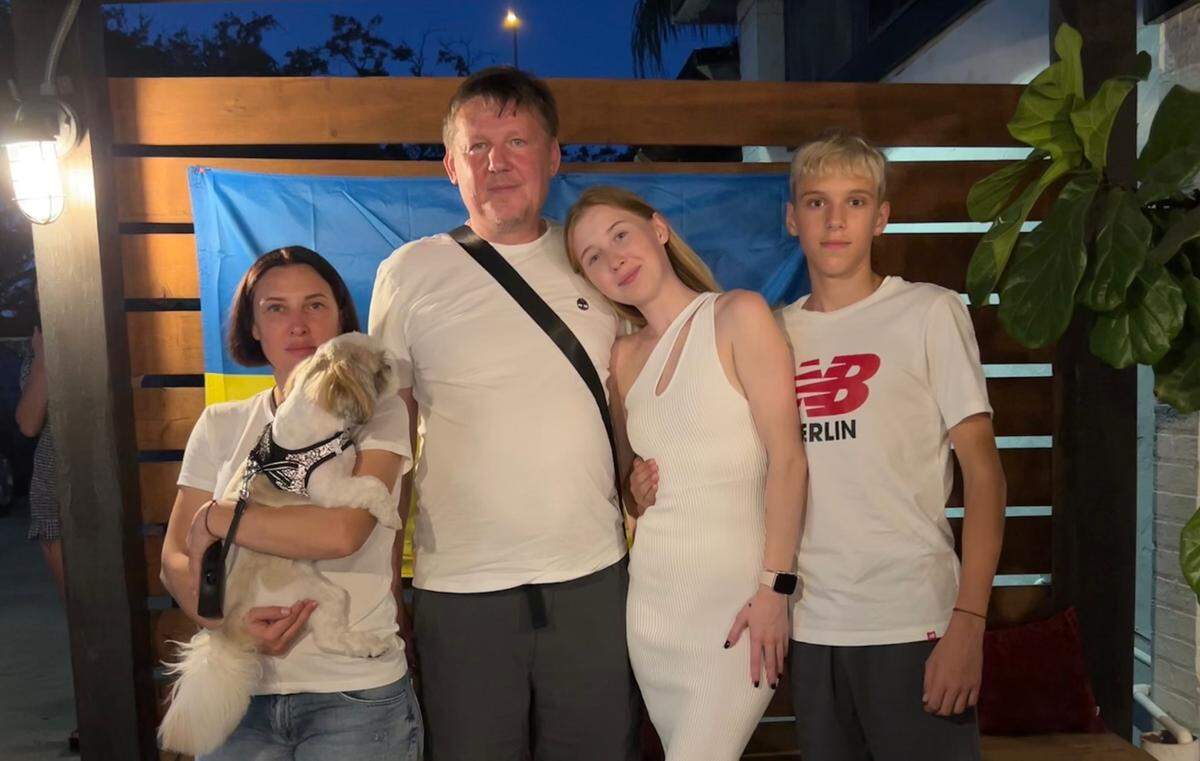
Kate Nikonova’s family fled their home country of Ukraine shortly after the Russian invasion in February 2022.
First, they went to Poland, then Germany, before Kate decided to come to the United States, where she landed in the Treasure Valley.
She fell in love with life here so much, she convinced her parents, Borys Nikonov and Oksana Nikonova, and her brother, Egor Nikonov, to follow her here.
“I talked to my parents and told them that I feel like it’s my own country,” Kate, 25, told me in an interview. “And I told them, ‘Do you want to try?’ ”
“My dad was like, ‘OK, we’ll settle here, we’ll start a new life,’ ” she said.
Nine months after Kate moved here, her parents and brother followed, in September 2023, spending a lot of money and learning a new language.
Since then, Borys, 51, has been working as a delivery driver, and Oksana, 45, has been working for Amazon. Egor, 16, goes to Ridgevue High School.
“I’m like, ‘OK, we finally will settle here,’ ” Kate said. “My parents do love Idaho. My parents love America, love this country.”
But now, two years later, Kate’s parents and brother are preparing to self-deport back to Ukraine after the Trump administration put a halt on the types of humanitarian visas that Kate and her family came to the U.S. on.
“I feel guilty because I asked my parents to move here, and now they’re supposed to move back and start a new life again,” Kate said. “My parents had plans. They moved here, work hard, spent money, and now all they can do is move back, and I feel it’s very unfair.”
Caught up in Trump’s immigration policy
Kate and her family came to the U.S. on a special visa under a program called Uniting for Ukraine, a program that started in 2022 during the Biden administration meant to help Ukrainians displaced by the war.
Kate’s family’s visa was up for renewal in September, and they applied in April, about six months in advance, as they were advised.
But applications have been at a standstill since January, when President Donald Trump put the brakes on in-migration through his Securing Our Borders executive order.
Kate said she has a friend who applied for renewal of her visa in December 2024 and was approved right away. Her parents, though, haven’t heard a thing.
Without word on their application, her parents are preparing to leave the country.
Other Ukrainians struggle to stay, too
“Unfortunately, that is a common story that I’ve heard too many times through my work,” immigration lawyer Chris Christensen, of Boise, told me in a phone interview.
Christensen said his firm, Christensen Legal, is working on about 90 Ukrainian asylum filings for people who came to the U.S. on the Uniting for Ukraine program.
He said, just last week, he met with five or six people who were in the same situation as Kate’s family.
“Their driver’s license has expired, their work authorization has expired,” Christensen said, “and a lot of them are saying to me, ‘What can we do?’ ”
The short answer is, “Not much.”
Kate contacted U.S. Sen. Jim Risch, R-Idaho, whose office opened a file on her case.
But, still no progress.
“Literally nothing is happening,” she said.
‘Pulling the rug out from under them’
It is estimated that over 250,000 Ukrainians are in the United States on humanitarian parole, according to the Idaho Office for Refugees.
More than 900 Ukrainians have moved to Idaho since March 2022.
That office has been working to help people apply for other options, such as asylum or Temporary Protected Status.
Asylum and Temporary Protected Status do not apply to her family, Kate said.
Welcome.US, a national nonprofit that helps Americans support refugees seeking safety in the U.S., reports that, in August, the U.S. Citizenship and Immigration Services resumed processing Uniting for Ukraine renewal applications and that re-parole has been granted to some Ukrainian newcomers.
Christensen said he has heard of some applications going through, but they are few and far between and take a long time to process.
“It frustrates me to no end that we invited people over to the United States through this program, and then are pulling the rug out from under them,” he said. “We’re not allowing them to work when they’re willing and able to go to work, not allowing them to get driver’s licenses.”
Winning the immigration lottery
As for Kate, she literally won the lottery.
She came to the U.S. under the Uniting for Ukraine program in December 2022, but soon after, she entered the annual lottery for a green card. In September 2023, she was notified she received a 10-year green card.
“I wish the same stuff for my parents,” she said. Her parents have applied but haven’t been as lucky.
Kate said she doesn’t have an issue with Trump’s hard immigration stance.
“I do like it,” she said. “I appreciate it. I love America, and if you’re not legal here, if you just cross the border, I’m sorry.”
But the treatment of Ukrainians, while the war is still going on, is unfair.
“My parents are very, very kind people, who had a job, pay taxes,” she said. “I don’t know what to do. I just feel so pathetic right now, because when I’m talking to people about that, they just don’t know about it. And I feel like just because nobody knows, nothing is going on.”
Glimmer of hope doused
Kate got a glimmer of hope in September when Trump responded to a reporter’s question asking whether he would allow Ukrainians to stay in the U.S. until the war ends.
“I think we will, yeah,” Trump said. “We have a lot of people who came here from Ukraine, and we’re working with them.”
This gave Kate hope, just before her parents’ visa was set to expire.
“And I’m like, OK, something is going on, probably something is going to change,” she said. “But nothing. It was just news. It was just blah, blah, blah for me, unfortunately.”
Going back ‘would be hell’
Kate’s hometown, Kharkiv, the second-largest city in Ukraine, is 20 miles from the Russian border and has been under constant attack from Russia.
When I asked her what it would mean if her parents and her brother moved back to Ukraine, she began to cry.
“It would be hell,” she said. “First of all, it’s unsafe. It’s very, very unsafe. Everything what’s going on in Ukraine, especially Kharkiv, right now is a nightmare.”
Her father is in a group chat with friends and family who are still in Kharkiv, and he checks in with them every day just to confirm they’re still alive.
‘I cannot stay here illegally’
In a twist of irony, Kate’s family is self-deporting rather than violate immigration law because of how much they love the U.S. If nothing changes, they plan to leave at the end of November.
“My dad bought tickets (back to Ukraine) the day his visa will expire because he said, ‘I respect this country and I cannot stay here illegally,’ ” she said. “He said, ‘I’m not going to do that.’ ”
To some extent, even if they were to figure out some way to stay in the U.S., the damage has been done. Trust has been broken.
“They’re like, ‘Kate, look, we’re not welcome here,’ ” she said.
A lot is being put on Kate’s shoulders. She only just turned 25. Her parents, without a visa, can’t work and can’t drive, either, meaning her salary as a server at the Revel retirement community in Eagle is the family’s only income, and she has to drive to the grocery store.
But “I don’t care how hard it is,” she said.
“To be honest, it probably will be harder if I will stay here alone without them and they move back. I cannot even imagine.”
Scott McIntosh is the opinion editor of the Idaho Statesman. You can email him at smcintosh@idahostatesman.com or call him at 208-377-6202. Sign up for the free weekly email newsletter The Idaho Way.
This story was originally published November 12, 2025 at 4:00 AM.
CORRECTION: This column has been updated to correct when Nikonova’s family left Ukraine. They left after the war began.