Former Trump adviser: Ukraine talks are all about ‘managing Trump’
AI-generated summary reviewed by our newsroom.
- Fiona Hill says Ukraine talks focus on managing Trump, not advancing real peace goals.
- European leaders work to curb Trump's influence and block Putin's territorial grabs.
- Putin seeks victory through Ukrainian land gains, not negotiated settlement terms.
The recent meetings among Presidents Trump, Putin and Zelenskyy over the war in Ukraine were more about managing Trump’s expectations and Putin’s territorial ambitions than they were about actually achieving a peace deal.
That’s according to Fiona Hill, senior fellow at the Brookings Institution and former deputy assistant to President Donald Trump. She is a leading expert on Russia and Europe, with a focus on U.S.-Russia relations and Eurasian security.
“Unfortunately for everyone concerned, even including Putin, this is an exercise more about managing Trump even than actually trying to get to a peace deal in Ukraine,” Hill told me in an interview Thursday. “And what I mean by that is that despite the fact that, of course, Ukraine and Europe and many other parties would very much like to see this war come to an end, and as President Trump puts it, ‘the killing stop,’ we know that Putin doesn’t necessarily want that outcome, because he wants to have the opportunity to take as much of Ukrainian territories as he possibly can.”
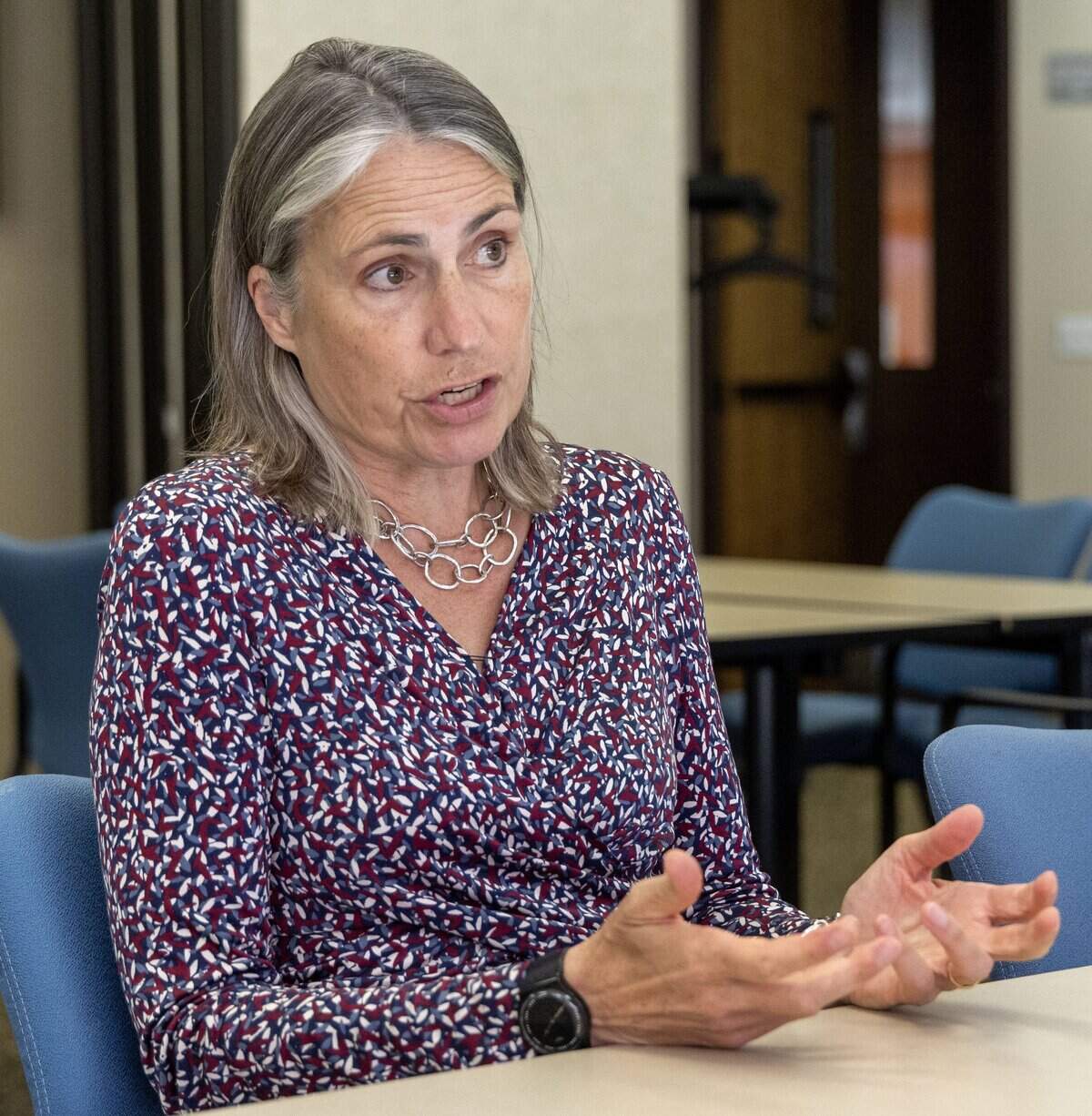
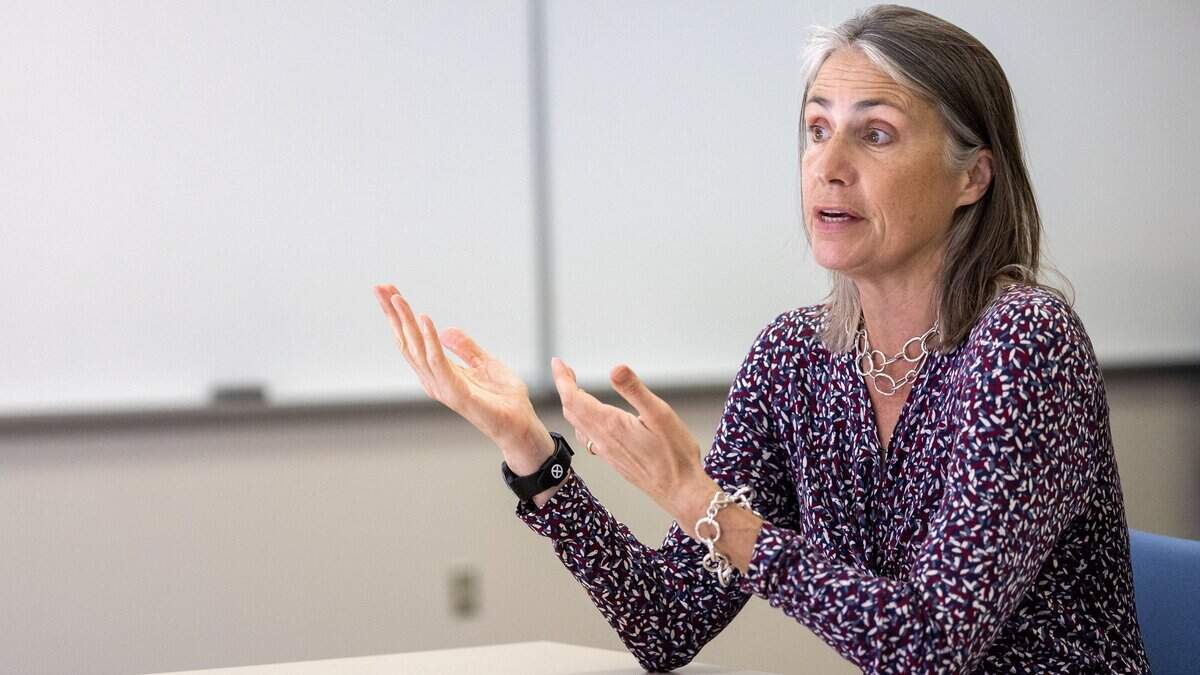
Hill was in Boise for the Conversations with Exceptional Women conference hosted by the Alturas Institute. We sat down for an interview in between sessions at the Yanke Research Center, where the conference was held.
Her visit to Boise was fortuitous because it came on the heels of Trump’s meetings with Putin and Zelenskyy. After Trump’s meeting with Putin, Hill said Trump had “completely ceded narrative control” to Putin.
Hill is perhaps most well-known for her testimony before Congress in the impeachment hearings against Trump in 2019.
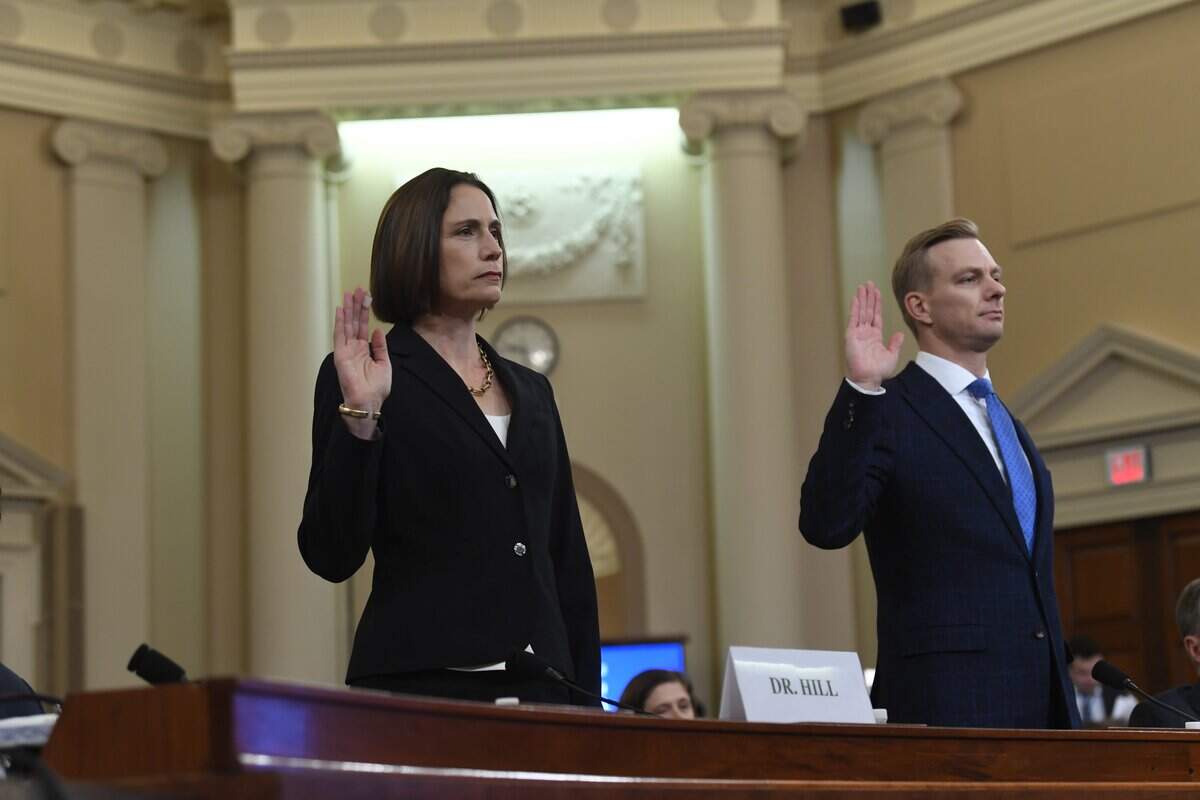
“The Russians’ interests are frankly to delegitimize our entire presidency,” she testified. “The goal of the Russians (in 2016) was really to put whoever became the president — by trying to tip their hands on one side of the scale — under a cloud.”
Here’s a Q&A with Hill, edited for length and clarity.
Q: What’s your assessment of how President Trump has handled the meetings this past week with both presidents, Putin and Zelenskyy?
A: Unfortunately for everyone concerned, even including Putin, this is an exercise more about managing Trump even than actually trying to get to a peace deal in Ukraine. And what I mean by that is that despite the fact that, of course, Ukraine and Europe and many other parties would very much like to see this war come to an end, and as President Trump puts it, “the killing stop,” we know that Putin doesn’t necessarily want that outcome, because he wants to have the opportunity to take as much of Ukrainian territories as he possibly can.
But it’s Trump himself who’s been pushing the agenda here. When he came into office, and before he came into office, he kept claiming that not only would the war not have started had he been in office, but that he could solve it in 24 hours, it’s going to be really easy just to get it all to stop.
Trump wants peace. Putin wants pieces of Ukraine and as big a piece as he possibly can.
And the Ukrainians also want peace, but they want to have it on terms that recognize the fact that they’re the ones who have been invaded. It’s their land that we’re talking about the whole time.
The Russians don’t want to give any security guarantees to the Ukrainians, Putin doesn’t want to meet with Zelenskyy. And really what he’s doing is trying to manage Trump and to kind of try to tamp down now Trump’s expectations so that he can keep pursuing the complete capitulation of Ukraine.
Q: Several European leaders accompanied Zelenskyy to the meeting with Trump at the White House? Why did they do that and how significant was that?
A: They wanted to prevent Trump from making unilateral decisions about Ukraine’s territory and to ensure they weren’t excluded from negotiations. It was a strategic move to counter Putin’s influence and manage Trump’s expectations.
The whole process is really a battle for Trump, because he’s kind of either the obstacle or the gateway to a solution in Ukraine.
Europeans have stepped forward to not just embrace Zelenskyy and to try to stand in solidarity with Ukraine, but they’ve also worked to try to find formulas that will enable them to engage directly with Trump. They know that he won’t ever treat them as peers.
It takes, you know, how many Europeans do we have at the table? Eight Europeans, nine Europeans, if you count Zelenskyy, to counter one Putin. Because for them, Putin, they know, in Trump’s mind, far outweighs their own collective ways.
When you look at the Europeans and everybody who came to Washington, D.C., on Monday, they came again to manage Trump. I mean, for them, it’s absolutely essential to have a peace deal in Ukraine, but it can’t be just any old peace. They have to have something that is going to ensure European security of the longer term as well.
Q: Is that a little bit of an irony that Trump has actually, in some ways, strengthened Europe’s commitment to NATO?
A: Between the two of them, Putin and Trump, they’ve probably done more to spur the kind of independent prospects of Europe as a security provider. And it’s long overdue, by the way. There’s no way that Europe should have been basically dependent on the United States for all this length of time.
The sad fact of the matter is that Europeans are still heavily reliant on the U.S., but we’ve then got to find that pathway in a kind of managed fashion for them to be able to provide for their own deterrence of Russia, and that requires also being able to support Ukraine so that Putin just doesn’t do something like this again.
They don’t want … a highly militarized Russia that is capable then of exerting all kinds of political, economic and intelligence and other nefarious influence over the rest of Europe, backed up by a very menacing military machine. Because Russia has thrown and Putin has thrown everything into the militarization of the economy now and building up the Russian forces to a point where Russia absolutely will be the dominant military power in Europe and be able to use coercive power, not necessarily invade all of the neighboring countries, but certainly use coercive power, putting the … future of Europe in question, and also making it very clear that war works.
Q: Sun Tzu’s “Art of War” talks about a “golden bridge,” or giving your opponent a way to retreat or save face in a conflict, rather than pushing them into a corner where they must fight to the death. Is there a golden bridge here?
A: If Putin could get the bridge and the gold and walk away, that’s what he would do. He doesn’t want anyone saving face. He’s going to keep on going until he can’t go any further, until he reaches, you know, some kind of major barrier. And then, you know, he could bank his territorial gains and try to make mischief in some other way.
Q: Idaho’s U.S. Sen. Jim Risch is the chairman of the Senate Committee on Foreign Relations. He has been a very vocal supporter of Ukraine in the past, but he faces tremendous political pressure to toe the company line with Trump. What should his role be in all of this?
A: There’s one thing for being critical in public; it’s really what you do in private. And my understanding of Sen. Risch is that he has stuck to his principles, just that we may not always be seeing what he’s doing and, let’s hope, that he’s continued to push for that kind of support. And if you actually look at polling in America, it is not politically unpopular to be still showing support for Ukraine in the United States. For Sen. Risch and others, they see the international and global implications of this, the signal that it sends to anybody else where a neighboring country thinks that they have a historic right to territory, and there’s so many places that that could be, this is kind of a recipe for disaster.
Q: Is there a potential solution to the conflict?
A: What I would like to see is President Trump genuinely working with his European counterparts. He seems to have forged reasonably good relations right now with the leaders of several European countries.
The solution, at least, would seem to start off from an ability to freeze the lines of conflict, and this is what all the Europeans are talking about. And it also involves providing defensive weapons to Ukraine, stopping Russian missile attacks, sharing intelligence and creating a peace deal that doesn’t completely sacrifice Ukrainian territory.
However, Putin wants a victory and is unlikely to make significant concessions.
Q: So what does Putin ultimately want?
A: I think what Putin is looking for is a reset of the U.S.-Russian relationship, which he seemed to get in Alaska. He literally had the red carpet rolled out for him and Trump talking about all the things that Russia and the U.S. could do together. But Putin wants to be able to have a semblance of victory.
Putin wants to claim victory by securing Ukrainian territories, particularly in Donbas. The only glimmer of a concession is that Putin has said that for now, and he may change his mind later, he’d be willing to take all of Donbas, which he doesn’t completely control, in return for maybe having some negotiation of the areas he does not control. I mean, that’s not a lot to take to the bank basically on the U.S. or the European side, but that’s the only kind of glimmer of something to work on. But we have to remember that everything is a loss for Ukraine. The only thing is, it’s an absolute miracle that we’ve got to this place right now because if there hadn’t been any support for Ukraine’s incredible bravery in fighting back, there wouldn’t be a Ukraine by now.
Q: Are you optimistic or pessimistic?
A: I can be both at the same time. I’m pessimistic about the trends but I’m optimistic since I know that things can be done. It’s just not going to be easy. We could do it. The big challenge is that it’s all about managing Trump and being able to get him into a place where he will continue to work with Europeans and support them and not be constantly flipping over onto the path that Vladimir Putin keeps laying out for him.
Scott McIntosh is the opinion editor of the Idaho Statesman. You can email him at smcintosh@idahostatesman.com or call him at 208-377-6202. Sign up for the free weekly email newsletter The Idaho Way.