
Risch has long supported Ukraine. Silence on Trump’s betrayal is abetting its fall | Opinion
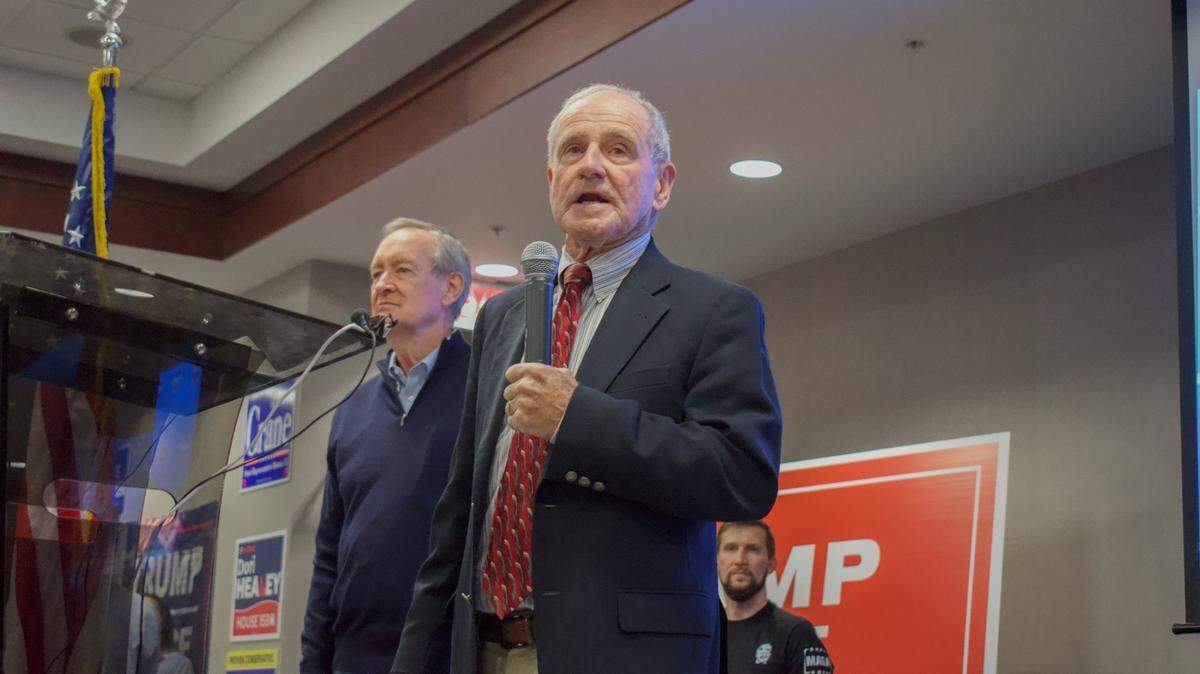
Just days ago during the Munich Security Conference, U.S. Sen. Jim Risch was overflowing with support for embattled Ukraine, now approaching its third year of valiant resistance against a brutal invasion by Russia.
As the chairman of the Senate Foreign Relations Committee, Risch holds one of the most important positions in American foreign affairs outside of the executive branch.
Risch urged President Donald Trump to implement the REPO Act, which would seize Russian assets frozen under sanctions, using them to help fund the Ukrainian war effort.
“After speaking with President Zelensky, it’s clear that America and our transatlantic allies must unlock more support for Ukraine, through the actual seizure of the underlying frozen assets or through, for instance, using those assets as collateral for another, larger loan for Ukraine,” he said in a joint, bipartisan news release from committee leadership. “Vladimir Putin must pay for his brutal invasion, and Russia’s own assets are an appropriate way to give brave Ukraine the support it needs to fend off his murderous aggression.”
This is not a new position. Risch has long been a full-throated supporter of Ukraine. A year ago, as the ranking Republican on the committee, he emphasized the obligations of the U.S. to support our ally.
“We have kept the commitment to Ukraine that we made in 1994 when we convinced it to give up its nuclear weapons,” he wrote. “But right now, most urgently, we need a plan of action that will bring the war in Ukraine to a decisive end and deny Russia a victory. If we do not, we will only invite more aggressors to challenge the United States and our allies in the years to come.”
All of that is true as well.
Not that it matters to Trump.
Trump opted to meet with Russia and talk to Vladimir Putin for “peace talks” without Ukraine at the table. And then, Trump falsely accused Ukraine of starting the war with Russia, when it was Putin who ordered an invasion. And then, Trump accused Zelensky of being a “dictator without elections” — at about the same time he was portraying himself as the king of America.
(Zelensky won over 70% of votes in the 2019 presidential election, and his term was supposed to end last May. However, no new election could take place because Ukraine has been under martial law since Russia invaded, and that prohibits elections. Polls continue to show majority support for Zelensky. Trump, of course, probably has no clue about any of that.)
Risch and most other Ukraine supporters in the GOP have issued no statements since Trump’s betrayal of our ally and embrace of a repressive, aggressive, authoritarian enemy. We asked Risch for comment and he did not respond.
This is a pattern when it comes to Republicans rolling over for Trump.
Remember the deep concerns of Sen. Bill Cassidy, a Louisiana Republican and physician, with the outlandish views longtime conspiracy theorist Robert F. Kennedy Jr. has expressed about the vaccine schedule? But it didn’t prevent him from voting for him as secretary of Health and Human Services.
Last time, the bargain for many Republicans in Congress was simple: In exchange for looking the other way on Trump’s lies, incompetence, mismanagement and complete lack of morality, they could have policies they long fought for: big tax cuts for corporations and the wealthy, loading the Supreme Court to overturn Roe, taking aim at the Affordable Care Act, and so on.
That was then. Now, it’s not only Risch who’s gone silent over Ukraine, but basically every Republican who cares about the issue, as ABC News reported. And so, as Putin grows in confidence that America has now handed him a victory, Risch has been silent on Ukraine for fear of offending Trump.
This time, it’s a new bargain with the White House, which tells you to get in line or get run over. Members of Congress are no longer permitted to have independent policy priorities.
The Constitution envisions Congress as an independent branch that checks the executive. But that would require members of Congress, like Risch, to find their misplaced backbones.
BEHIND THE STORY
MOREWhat is an editorial?
Statesman editorials are the consensus opinion of the Idaho Statesman’s editorial board. The editorial board is composed of journalists from the Idaho Statesman and community members. Members of the editorial board are Statesman editor Chadd Cripe, opinion editor Scott McIntosh, opinion writer Bryan Clark, assistant editor Jim Keyser and community members John Hess, Debbie McCormick and Julie Yamamoto.
How does the editorial board operate?
The editorial board meets weekly and sometimes invites subjects to board meetings to interview them personally to gain a better understanding of the topic. Board members also communicate throughout the week via email to discuss issues and provide input on editorials on topics as they are happening in real time. Editorials are intended to be part of an ongoing civil discussion with the ultimate goal of providing solutions to community problems.
Why are editorials unsigned?
Editorials reflect the collective views of the Statesman’s editorial board — not just the opinion of one writer. An editorial is a collective opinion based on a group discussion among board members. While the editorial is written by one person, typically the opinion editor, it represents the opinions and viewpoints expressed by members of the editorial board after discussion and research on the topic.
Want your say?
Readers are encouraged to express their thoughts by submitting a letter to the editor. Click on “Submit a letter or opinion” at idahostatesman.com/opinion.
Want more opinions each week?
Subscribe to The Idaho Way weekly email newsletter, a collection of editorials, columns, guest opinions and letters to the editor from the Opinion section of the Idaho Statesman each week. You can sign up for The Idaho Way here.