
What a trial 300 years ago tells us about Trump’s media lawsuits | Opinion
President Donald Trump’s lawsuit against CBS News reminded me of a famous legal case that I teach my journalism students each semester at Boise State University.
It’s known as the Zenger trial.
The case was in 1735, nearly 300 years ago, before the United States was even a country.
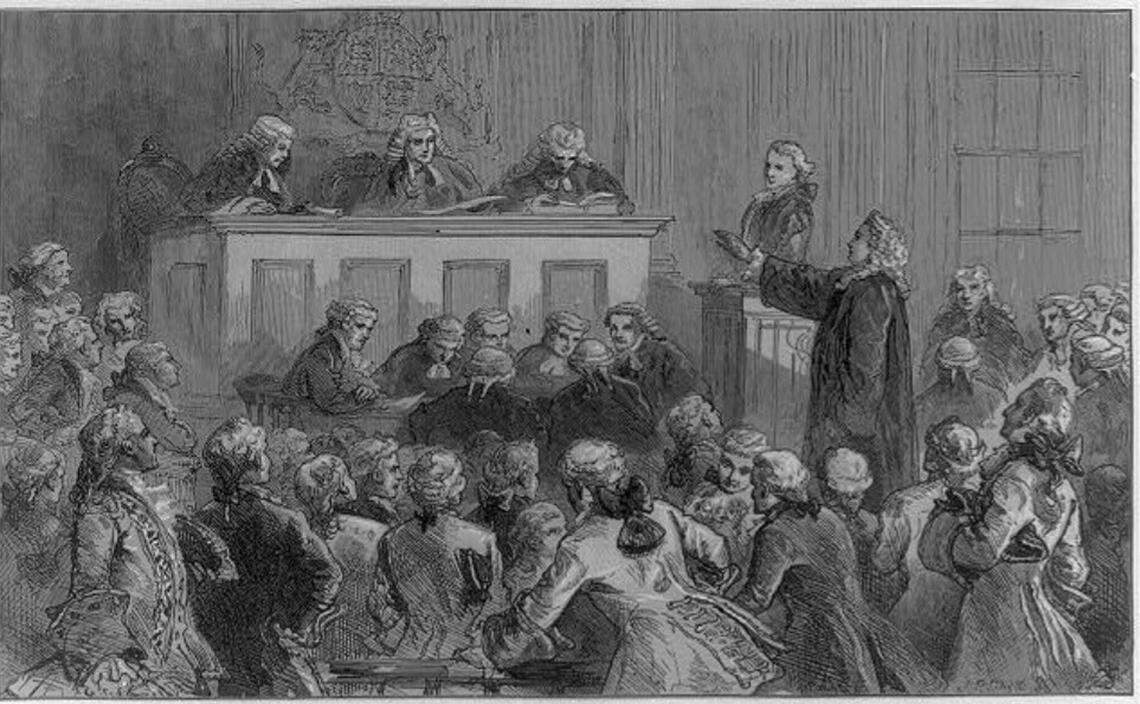
Then-New York Gov. William Cosby charged the New-York Weekly Journal printer John Peter Zenger with “seditious libel” because the newspaper was critical of Cosby, accusing him of tyranny and violating the people’s rights.
Seditious libel at the time simply meant you were critical of the government, even if what you wrote was true. The plaintiff did not have to prove that the published material was false, as plaintiffs have to do today.
On its face, Zenger was guilty, simply on the basis that he indeed printed the material.
Despite that and despite Cosby’s repeated efforts to stack the court with lawyers, judges and jurors in his favor, the jury returned a verdict of not guilty — after just 10 minutes of deliberation.
Essentially, the jury said, “Yeah, we know he did this and it’s against the law, but it shouldn’t be, and he shouldn’t be punished for it.”
‘Right to criticize’
It’s remarkable to me that a jury of average people in 1735 in a British province recognized the importance of allowing the press to criticize the government without fear of retribution.
“I think it was reflective of the deep commitment that existed among these ordinary jurors that the right to criticize their colonial governor was essential in their society,” University of Minnesota media ethics and law Professor Jane Kirtley told me in a phone interview. “Criticism is the lifeblood of what keeps a democratic society functioning and helps to hold those in power accountable.”
The Zenger case didn’t set legal precedent, but it was foundational in our understanding of the freedom of the press and the importance of protecting the free exercise of journalism.
As we all know, freedom of the press was enshrined in the First Amendment of the Constitution, its roots found some 50 years earlier in the Zenger trial.
“We really value political speech as a society,” Kirtley said. “We see that as essential to political debate, to discussion, to an informed citizenry, to participation in our system. ”
Trump’s lawsuit against CBS
Kirtley and I talked about the Zenger trial in the context of what we’re seeing today with attacks on the media and particularly the lawsuits that Trump has brought against several media companies.
Trump is suing CBS News for $20 billion over claims that the news program “60 Minutes” edited an interview with Kamala Harris to make her look good just before the election. (The accusation is ridiculous; “60 Minutes” used a more succinct answer from Harris to a question about Israel.)
It’s interesting, though, that Trump is not suing CBS News on the grounds of libel; he’s suing under the Texas Deceptive Trade Practices-Consumer Protection Act, which is meant to regulate deceptive advertising. And he filed it in Texas in a district whose lone judge is a Trump appointee, under the guise that a Texas congressman was harmed by the “60 Minutes” interview.
Kirtley said the strategy is similar to a couple of lawsuits in the 1990s against media companies by businesses that knew they wouldn’t be able to prove published material was false to win a libel suit. So they sued on other grounds, such as trespassing and breach of contract.
Trump vilifies the press
Of course, it’s all part of Trump’s strategy to intimidate and vilify the press, calling us “the enemy of the people” and “fake news.” It’s meant to diminish trust in the media among his followers. The reason is obvious: Any time the press reports on some heinous thing he’s done (like mistakenly deporting a man to an El Salvador prison then refusing to bring him back in defiance of a Supreme Court order), he simply attacks the messenger so that his followers don’t acknowledge his unconstitutional actions.
It’s worth noting that in the Zenger case, Cosby had removed New York’s Chief Judge Lewis Morris after Morris ruled against Cosby in a case involving Cosby’s salary as governor and hinged on, essentially, separation of powers.
Sound familiar? Trump has regularly attacked judges and threatened to remove those who don’t rule in his favor.
It’s also worth noting that just as Trump is using the regulatory powers of the FCC to violate CBS News’ First Amendment protections, Cosby also sought to use his regulatory powers to attack the New-York Weekly Journal, including ordering a hangman to burn copies of the newspaper.
By doing such things as suing media outlets, canceling subscriptions to Politico, threatening funding to NPR and PBS, barring the Associated Press from the Oval Office or refusing to answer questions from reporters who list their pronouns, Trump’s attacks on the media are just as petty and just as anathema to American values as then-Gov. William Cosby’s actions back in the early 1700s.
But the Zenger verdict shows just how deeply ingrained in America’s DNA is the recognition of the importance of freedom of the press and the need to protect the press from such government bullying.
“If we don’t have the independent press to engage in that kind of reporting,” Kirtley said, “then we’re left with simply getting the version of events that the government chooses to give to us.”
That’s what Trump apparently wants today, just like Cosby did nearly 300 years ago.
This story was originally published April 17, 2025 at 4:00 AM.
