This Boise business in jeopardy after Trump tariffs hit mangoes | Opinion
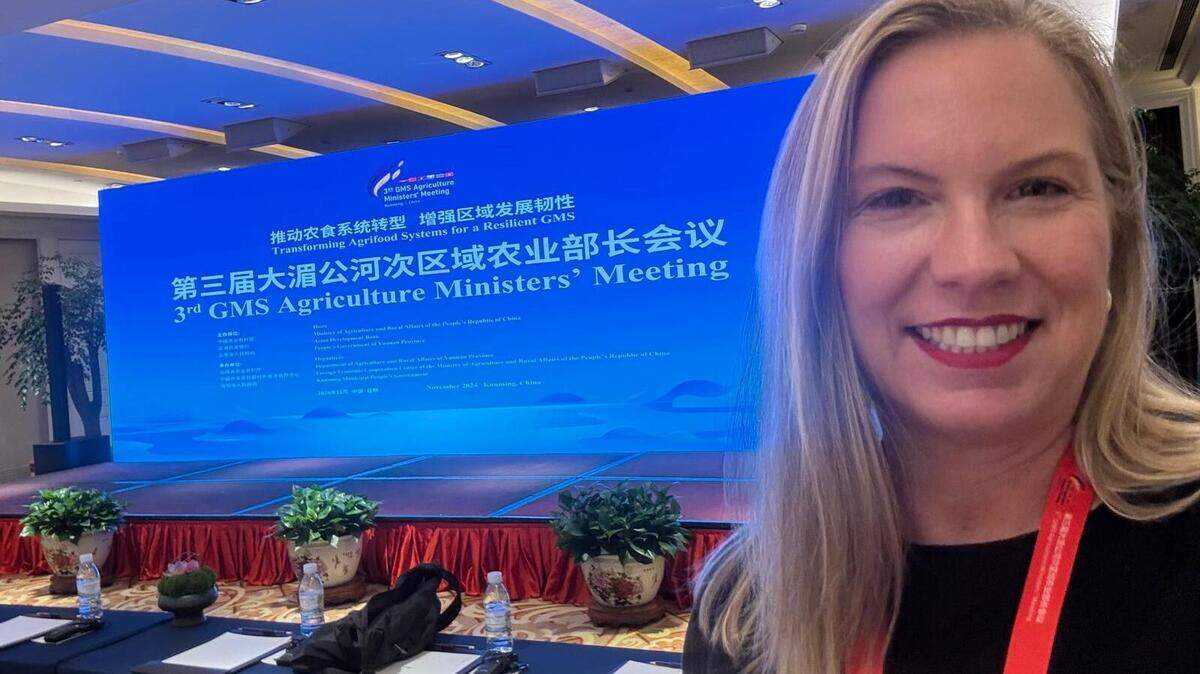
Coree Carver’s business exporting mangoes from Cambodia has faced more than its fair share of challenges over the past several years: regulatory hurdles, the COVID pandemic, the closing of the border in China, the Russia invasion of Ukraine and even a car accident that caused traumatic brain injury.
But the latest blow — a 49% tariff on goods from Cambodia imposed by President Donald Trump — could prove to be the death knell for what’s been a labor of love for the Boise businesswoman.
“Realistically, as I’m talking through this, (if the tariffs go through), the project is done,” she told me by phone from Chicago, where she was attending a trade conference that was consumed by talk of Trump’s tariffs.
Trump put a 90-day delay on his so-called “Liberation Day” tariffs imposed on several nations, but if Cambodia isn’t able to somehow wriggle out of Trump’s sights, Carver’s business, Grove Fruit Growers, likely will be done for good.
Buyers looking for frozen or dried mangoes will simply shift to suppliers in Mexico or Peru, where tariffs are lower, leaving Cambodian farmers without a market, Carver said. If the tariffs on Cambodia don’t go through, Carver said Grove Fruit Growers can continue.
Why Cambodian mangoes?
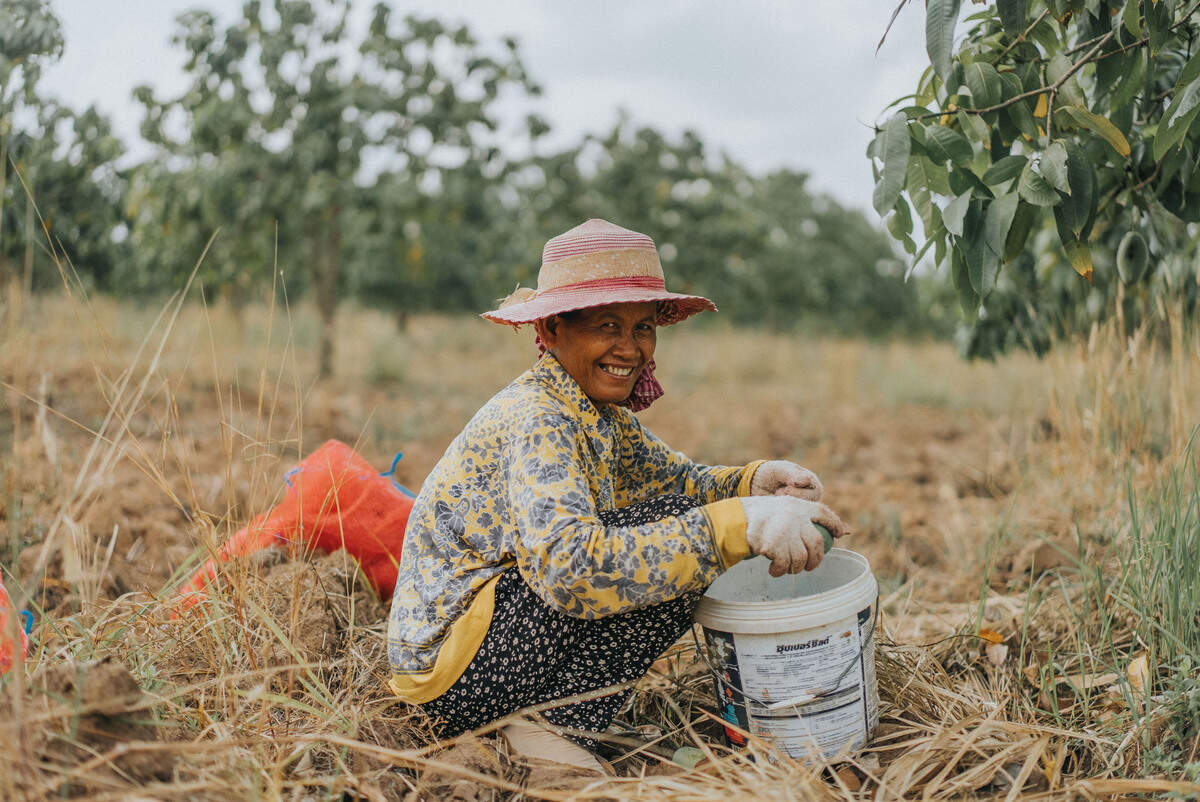
Grove Fruit Growers isn’t your typical for-profit business; it’s much more altruistic. It’s not just about making a buck selling mangoes; it’s about helping lift rural farmers out of poverty.
Carver started the business around 2018 after her children read a book about Cambodia’s devastating genocide at the hands of dictator Pol Pot, who was supported by the Chinese Communist Party.
The family was living in Taiwan at the time, and they made a trip to Cambodia to learn more.
Carver said they witnessed the most horrific poverty. Meanwhile, farmers in rural Cambodian villages were sitting on mountains of unsellable mangoes because they had no access to processors, shipping or end markets.
Carver was already running a food distribution company that exported nuts, dried fruits and grains from the U.S. into Asia, so she thought she could leverage her supply chain contacts to start a business while at the same time help rural farmers in Cambodia.
She purchased a 110-acre mango farm and introduced international standards and sustainable farming practices, while also providing living wages and clean drinking water to local workers.
Trump tariffs announced
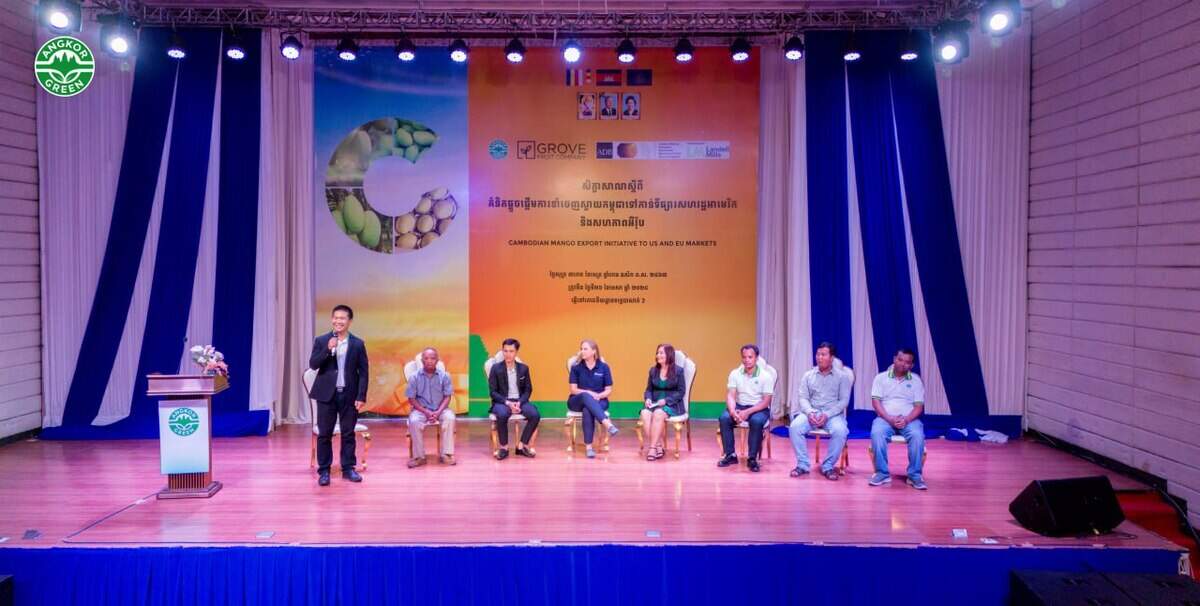
After years of trials and tribulations in trying to find processors, transportation and buyers, Carver had finally put it all together and last year signed a contract with buyers in Washington state for more than 2 million pounds of fresh fruit (1 million pounds after processing) to be distributed in supermarkets across the country.
“It’s helping, like, thousands of farmers,” she said. “Everything’s signed, we send a couple of containers, everything’s going great, and then these tariffs hit.”
Fortunately, for now, there’s a temporary reprieve with the 90-day delay, but if Cambodia can’t negotiate out of it, then that’s likely the end of Grove Fruit Growers.
Carver said she understands the intent of Trump’s tariffs but criticizes the execution.
“I don’t hate what Trump is trying to do as far as making things more equitable,” she said. “But the way he’s going about it is sending shock waves and causing unbearable pain for businesses.”
Cambodia, of all places, was one of the hardest-hit countries in Trump’s “Liberation Day” tariffs, with a 49% tariff. That’s on top of the already imposed and still in place 10% blanket tariff.
It appears that Trump’s administration arrived at that number by taking the U.S. exports to Cambodia, subtracting Cambodian imports in the U.S., dividing by imports, and then dividing by two.
It makes no sense.
The U.S. goods trade deficit with Cambodia was $12.3 billion in 2024 and is not in the top 10 of trade deficits, according to CNBC. U.S. exports to Cambodia in 2024 were $321.6 million, while U.S. goods imported from Cambodia totaled $12.7 billion.
The tariffs are a double whammy for the small southeast Asian country of 18 million people.
Carver said she also worked with the U.S. Agency for International Development, which Trump’s Department of Government Efficiency decimated.
“(The U.S.) had a 15-year project with USAID in Cambodia (that has) spent almost $75 million there over those 15 years on development, trying to help the Cambodian people, because it’s so poor there,” she said. “And then all of a sudden, Trump just eradicates USAID and then sticks it to the Cambodians.”
This story was originally published April 13, 2025 at 4:00 AM.