This downtown Boise building was frozen in time. See what it looks like today
Jade Stacey has done a painstakingly masterful job of restoring the facade and the second floor of the Smith Block Building, considered the last remaining undeveloped property in downtown Boise.
Stacey was able to preserve wood trim, lath and plaster walls, frosted glass, transom windows, hardwood floors, even a few old radiators (non-working), so that the new space is transformed back to the day when it was first built in 1905.
“I kept all of that old look and details,” Stacey said as he gave me a tour of the building recently. “I want you to walk in and say, ‘Wow, I’m back in 1905.’”
Even the new design elements are reminiscent of the building’s original design, including brass hand railings and door hardware, light fixtures, sconces, push-button light switches and tile.
One feature that’s old is new again: Stacey purchased the old light fixtures from the 1901-built Masonic Temple, which is going through its own renovation, and installed them in each of the offices on the second floor.
On the outside, Stacey used early photos of the building to re-create the exterior.
Restoration of the facade included brick and sandstone restoration, parapet wall work, new windows, new retail storefront entry locations and a restoration of a middle entry and staircase to the second floor, which was original to the building but was demolished and sealed off somewhere along the way. Stacey also cleaned up the “Smith Block” sign at the top of the building so that it’s actually readable again.
Stacey received a $200,000 facade improvements grant from Capitol City Development Corporation, the city’s urban renewal agency. In exchange, Stacey has given CCDC a facade easement on the building.
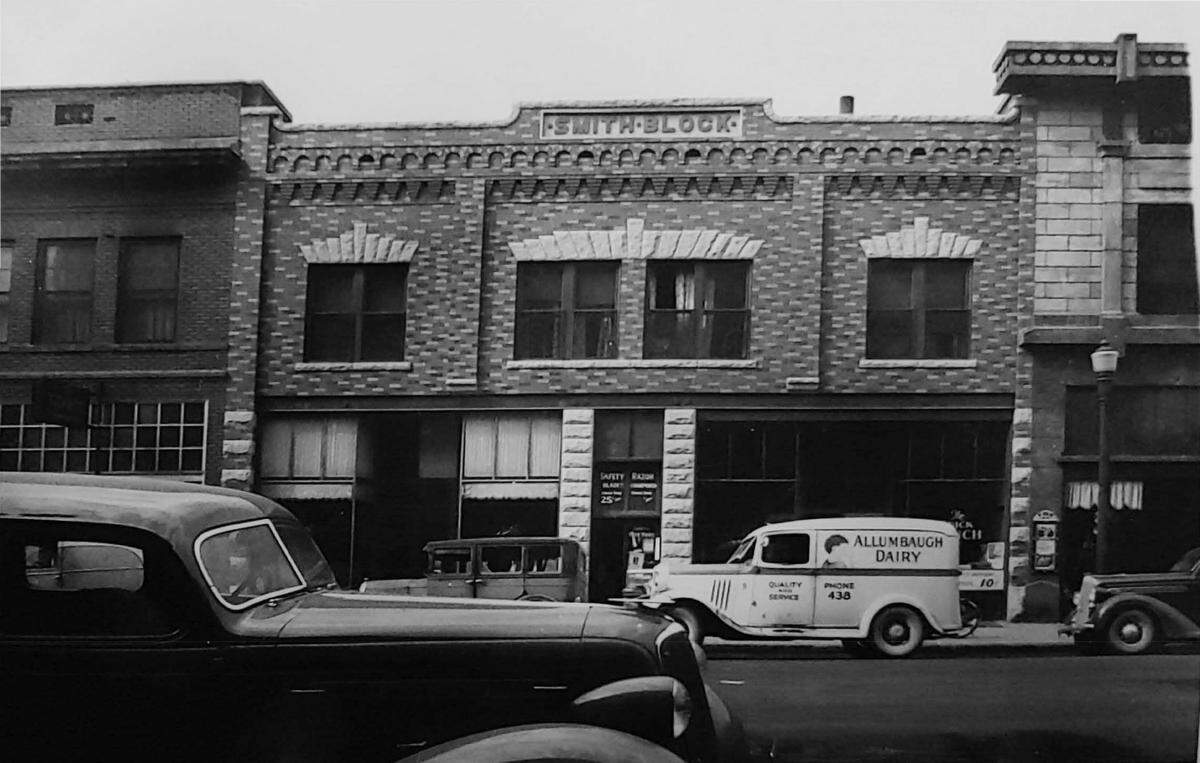
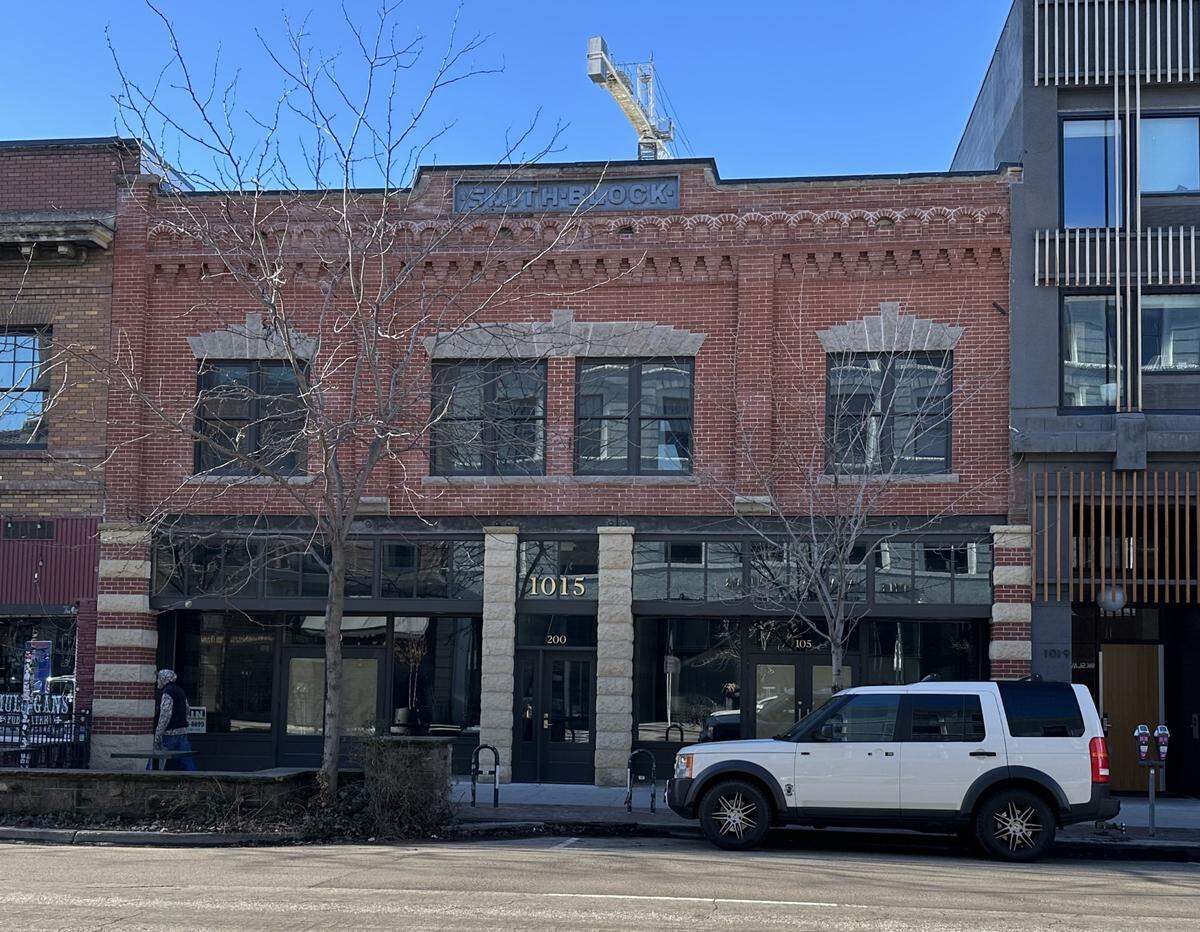
Smith Block building background
I first wrote about the Smith Block Building, 1015 W. Main St., in October 2022, shortly after Stacey had purchased the building and had begun to renovate it.
According to a nomination for the building to be listed on the National Register of Historic Places, Roscoe Smith had the Smith Block Building constructed in 1905.
Roscoe Smith’s father, Dr. Ephraim Smith, was Boise’s first territorial mayor in the 1860s, and the site encompassing the building was where some of Boise’s first structures were located. Ephraim Smith operated a drug store and opened a private hospital in Boise, according to the city of Boise. He was killed in a streetcar accident in 1891 in Toledo, Ohio.
The first floor of the building had been in near constant use since it was built, but the second floor had been closed off for decades, frozen in time, a lost world from the 1950s.
Ironically, its dereliction ensured its preservation, with window locks, trim, individual sinks, transom windows and doors for each 12-by-15-foot room still intact from when the second floor was a boarding house, untouched for 50 years or more.
Since the street entrance and staircase had been blocked off, and a secret entrance from the neighboring building was the only access, it was speculated that the second floor was a house of ill-repute, as were several other properties in that area at the time.
At some point, the secret side entrance was closed off, sealing the second floor like a time capsule.
Stacey is ready to rent out the second floor as office space. He had considered renting out each individual room, but he now thinks it would be better for one tenant.
Despite the old look, the office space has modern amenities, including wiring for internet, plenty of electrical outlets, modern HVAC, 12 individual offices, two breakrooms, a copier/printer room, two bathrooms, and Stacey knocked out a wall between two rooms to create a sizable conference room overlooking Main Street. He installed mass-loaded vinyl in the walls of the front rooms to deaden the noise.
Even though he wasn’t able to salvage the two 19-by-9-foot original skylights, he ordered new ones from a company in Washington that was able to re-create the originals, right down to the metal framing and peaked slope.
He said he considered dividing the skylights into four sections, which would have cost him a quarter of what the two skylights cost, but he felt he needed to stay true to the original design.
Considering the fact that Stacey could have just demolished everything, closed off the skylights altogether and built the second floor from scratch, the restoration is remarkable.
“It’s really stunning,” said Bill Babcock, Roscoe Smith’s grandson who lives in Boise. “I was afraid at one time it would have been torn down. But Jade did a wonderful job renovating it and making sure it will live on for another 100 years.”
Stacey recently gave a tour of the building to Babcock and his wife, Margi, and their daughters, Joni Babcock and Julie Baiocchi.
“Honestly, I see so many historical buildings torn down,” Joni Babcock said on the tour. “It’s a great credit to Jade that he would take it on himself to restore this.”
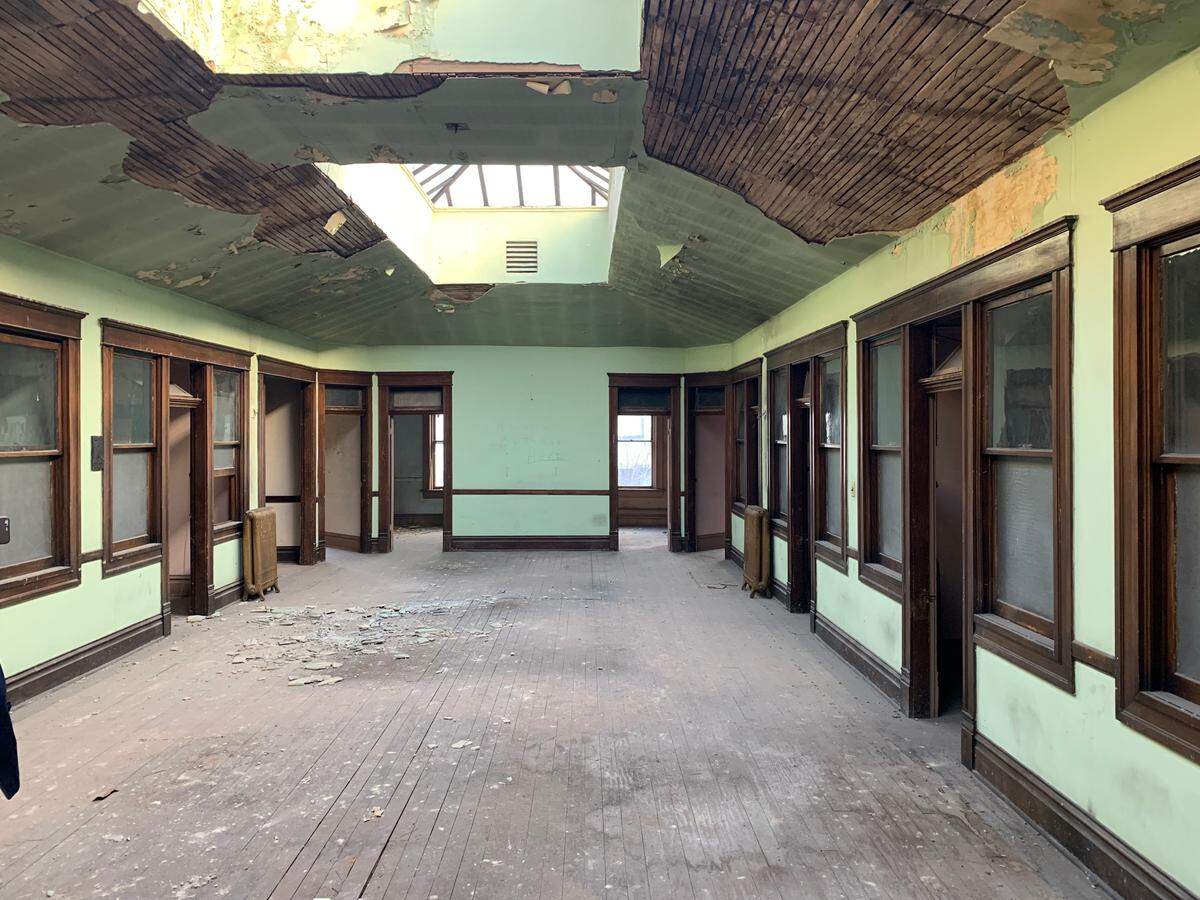
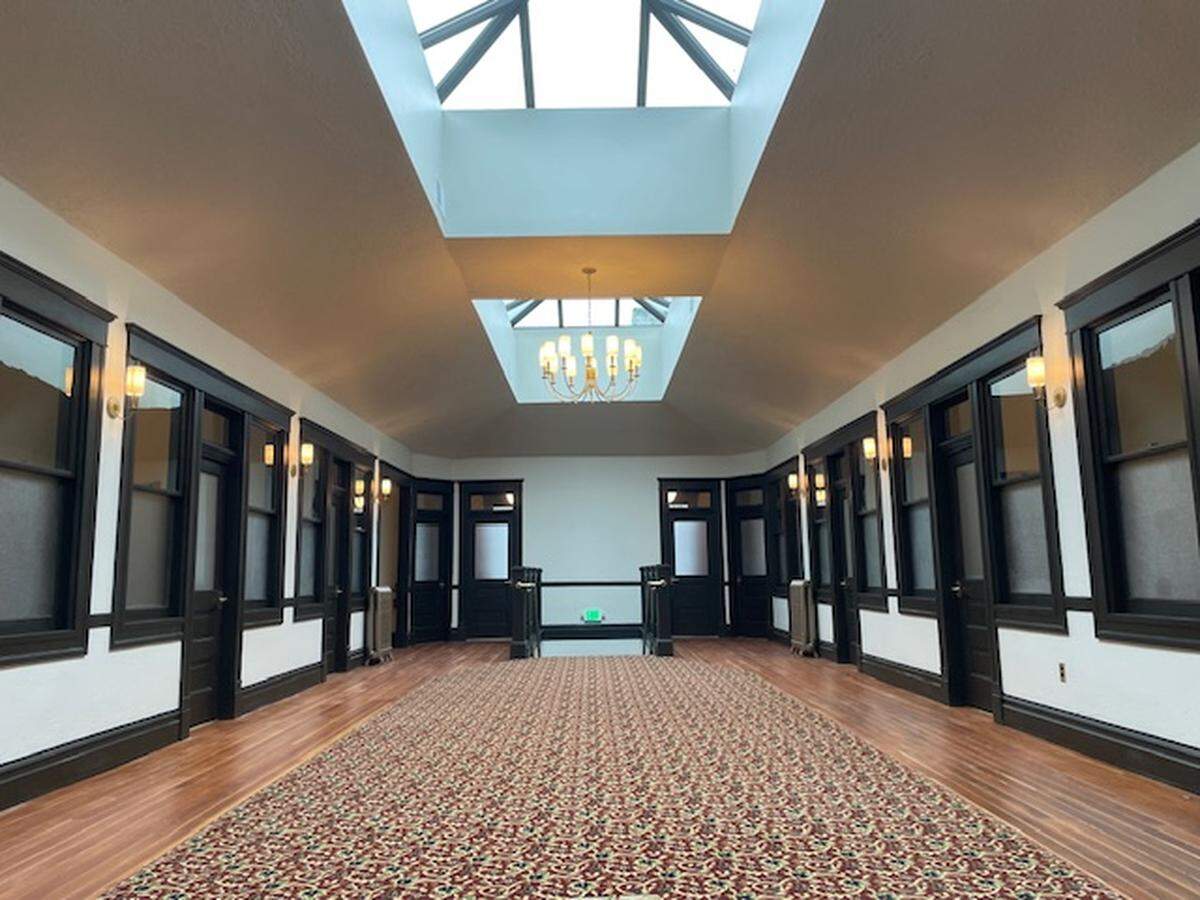
Restoration project has been a ‘labor of love’
The two-and-a-half-year (so far) project has another, more personal side benefit for Stacey.
“My dad and I have spent probably thousands of hours here working on this together,” Stacey said. “I’m glad I got to spend that time with him. It’s definitely been a labor of love.”
One of those tasks was removing all of the plaster from the brick walls, including the two side walls on the first floor that go floor to ceiling, front to the back.
It’s amazing that they were ever covered up.
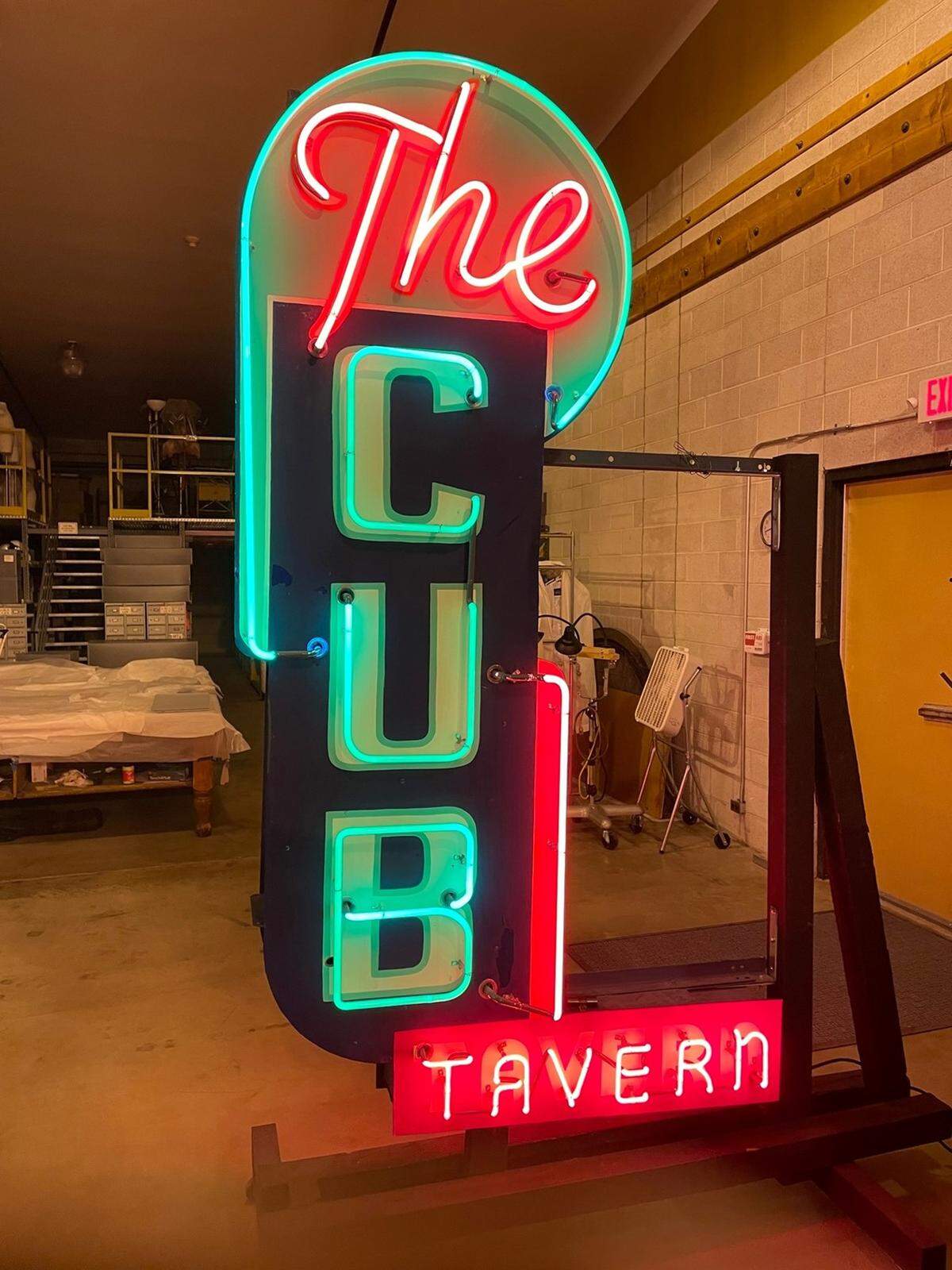
I got a sneak peek of the first-floor retail space, formerly where Art Source Gallery was. The new space will be converted into a bar called the Cub Tavern, which was a bar on Capitol Boulevard from 1948 until the 1980s, where Bar Gernika is today.
The Cub Tavern’s neon sign was rehabbed by Classic Design Studio and Rocket Neon for the local “Signs of Our Times” project, which collects and refurbishes old Boise signs. The project has agreed to lease the sign to Stacey so that it can be appreciated once again.
Liquor license law holding him back
But there’s a bit of a hangup with getting the Cub Tavern going: a liquor license.
Stacey’s on the waiting list for a state-issued liquor license, but a new license is granted for every 1,500 new residents in the city, and Boise isn’t growing as fast as it once was, meaning there’s a long waiting list.
As of May 2023, there were 119 applicants on the list in the city of Boise, with the top applicant having waited for 10 years, according to an analysis by the law firm Hawley Troxell.
Stacey had planned to buy a liquor license on the secondary market. But the state Legislature, intending to fix the problem, made it worse by passing Senate Bill 1120 in 2023. The law ended up further restricting the transferability of existing liquor licenses without solving the problem of the supply-and-demand imbalance in the current system.
“So without a license, I’m really stuck,” Stacey said.
It’s incredible that in a free market state like Idaho, the state Legislature is making it worse for the free market to do its thing.
Legislators need to get rid of this restrictive, intrusive law.
Stacey still has some time before the Cub Tavern will need a liquor license. He’s done a lot of work, but there’s still a long way to go on the first floor. Hopefully, the state Legislature can get its act together soon. I’m looking forward to having a drink in the new tavern.
If the first floor turns out like the second floor, it will be remarkable.
“I tell people all the time to view something like this entirely as a business,” he said. “Business is business. But this, this is very personal for me. And hopefully, it stays in my family forever.”
This story was originally published March 5, 2025 at 4:00 AM.