This last, untouched piece of downtown Boise’s history is about to get a face-lift
If Dashiell Hammett had lived in Boise instead of San Francisco, you could imagine his hard-boiled detective Sam Spade prowling the buildings on Capitol Boulevard or peeping in transom windows on Main Street.
The transom windows at 1015 W. Main St., to be exact.
The second floor of this unassuming, two-story, brick-and-sandstone building, which now houses The Art Source Gallery on the first floor, appears to be exactly the same as it was built in 1905 — complete with transom windows, the tilt-out windows over doorways.
The “Smith Block” building is believed to be the last unrehabilitated building in downtown Boise, according to the Idaho State Historical Society.
“I had no idea there was a building like this left in downtown Boise,” the building’s new owner, Jade Stacey, said during a recent tour.
Best of all, Stacey said he plans to keep as much of the original details on the second floor as possible, keeping the individual rooms, trim, doors and, yes, the transom windows, intact.
“This is my favorite spot of the building,” Stacey said, standing in the middle of the second floor. “I mean, it’s just so cool.”
Since it’s believed to be the last untouched downtown space, remodeling the building also brings a momentous close to a chapter in Boise’s history.
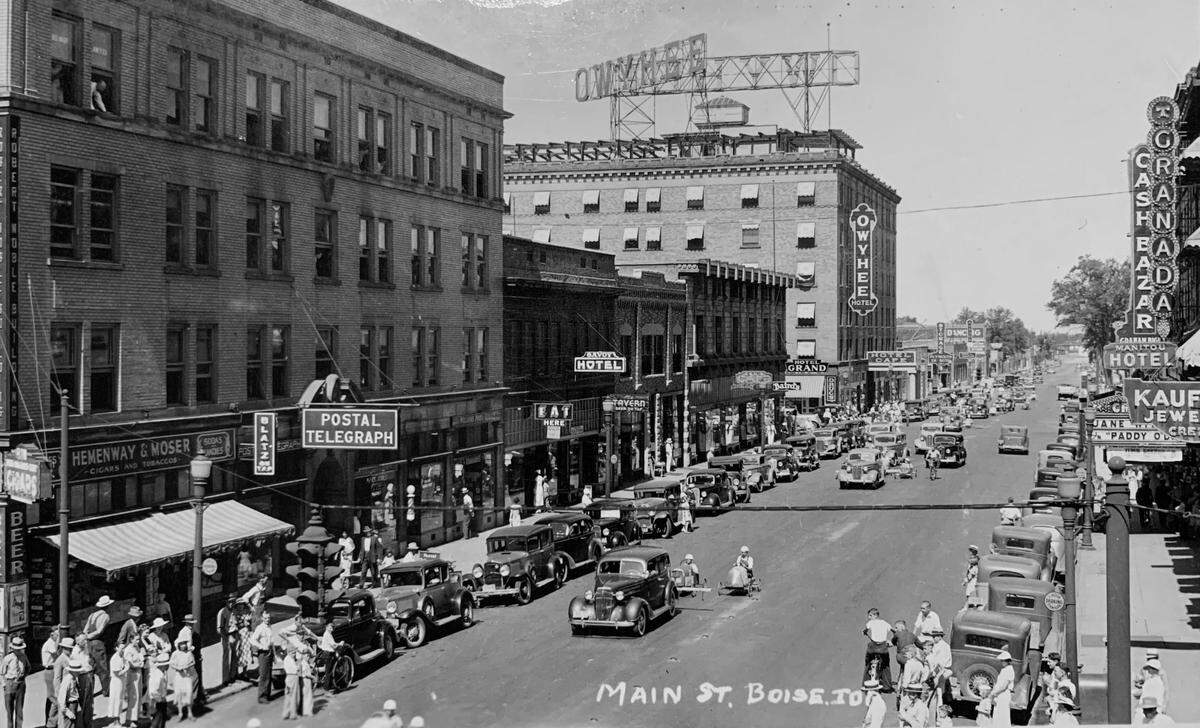
Much like other Western cities, Boise was a boomtown in the late 1800s and matured in the early 1900s with stately buildings like the Hoff Building, the Idanha Hotel and the Gem Building.
Unfortunately, Boise lost several historic buildings in the foolish rush of urban renewal that tore down some of Boise’s old buildings with the intent of propelling Boise into the future and turning downtown Boise into a large mall.
Fortunately, no one got to the Smith building, about halfway on the south side of Main Street between 11th and 10th streets.
For those buildings still standing, it was common practice in the 1950s through the 1970s to seal off the upper floors, Dan Everhart, outreach historian for the State Historic Preservation Office, said in a phone interview.
“I think the Smith Block is the last one of these where you’re sort of opening up Tut’s tomb on the second floor,” Everhart said. “It’s been sealed off and inaccessible for decades. And now, with the rebirth of downtown over the past 20-plus years, I think this is the last one. I can’t think of a single other building like this that has never seen a rehabilitation.”
The first floor has been remodeled and changed over the years, but the second floor is like a time capsule frozen in time.
“I think there is a sort of magic in those spaces that haven’t seen a lot of use — any use, housing, any use — for 50, 60 years,” Everhart said. “It’s pretty incredible.”
The reason it’s remained untouched suggests a more nefarious possible use for the building.
.jpg "Smith Block - 1912 close up smith building (with stairs).jpg")
House of ill repute?
Like Sam Spade, Stacey did some sleuthing and found an architectural drawing of the building from 1912 showing a staircase from the street entrance leading to the second floor. Early photos also show the staircase in the middle of the front entrance.
At some later point, the staircase was removed, leaving the only route into the second floor via a secret entrance to the rooms situated in a back passageway that came through the neighboring hotel, what was then the Hotel Grand on the west side and later became the Safari Inn.
Stacey’s not sure, but he and local historian Mark Iverson, founder of idahistory.com, speculate the second floor may have been used as a brothel.
“If it was a brothel, it was very well-managed because they never got caught, at least from what I could find,” Iverson said in an interview. “But it fits the M.O. It’s definitely a candidate for it.”
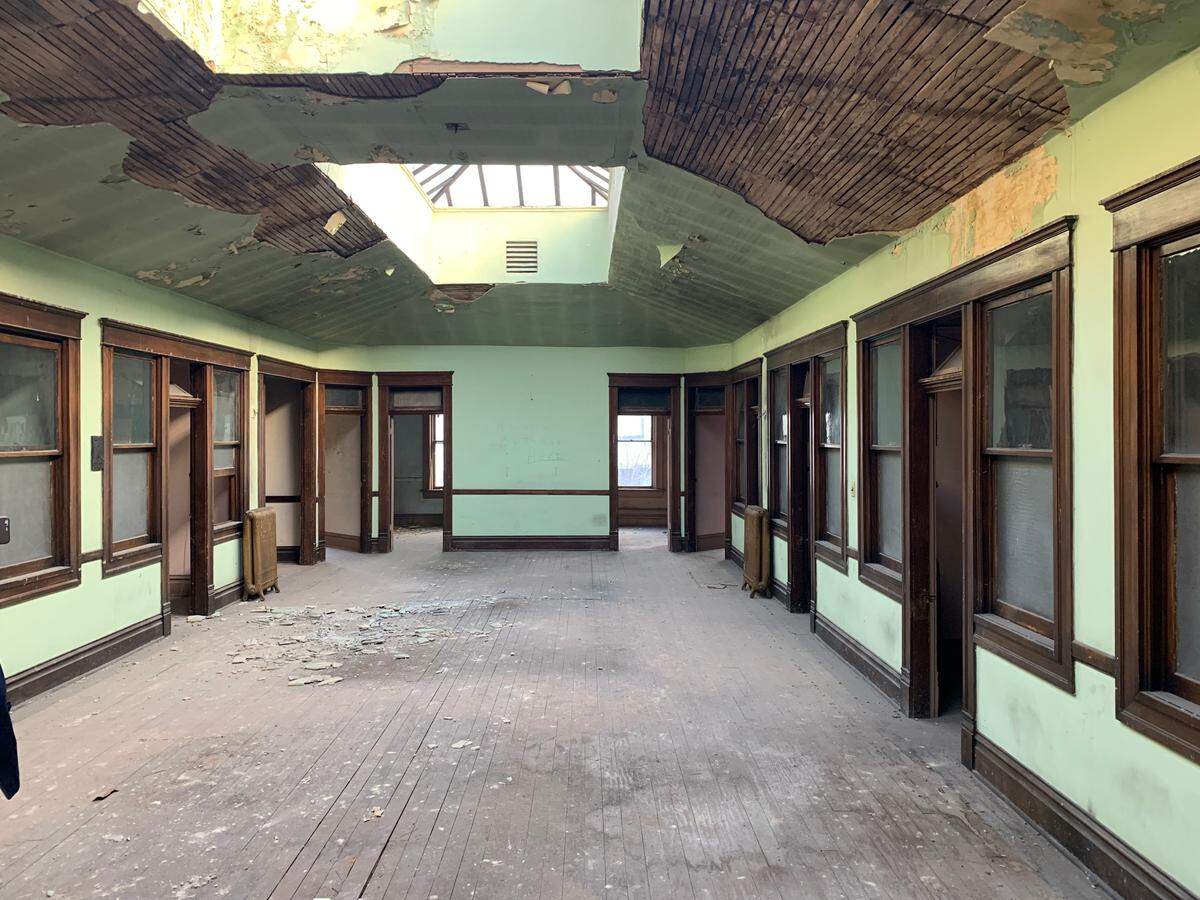
The 3,700-square-foot second floor is open in the middle, with a series of small rooms lining three walls. An early Polk Directory listing for the address listed it as the Nevada House, ostensibly a boarding house.
But as Iverson points out, that sounds like a great name for a brothel, especially back in those days. Another listing calls it the “Boise Lodging House.”
Iverson cited the numerous other “houses of ill-repute” in the area at the time — including the Hotel Manitou across the street — and the fact that at one point, the manager of the boarding house, Lizzie Wilkins, was cited by the health inspector for “public nuisance,” and her own husband in divorce proceedings accused her of infidelity and being a woman of ill repute.
Coupled with the secret back entry through the Hotel Grand — also rumored to be used as a brothel, according to Iverson — and the closed-off main stairway, there’s more than enough evidence for speculation.
Each of the rooms, about 12-by-15 feet, just enough for a bed and maybe a dresser, contains a sink, just like one you’d see in an old movie of a flophouse.
Stacey speculates that when prostitution became more taboo in the 1920s, along with Prohibition, that’s when the stairs were removed, giving police no way to get upstairs — unless they knew about the secret passageway next door.
“All over that whole area, there are rumors of prostitution,” Iverson said.
Iverson found evidence that vigilante groups would break up brothels in the Boise business district because police wouldn’t.
“Vice is part and parcel of the history of this town,” Iverson said.
Plans for renovation
Whatever the building’s past, Stacey has great plans for the building’s future.
First, he’s going to restore the facade to its original condition, including recreating a central door and staircase leading to the second floor. The central door will be flanked by two more doors into the first floor, which he plans to turn into a bar, The Cub Tavern, complete with a vintage neon sign salvaged from a former downtown Boise bar that was situated where Bar Gernika is today.
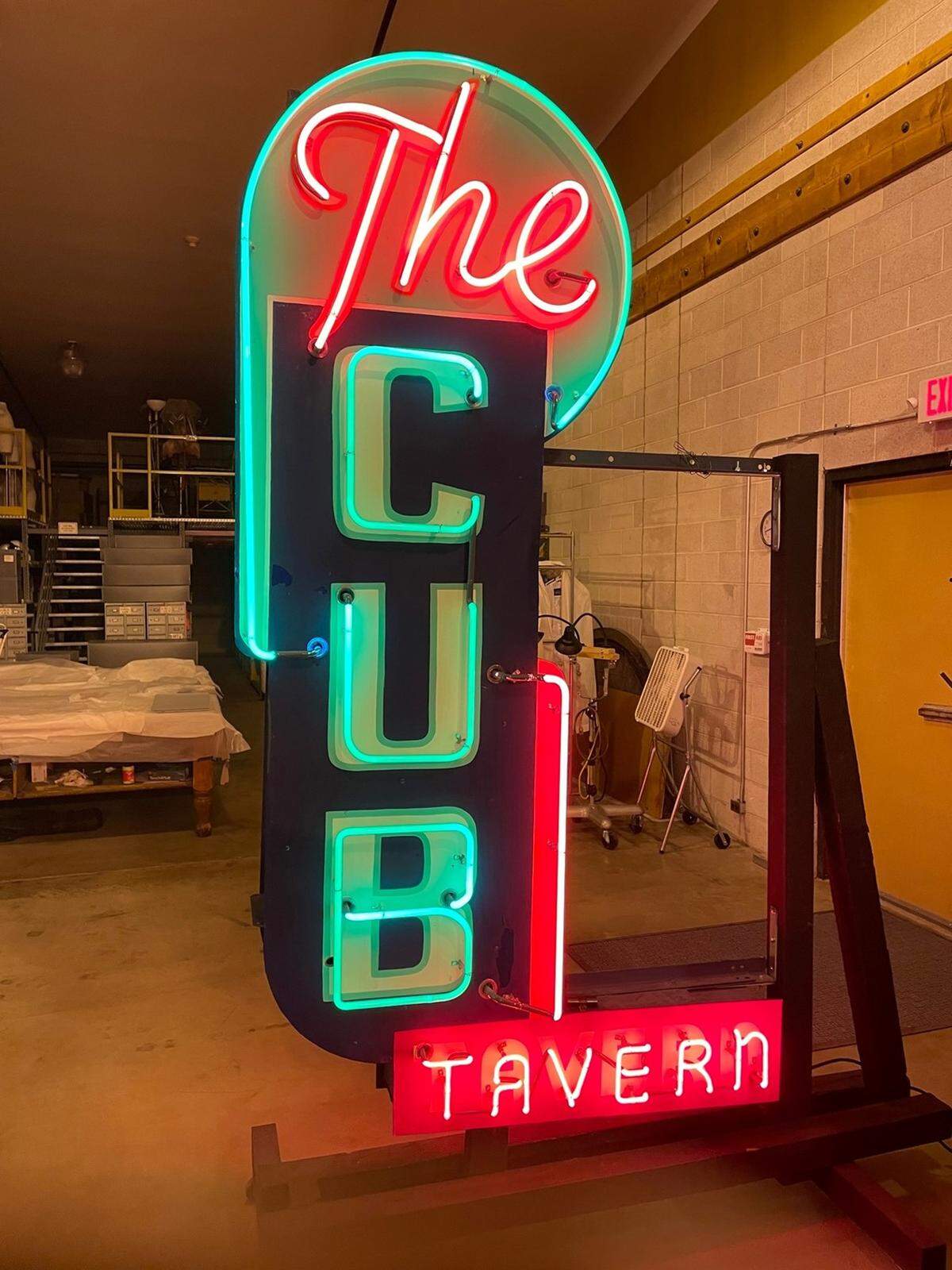
The neon sign was rehabbed by Vangie Osborn, a local resident who’s working on a “Signs of Our Times” project, collecting and refurbishing old Boise signs. She’s agreed to lease the sign to Stacey so that it can be appreciated once again.
Stacey is applying for a “facade easement” with the city of Boise, which would make him eligible for reimbursement from the Capital City Development Corp., Boise’s urban renewal agency.
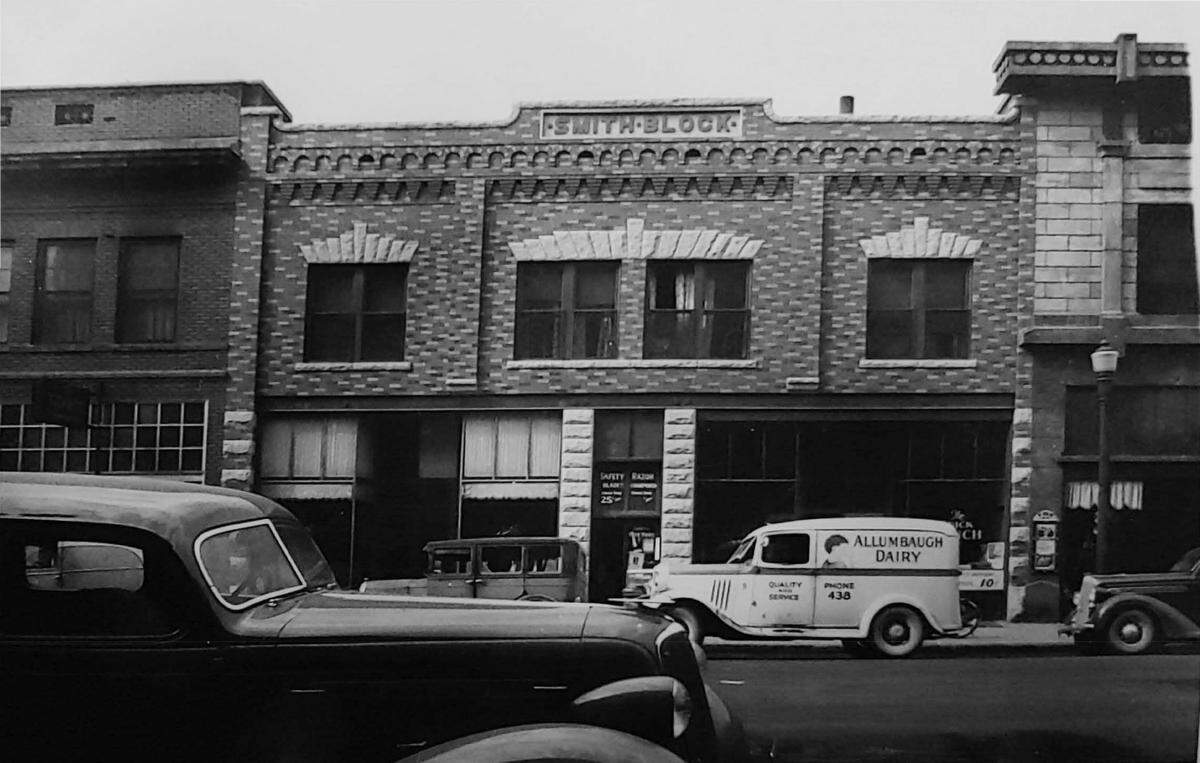
Using early photos of the building, he will recreate the front to look just as it looked when it was built in 1905.
“The detail that they used to do in these buildings is what I think is so neat,” Stacey said. “When you look at that brickwork up there, the sandstone, just the Smith Block (sign) and the eyes on the windows. Just really neat. They used to put in so much detail.”
The easement means no one will be able to change it in the future, and in return, he’ll be eligible for reimbursement for the cost of the facade work. He’s applying for up to $200,000 for the facade improvements.
“To me, it’s huge,” he said. “I mean to get it done, I don’t know that I could financially get it done without that assistance from CCDC and the city.”
He plans to work on the facade and first floor starting Jan. 1 and get the Cub Tavern up and running as soon as he can, about “a year-plus,” he estimated.
“Then within a year or so after that, I will get up here to the second floor,” Stacey said.
The Art Source gallery is moving to a new location at 1516 W. Grove St.
Second floor
The second floor is a magnificent space, with dark wood trim, original weight-and-pulley windows and an arched ceiling rising up 15-16 feet to two massive skylights.
Each skylight is about 19 feet long and 9 feet wide and peaked in the middle. Stacey doesn’t think he’s going to be able to salvage them, because the metal and glass are too badly deteriorated. But he plans on recreating them, casting natural light into the whole space.
Stacey said he will keep the second-floor design and many of the features as they were in 1905.
He’s envisioning it as an office for some lucky business or maybe several small individual businesses. He said he’s already received expressions of interest in the space, but it won’t be ready for tenants anytime soon.
He’ll keep the individual rooms, except for the rooms in the front of the building, where he plans to tear out a couple of interior walls and turn them into a conference room, with windows looking out onto Main Street.
A restored central staircase from the street will lead right up into the middle of the space to a reception desk, where the visitor will be directed to any of the offices lining the walls.
Stacey said he’ll try to salvage as much plaster and lath on the interior of the central area as he can, but to put in heating, ventilation and air conditioning and new electrical wiring, he plans to tear out the plaster and lath in the individual rooms and on the arched ceiling.
He’s also going to keep the old radiators for aesthetic purposes.
Safari Inn
Stacey bought the Smith Block building in 2020 from Revolve Development, of Seattle, which had bought it along with the adjacent Safari Inn.
Revolve wanted only to develop the Main Street side of Safari Inn, which it closed and turned into apartments, now called B Side.
Revolve wasn’t interested in the Smith Block, so Stacey purchased it from Revolve two years ago.
Right up until Revolve developed B Side, the secret back passageway remained. You can still see the stairs leading up to the now-bricked-over doorway.
Who’s Smith?
The words “Smith Block” are etched in stone at the top of the building. You can barely see the words from the sidewalk.
According to a nomination form for the building to be listed on the National Register of Historic Places, Roscoe Smith had the Smith Block building built in 1905.
Roscoe Smith’s father, Dr. Ephraim Smith, was Boise’s first territorial mayor in the 1860s, and the site encompassing the building was where some of Boise’s first structures were located. Ephraim Smith operated a drug store and opened a private hospital in Boise, according to the city of Boise. He was killed in a streetcar accident in 1891 in Toledo, Ohio.
Iverson said he was able to locate a Smith building, an early wooden structure at that site in 1901. It had been used as a polling location.
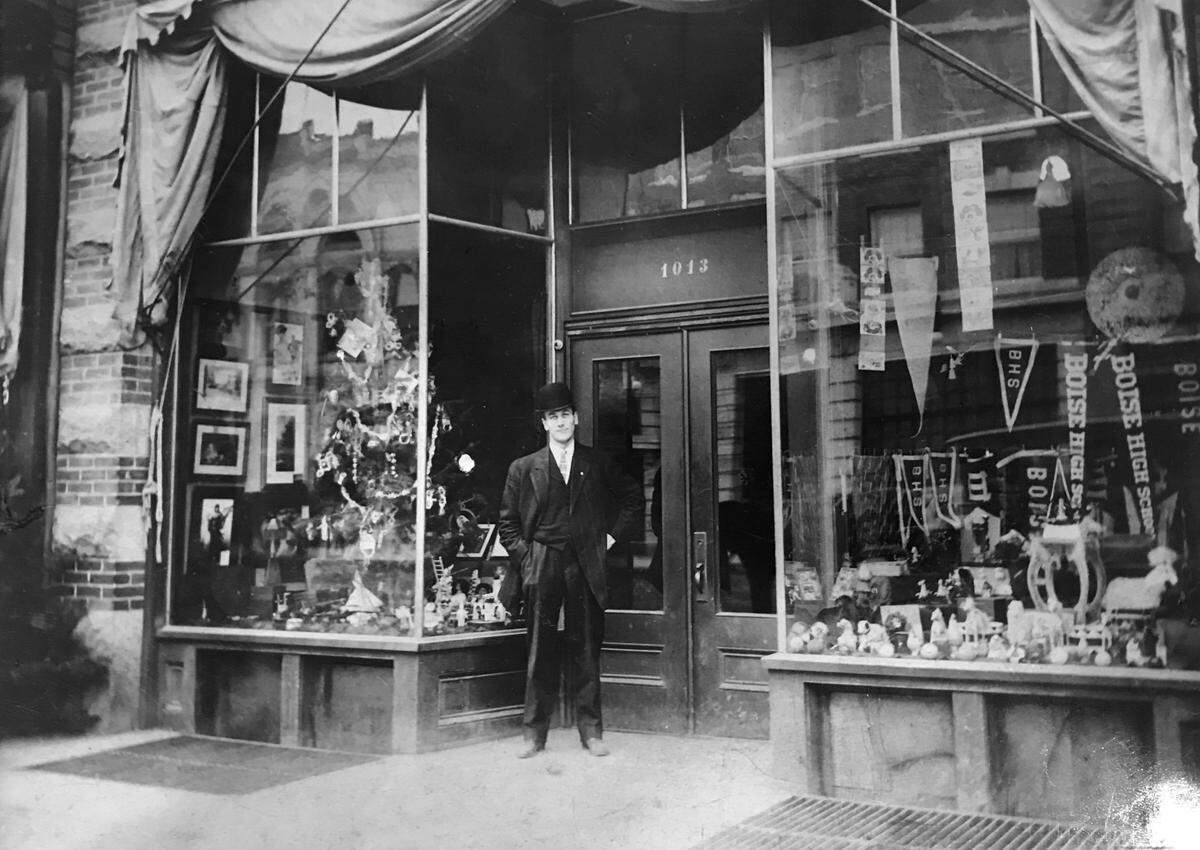
Over the years, the first floor of the Smith Block building was a general goods store, an Asian goods store, a hardware store, a paint store, a barber shop, a tailor’s shop and an art supply store, according to Iverson.
Throwback
This stretch of Main Street is a throwback to Boise history, with the Belmont Barber Shop on the corner, the Idanha down the street, the Gem Building across the street. The Averyl Tiner Building, which has a painted “Hotel Manitou” billboard on its side, is being redeveloped across the street into The Avery Hotel and restaurant. Right next to that is the historic Alaska Building, also built in 1905.
“That’s why I love this block,” Stacey said. “This block to me is the only other block, other than Sixth and Main, in Boise that still has old historical buildings.”
Iverson agreed that the block and surrounding area is unique.
“That whole business district is a concentration of cohesive design that got built all around that same time period,” Iverson said. “You can really see what was all the rage in that area in that period of time.”
Iverson applauds Stacey for preserving this piece of history.
“It reflects the notion that preserving history can be good business,” he said. “People go to these historic places, and it’s a very unique experience, to have these experiences in a historic building. … This space is just an incredible time capsule that’s been closed up for so long.”
Everhart noted that Stacey isn’t required to preserve the building at all, so for him to make this investment in preserving a slice of Boise history is commendable.
“In the preservation community we get so used to begging for the crumbs,” Everhart said. “So it’s an interesting position to find yourself in where the owner of a historic property is not just willing to preserve the shell of the building, but preserve the interior features and even the dust that gives that space its patina. It’s so unusual that I think we find ourselves a little bit surprised that we’re going to see this great renovation but also a continuation of that history.”