Should college students vote in Idaho? One legislator thinks it’s not a good idea | Opinion
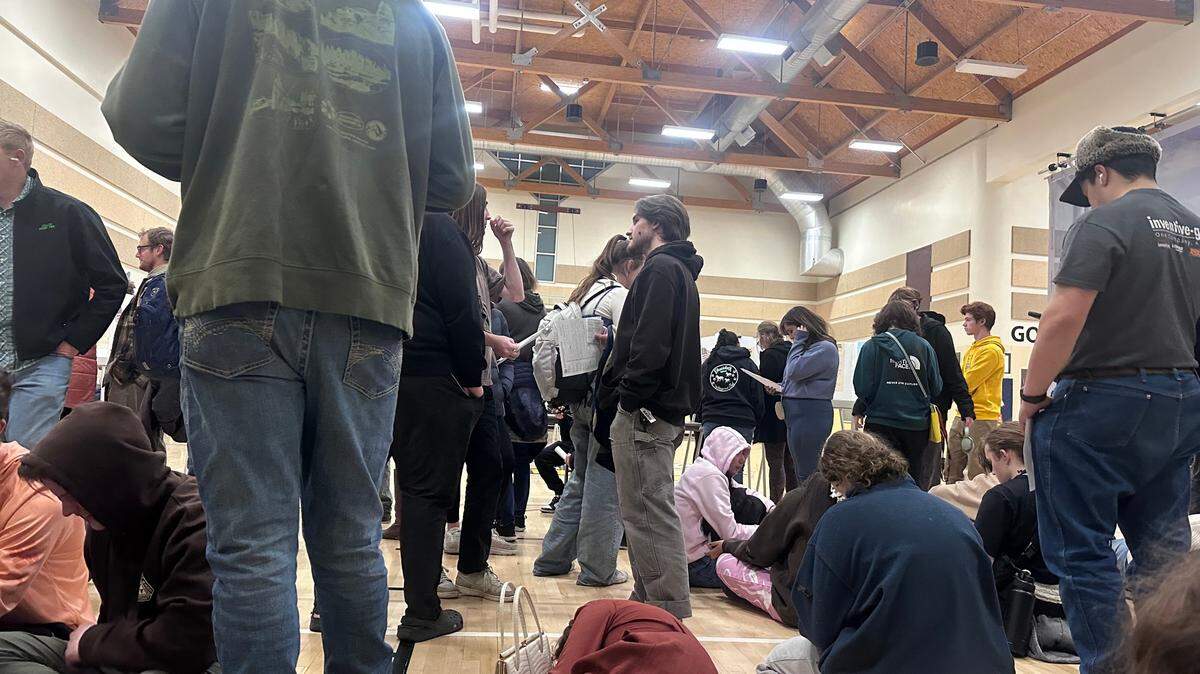
This was Andrea Lael’s first year voting.
For the 18-year-old first-year University of Idaho student from California, it was a memorable experience – but not all for good reasons.
Lael waited in line for five to six hours — until midnight — to register and vote at her polling place, the University of Idaho Student Recreation Center.
“I mean, I know some people that stayed for like eight hours, nine hours,” Lael told me in a phone interview. “I mean, it was really bad. Some people even missed their classes, their appointments, like, doctors appointments.”
Kelby Huyhn, also 18 and also trying to vote in his first election, didn’t have the luxury of staying in line for five or six hours.
He showed up at the same polling place at 5 p.m. and went to vote, but he had registered to vote in Ada County, where he’s from. Elections officials said he could re-register in Latah County and vote. But then he saw the line of 100 or more students waiting to register. He had a lab to get to at 7 p.m., so he left, without voting.
Luke Weaver, 21, a University of Idaho graduate student from Boise, was in the same line earlier in the day and saw many people give up.
“I watched some people leave the line because they just had other obligations, like classes or whatever,” Weaver told me in a phone interview.
Their experience illustrates the difficulty that some students have when they try to vote.
Most of us take for granted how easy it is to vote, especially when we’ve had the same address for years, have been registered to vote for as long, have an Idaho drivers license and have multiple forms of proof of residency, such as mailed bank statements or utility bills.
But registering and voting can prove to be a time-consuming challenge for young people, particularly college students, who move around a lot, may be going to school in another state than where they’re from or don’t have mail that establishes their residency.
The Big Lie
Add on top of that, ever since Donald Trump fooled half of America into believing that the 2020 presidential election was stolen and that the U.S. election system is rigged, the Idaho Legislature has passed new laws that eliminated student IDs and out-of-state licenses as acceptable forms of identification and put new restrictions on registering to vote.
“And it’s all in service to a lie,” Kendal Schaber of the Idaho chapter of the League of Women Voters, told me in a phone interview. She’s concerned about young people voting, but what she saw more acutely this election were senior citizens not being able to vote, either because they no longer had drivers licenses or had moved into an assisted living facility with a new address. Re-registering to vote was “a nightmare” under the new laws, she said. But I’ll save that for another column.
In the meantime, the attitude behind attempts to disenfranchise young voters was on full display this week during a legislative preview livestream hosted by the Idaho Statesman.
Rep. Brent Crane, R-Nampa, said Tuesday that he personally doesn’t think it’s a good idea for Idaho college students to “elect leaders that I’ve got to live with for the next two years.”
“I want people that have a vested interest, that are living here,” Crane said, as if college students aren’t “living here.” “People that have put down roots here, people that are paying property taxes, people that are paying income taxes, people that have a vested interest in the state of Idaho, not kids that are blipping in, blipping out. ‘Oh, hey, they got a new football coach, so I’m transferring, I’m going somewhere else.’ Those kids casting votes, I don’t think it’s who you want deciding elections.”
That kind of attitude clearly illustrates why legislators like Crane earn the label “extremist.”
Suggesting that only landowners can vote is extreme. Saying it’s “not a good thing” for college students to vote is extreme.
By the way, the first time I called Luke Weaver to interview him for this column, I had to leave a voicemail because he was unavailable. He was working, earning a wage and contributing to the income tax base.
And as I’ve pointed out before, Idaho legislators make many decisions that affect college students (usually negatively). Take, for example, the debate going on right now about diversity, equity and inclusion programs at Idaho’s universities.
Students should have an opportunity to vote in those elections without unnecessary and undue burdens and obstacles.
Granted, the situation with the University of Idaho students on Nov. 5 was a unique situation. The polling location there drew more new voters than the county was prepared for, Latah County Auditor Julie Fry told the Moscow-Pullman Daily News.
Fry told the Daily News that the Student Recreation Center polling location had 1,077 new voters that day, compared with just 455 total voters in the 2020 general election.
“We were just really completely overwhelmed at the (Student Recreation Center),” Fry told the Daily News.
But students elsewhere had trouble voting, and it was directly related to the new laws passed by legislators.
Hundreds of students at BYU-Idaho in Rexburg reported being turned away at the polls, according to East Idaho News.
One student, Aubrey Slade, brought a North Dakota driver’s license, proof of residency and a student ID, but she was turned away.
“I was pretty bummed,” Slade told East Idaho News. “This was the first presidential election I’d be able to vote in, and I was very excited for it.”
At the University of Idaho, Weaver said he went in the morning and still waited about three hours to vote.
He had registered at the Latah County Courthouse a month before the election, knowing that there might be some confusion surrounding the new state laws.
Even then, there was still confusion when he went to vote: The address on his Idaho drivers license from Ada County didn’t match his proof of local residency in Latah County, and he was initially told he couldn’t vote there. Once they talked to an elections supervisor, though, they cleared up the confusion, and Weaver was able to vote.
But he wondered how many students before him were turned away because of that misunderstanding.
“I’m pretty frustrated because this feels like it was a disproportionately student problem, and it feels like it would discourage a lot of people from voting in the future,” Weaver said.
Voting trends going backwards
We should be encouraging young people to vote, not making it more difficult.
Unfortunately, we’re going backwards right now.
Between 2018 and 2022, Idaho experienced a 66% increase in registered 18- and 19-year-old voters.
But between November 2020 and September 2024, Idaho experienced a 23% decrease in registered 18- and 19-year-old voters, according to a new study from Tufts University.
Nationally, the numbers are going in the wrong direction, as well.
Approximately 42% of young voters (ages 18-29) participated in the 2024 election, according to the Tufts study. This is a decrease from the 2020 election, where youth turnout was estimated to be over 50%.
In all, young voters (ages 18-29) cast 14% of all ballots in the 2024 election. This is lower than the 17% in 2020 and 19% in 2016.
Compare this with turnout of other age groups: 60-70% for voters age 45-64 and over 70% for voters 65 and older.
‘Sacred right’
Crane’s comments Tuesday also demonstrate a fundamental misunderstanding of the laws he passed.
“You know what? In order to get on an airplane, you’ve got to have a valid ID and to go into the voters booth and to exercise this sacred right, you should have to have a valid ID,” Crane said.
But you can get on a plane with a drivers license from California, Washington or Nebraska — but under Idaho’s new law, you can no longer vote in Idaho with a valid drivers license from another state, which affects college students, like Lael, who are from another state. (She used her passport to register, but not everyone has their passport handy or even has a passport.)
Oddly, Crane repeated that voting is “a sacred right. It’s a fundamental right.”
“Let’s not forget that men and women have died, shed their blood for us to have the right to vote,” Crane said.
So why is he passing more laws that make it even more difficult for legal, legitimate citizens to exercise that right? Particularly laws that disenfranchise younger voters and college students? Is it not also a sacred right, a fundamental right of a college student?
Or is keeping young people from voting the whole point?
We also have to think about the message we’re sending young voters.
I tell my own sons that people like Crane are laughing at young people who don’t vote. They’ll pass whatever laws they want and will trample all over your rights, knowing that you won’t show up at the polls to vote them out of office.
So my hat’s off to those students who were able to vote and to those like Lael and Weaver who showed tremendous resilience to stand in line for hours just to exercise their “sacred and fundamental” right to vote.
“I feel like if you have the opportunity to vote and you don’t take it,” Weaver said, “it feels like you forfeit a lot of your right to complain about what happens afterwards.”