
Idaho Board of Education bans DEI programs based on a flawed definition | Opinion
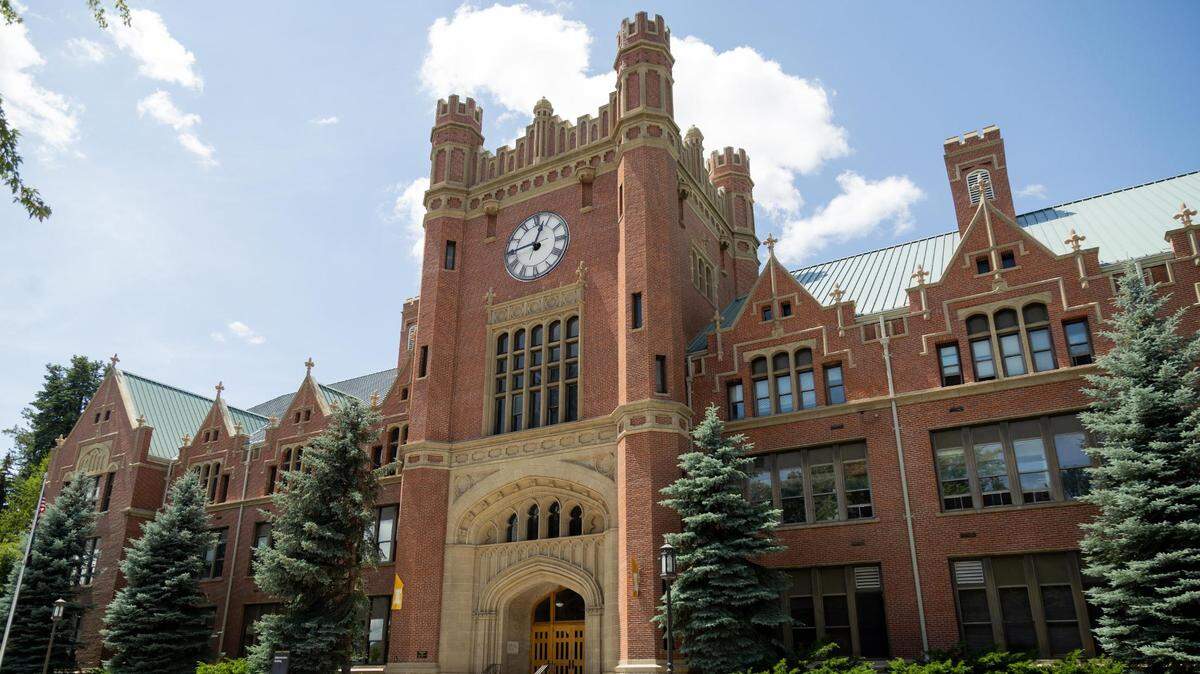
The Idaho State Board of Education on Wednesday approved a resolution eliminating all offices and programs related to diversity, equity and inclusion efforts, otherwise known as DEI.
This is apparently a preemptive measure in response to a hostile, Republican-dominated state Legislature that briefly considered a bill prohibiting funding for any DEI offices, officers or programs.
According to a press release from the State Board of Education, the resolution that was passed Wednesday has been “revised based on input received from students, institutional leaders, faculty, staff, and the general public since the Board first considered the resolutions in November.”
We’re not sure what input the board received or from whom, but the very foundation of the board’s resolution is deeply flawed.
The resolution includes an inaccurate definition for “DEI ideology.”
According to the resolution, DEI ideology is any “approach that prioritizes ‘personal identity characteristics’ (race, color, sex, sexual orientation, national origin, religion, or gender identity) over individual merit.”
That’s not at all what DEI is, but that’s what DEI opponents erroneously think it is. And that’s the tell: Any time DEI opponents see a woman or a person of color in a position of power, they automatically think it’s because of DEI, or that they’re a “diversity hire.”
This is a misguided resolution based on a flawed premise.
DEI does not prioritize personal identity characteristics over individual merit. DEI does the opposite: It seeks to ensure that personal identity characteristics are not used against someone over their individual merit.
Unfortunately, Idaho’s universities are already taking action based on fears of what the Legislature might do.
Idaho State University last month announced it was restructuring the Office of Equity and Inclusion and renaming it to the Office of Equal Opportunity and Title IX. Programs from the Diversity Resource Center and the Gender Resource Center are set to be “integrated into broader student support services,” according to the university.
Boise State University last week announced it had closed the Gender Equity and Student Equity centers.
“We want to acknowledge that the staff members who have worked in these centers over the last few decades have impacted the lives of thousands of students — helping them to achieve graduation and their academic and personal goals — and provided key development opportunities to our staff, faculty, and extended community,” according to the university in announcing the closure.
So if the centers were such a success, why close them?
To document the impact of the centers, Boise State University is organizing a “celebration” in the spring.
Maybe don’t call it a celebration; a “wake” might be a more appropriate term.
The University of Idaho hasn’t closed the Women’s Center, its Office of Multicultural Affairs, LGBTQIA+ Center and the Black/African American Cultural Center, according to university spokesperson Jodi Walker, but is awaiting guidance from the State Board of Education.
It’s disappointing that these university leaders and the State Board of Education are giving in so easily and quickly, rather than defending the value of DEI efforts in Idaho.
Without these centers and without these efforts, DEI might as well stand for division, exclusion and isolation.
This story was originally published December 18, 2024 at 4:00 AM.