
Endorsement: Four-way race for Boise City Council in West Bench. Here’s our pick | Opinion
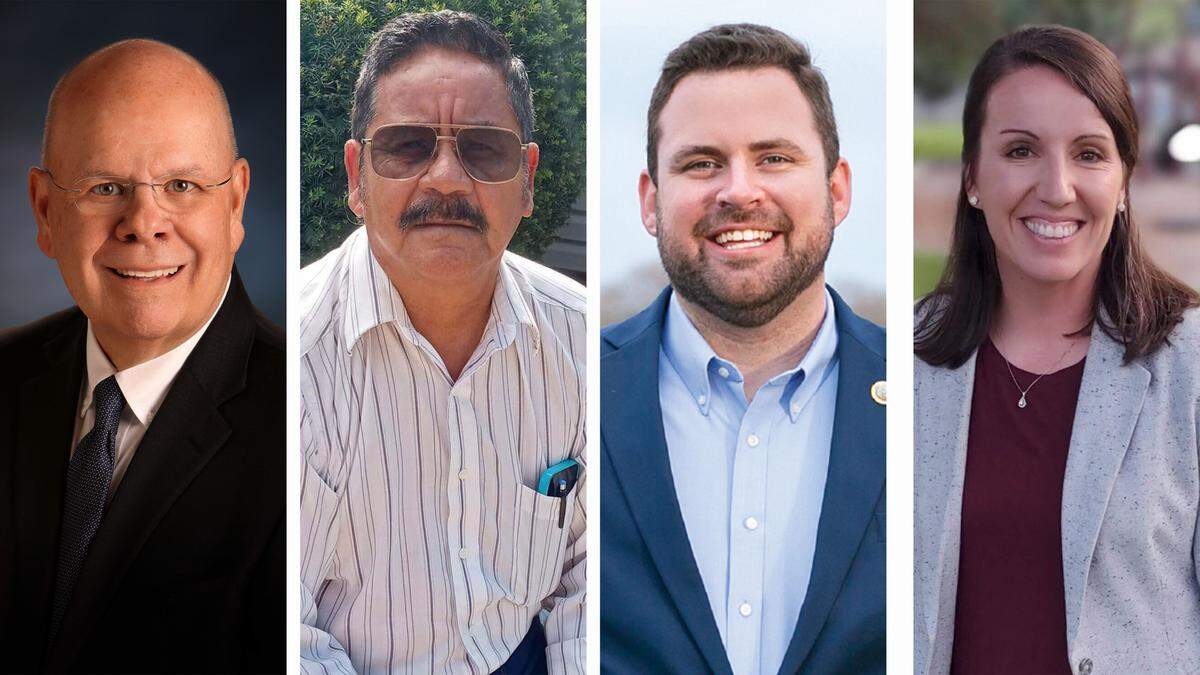
Colin Nash is the best candidate to represent constituents in District 2 on the Boise City Council.
Nash, a lawyer who was appointed to the seat this year by Mayor Lauren McLean, is level-headed, smart, thoughtful and has experience in the state Legislature and on City Council.
The Idaho Statesman editorial board endorses Nash in this race.
Nash is running against Grant Burgoyne, a lawyer and longtime state legislator; Hillary Smith, a lawyer and newcomer to politics; and Jesse Gonzales, who is retired.
Gonzales did not respond to our invitations to interview with the editorial board, although he confirmed he received them, and he did not attend our scheduled interview.
Smith is a political newcomer who wants to add 60 firefighters in the city to help to reduce homeowner insurance rates. This is a good idea that should be explored.
But beyond that, Smith offers more criticisms, mainly of McLean, than solutions.
Burgoyne presents the most viable alternative to Nash.
Burgoyne is an eloquent speaker and familiar with the issues. As a Democratic state legislator, Burgoyne’s often thorough and detailed speeches opposing bad legislation make the Republican supermajority earn their bills. That skill, however, would not translate well to the City Council, which needs to be more collaborative, and we fear council meetings could double in length with Burgoyne on the council.
Burgoyne and Nash’s styles couldn’t be more different.
Burgoyne is long-winded, while Nash is concise and quiet. Nash presents a humble demeanor, while Burgoyne shows extreme confidence, bordering on arrogance.
Burgoyne touts his record as a state legislator, which is impressive.
But Nash, in his short tenure in the Legislature, has brought and passed meaningful legislation, as well.
For example, Nash this year brought a bill that gives private property owners the right to have accessory dwelling units on owner-occupied residential property. The bill passed 56-13 in the House and 32-3 in the Senate.
We agree with Burgoyne on many issues, especially his criticism of how the mayor and the council handled a contract with Steptoe and Johnson, the Washington, D.C., law firm hired to investigate racism in the Boise Police Department. Expectations for what the city would receive for $500,000 were unclear and, in the end, woefully inadequate. Further, when Steptoe and Johnson went over its allotted “not to exceed” amount of $500,000, the council approved another $170,000 without much pushback or deliberation. We would expect Burgoyne to be a strong stopgap to mayoral decisions and not a rubber stamp.
Nash was not on the council when the original contract was approved, but he was on the council when the additional payment to Steptoe was approved. We give Nash the benefit of the doubt, as he was relatively new to the council, but moving forward, we encourage Nash to be more of a firewall and less of a rubber stamp for decisions made by the mayor.
On that point, Nash said he was the only council member to vote initially against a conditional use permit on a proposal to redevelop an assisted living facility into townhomes. Nash later voted in favor of a conditional use permit that imposed restrictions on the developer and provided protections for residents of the assisted living facility. The developer did eventually withdraw the application.
There are other issues on which we disagree with Burgoyne, namely his positions on the Boise zoning code rewrite and his misleading warnings about seven-story buildings in residential neighborhoods. Burgoyne has already passed judgment on the rewrite as not providing affordable housing when the ink is barely dried on the rewrite.
Nash recognizes there is no silver bullet in affordable housing, but it includes the changes that were made in the zoning code rewrite, as well as providing incentives to developers to “buy down rent,” as he puts it.
Nash also demonstrates a deeper understanding of the issues around public safety. He supports working with an amenable commission on the Ada County Highway District to promote bike and pedestrian pathways. He also points out that Boise has increased funding for the Police Department by 10% and hired 100 officers over the past four years. He recognizes the challenge of sergeants being reluctant to apply for lieutenant positions because pay doesn’t increase commensurately. He’s advocated for increasing lieutenant salaries.
Nash also recognizes the importance of parks and a library branch to his constituents in West Boise.
Nash will serve his constituents well, and as he gains experience, we expect him to be a strong, independent voice on the council.
This story was originally published November 1, 2023 at 4:00 AM.
CORRECTION: This editorial has been updated to clarify Nash’s position on the proposal to redevelop an assisted living facility into townhomes.
BEHIND THE STORY
MOREHow we write endorsements
Who decides the endorsements?
Members of Idaho Statesman editorial board interview political candidates, as well as advocates and opponents of ballot measures. The editorial board is composed of journalists and community members. Members of the Statesman editorial board are: Statesman editor Chadd Cripe, opinion editor Scott McIntosh, opinion writer Bryan Clark, assistant editor Jim Keyser and community members John Hess, Debbie McCormick and Julie Yamamoto.
What does the endorsement process entail?
The Statesman editorial board meets with political candidates and asks them a series of questions about policy issues. The editorial board discusses the candidates in each race. Board members seek to reach a consensus on the endorsements, but not every decision is unanimous. The editorial board generally will not endorse a candidate who does not agree to an interview with the board members.
Is the editorial board partisan?
No. In making endorsements, members of the editorial board consider which candidates are well-prepared to represent their constituents — not whether they belong to a particular political party. We evaluate candidates’ relevant experience, their readiness for office, their depth of knowledge of key issues and their understanding of public policy. We’re seeking candidates who are thoughtful and who offer more than just party-line talking points. The editorial board will endorse both Republicans and Democrats. We make recommendations about who the best-qualified candidates for these jobs are.
Why are endorsements unsigned?
Endorsements reflect the collective views of the Statesman’s editorial board — not just the opinion of one writer. Board members all discuss and contribute ideas to each endorsement editorial.
Do I have to vote for the candidate the Statesman endorses?
Of course not. An endorsement is just our recommendation based on the candidates’ backgrounds and their answers to editorial board questions.
Can I disagree with the Statesman’s endorsement?
Of course you can. We encourage voters to do their own research and choose the candidate who best represents your views.
Want your say?
Readers are encouraged to express their thoughts by submitting a letter to the editor. Click on “Submit a letter or opinion” at idahostatesman.com/opinion.
Want more opinions each week?
Subscribe to The Idaho Way weekly email newsletter, a collection of editorials, columns, guest opinions and letters to the editor from the Opinion section of the Idaho Statesman each week. You can sign up for The Idaho Way here.