
Masterson or McLean? Endorsement: Here’s our pick in the Boise mayoral race | Opinion
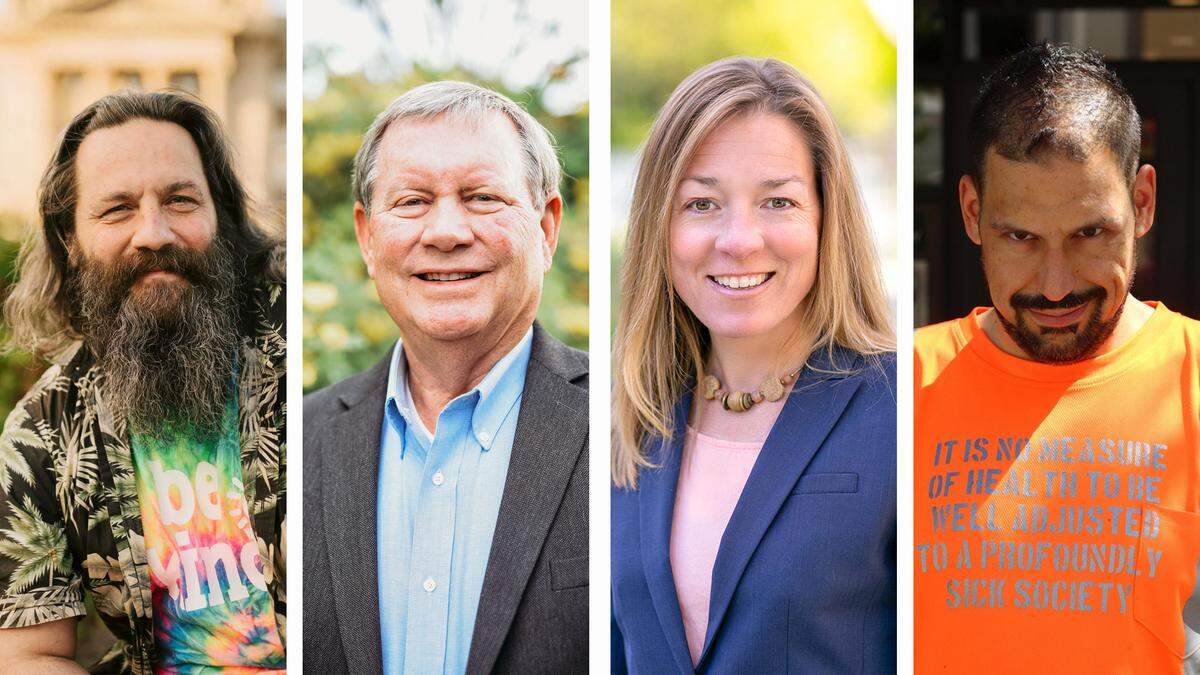
Whether to endorse Boise Mayor Lauren McLean for a second term has been a difficult decision for the Idaho Statesman editorial board, whose individual members over the past several weeks have vacillated between McLean and her strongest challenger, former Boise Police Chief Mike Masterson.
Also challenging McLean are Joe Evans and Aaron Reis. Evans brings fresh perspectives to the table on a variety of issues. Reis says he is campaigning in order to spread a message, not seeking to be elected.
This race really is between McLean and Masterson.
Our endorsement in this race is not resounding nor is it unanimous.
Despite our misgivings about McLean’s performance and obvious signs of poor management, we support the policies she champions and acknowledge the successes she’s had.
Because of those policies and successes, the Idaho Statesman endorses McLean for a second term as mayor.
McLean’s first term admittedly has been hampered by the onset of the COVID-19 pandemic, making administration difficult.
She has had noted successes, such as a rewrite of the city’s zoning code, which this board supports; increasing the stock of affordable housing through incentives and policies she championed; ushering the city through the pandemic; strengthening the Housing Land Trust; being the only city in Idaho to implement a targeted property tax rebate program for those most in need; presenting budgets that don’t take the full 3% property tax increase; successfully lobbying for the federal CHIPS Act — even when our own federal delegation wouldn’t — and working with other economic development agencies and the state to ensure Micron will locate a manufacturing facility in Boise.
But McLean’s supporters should be clear-eyed about her shortcomings.
Boise mayor’s missteps
McLean’s tenure as mayor has been beset by management missteps of her own doing.
Complaints against former Police Chief Ryan Lee were handled poorly and secretively. Her firing of Lee was also handled poorly, as was her handling of the situation with Office of Police Accountability director Jesus Jara, who was hired and fired under her watch and is now suing the city.
Despite promises of a nationwide search and public process to hire the next police chief, interim chief Ron Winegar was named police chief without a search or public process, two years after he was passed over for the position.
McLean badly bungled a contract with the law firm Steptoe and Johnson to investigate potential racism in the police department.
Turnover in city employment has been too high, particularly among director-level positions.
City officials on several occasions have violated state public records law, and the practice continues today, despite several attempts by the Idaho Statesman to resolve these issues in good faith.
McLean said she meets with department heads only on a quarterly basis. McLean is the mayor; she needs to be more active in the day-to-day operations of the city and not delegate so much to her chief of staff. We’re voting on a mayor, not a chief of staff.
Masterson’s campaign
Our board has been mostly impressed with Masterson, particularly after our initial personal interview with him in August.
He rightly points out the issues with McLean’s poor performance as a manager.
He has shown that he is well aware of the issues within City Hall and says he’ll bring his “fiercely independent, moderate” mindset to bear on some of the problems we see playing out under McLean’s administration.
But his message and his critiques have strayed, and become negative and personal, perhaps because Masterson feels he needs to appeal to the right-wing conservatives who have taken him up as their savior from McLean, someone they see as a woke liberal trying to turn Boise into Portland or Seattle.
Masterson, in these waning days of the campaign, has turned to dog whistles, such as suggesting, without specifics, at the City Club of Boise forum that Boise was “taking a path to becoming a clone of other troubled cities.” He didn’t say “Portland” or “Seattle,” but he might as well have.
We agree with Masterson that the contract with Steptoe and Johnson, the Washington, D.C., law firm investigating whether racist attitudes espoused by retired police officer Matt Bryngelson infected the Boise Police Department, was poorly handled by McLean. However, Masterson has shifted his criticism of McLean, blaming her for throwing the department into turmoil and hurting morale. It wasn’t McLean who threw the department into turmoil; it was Bryngelson, an officer who was promoted while Masterson was police chief.
When faced with the shocking revelations that a 24-year employee of the police department, twice promoted, held extreme racist views, McLean did the right thing and called for an independent investigation. Hiring a law firm outside Idaho was justifiable to maintain objectivity; that point is debatable but still reasonable. Where McLean utterly failed was in setting the expectations for the agreed-upon price of $500,000 and then allowing Steptoe to go over that $500,000.
Masterson has plenty of room to criticize McLean there. Instead, he attacks her for “throwing the police department into turmoil.” The department did that itself.
Negative campaign ads
To his credit, Masterson has disavowed negative attack ads paid for by a group of wealthy developers. And he returned a campaign donation to an anti-LGBTQ supporter.
We are convinced that Masterson is not some sort of Republican Trojan horse sent to undo progressive policies in the city. Once called “the liberal from Madison, Wisconsin,” when he was hired from that city to be Boise’s police chief in 2005, Masterson testified in 2015 in uniform before the state Legislature in support of adding the words “sexual orientation” and “gender identity” to the Idaho Human Rights Act.
But during a televised debate on KTVB, Masterson mocked McLean for marching in the Boise Pride Parade as a campaign stunt, even though McLean has frequently marched in the parade. We agree with McLean that leaders, particularly in Idaho, need to send a clear message to the LGBTQ+ community that they are supported.
We are also concerned about some of Masterson’s policy positions, such as a desire to annex land south of Boise, an issue that is not as simple as mayoral fiat to make it happen — or stop it. He also stokes fears about the zoning code rewrite and talks about requiring parking minimums, which stymies new, high-density development.
Masterson also has been wrongly critical of McLean for the actions of a nonprofit, Interfaith Sanctuary, in its selection of a new location for a homeless shelter on State Street, as if the mayor were responsible for the selection and application. Instead of offering solutions, Masterson deflects by pointing to another project by Boise Rescue Mission to build transitional housing in another location in the city.
While McLean deserves criticism in several areas, Masterson misses the mark by attacking her in areas where she doesn’t.
Masterson also has shown a tendency to level accusations not backed up by facts, such as a claim that McLean used Foothills levy money as a “slush fund for other projects,” a serious accusation that’s wholly inaccurate.
In general, Masterson’s campaign has taken on a more negative tone, which didn’t work for then-Mayor Dave Bieter four years ago.
McLean has said repeatedly during the campaign that she has learned lessons over the past four years.
If reelected, we expect McLean to correct the problems she’s had.
This story was originally published October 31, 2023 at 12:00 AM.
BEHIND THE STORY
MOREHow we write endorsements
Who decides the endorsements?
Members of Idaho Statesman editorial board interview political candidates, as well as advocates and opponents of ballot measures. The editorial board is composed of journalists and community members. Members of the Statesman editorial board are: Statesman editor Chadd Cripe, opinion editor Scott McIntosh, opinion writer Bryan Clark, assistant editor Jim Keyser and community members John Hess, Debbie McCormick and Julie Yamamoto.
What does the endorsement process entail?
The Statesman editorial board meets with political candidates and asks them a series of questions about policy issues. The editorial board discusses the candidates in each race. Board members seek to reach a consensus on the endorsements, but not every decision is unanimous. The editorial board generally will not endorse a candidate who does not agree to an interview with the board members.
Is the editorial board partisan?
No. In making endorsements, members of the editorial board consider which candidates are well-prepared to represent their constituents — not whether they belong to a particular political party. We evaluate candidates’ relevant experience, their readiness for office, their depth of knowledge of key issues and their understanding of public policy. We’re seeking candidates who are thoughtful and who offer more than just party-line talking points. The editorial board will endorse both Republicans and Democrats. We make recommendations about who the best-qualified candidates for these jobs are.
Why are endorsements unsigned?
Endorsements reflect the collective views of the Statesman’s editorial board — not just the opinion of one writer. Board members all discuss and contribute ideas to each endorsement editorial.
Do I have to vote for the candidate the Statesman endorses?
Of course not. An endorsement is just our recommendation based on the candidates’ backgrounds and their answers to editorial board questions.
Can I disagree with the Statesman’s endorsement?
Of course you can. We encourage voters to do their own research and choose the candidate who best represents your views.
Want your say?
Readers are encouraged to express their thoughts by submitting a letter to the editor. Click on “Submit a letter or opinion” at idahostatesman.com/opinion.
Want more opinions each week?
Subscribe to The Idaho Way weekly email newsletter, a collection of editorials, columns, guest opinions and letters to the editor from the Opinion section of the Idaho Statesman each week. You can sign up for The Idaho Way here.