
Idaho Republicans’ property tax bill is more like Frankenstein’s monster | Opinion
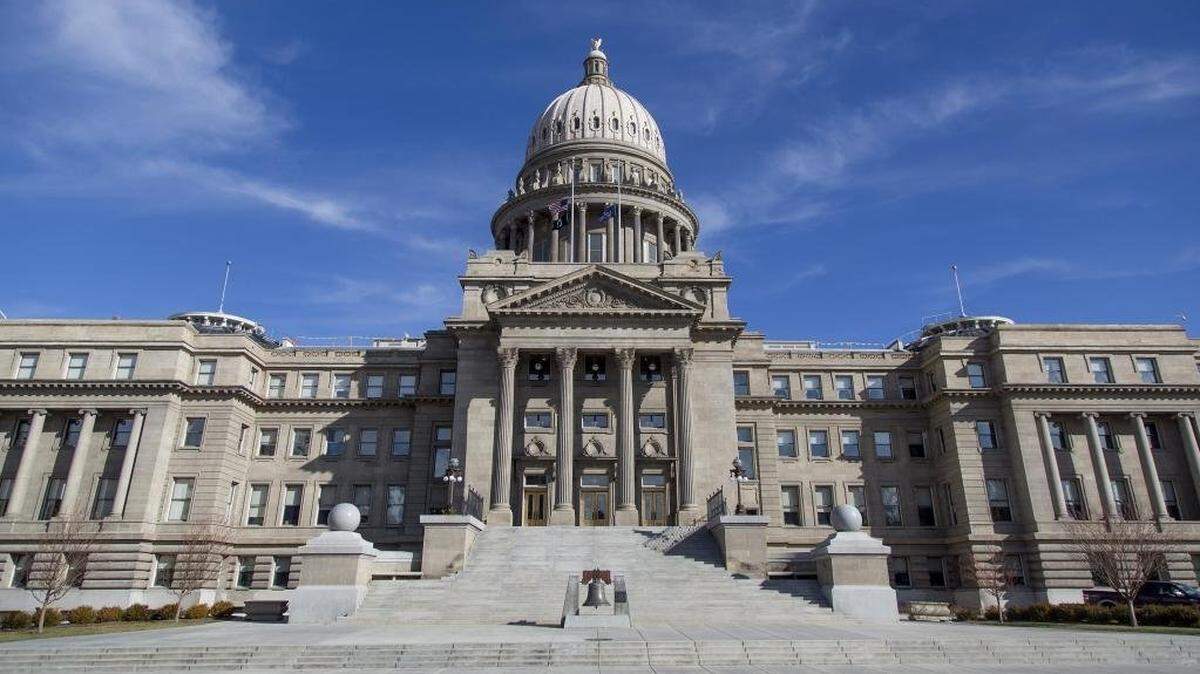
Here we are once again in the waning days of the legislative session, and legislators are tackling the No. 1 priority heading into the session — property tax relief — at the 11th hour.
And what they’re considering is a complicated mess of a bill whose fiscal impacts are uncertain, all while they ignore the simplest, most sensible solution.
Earlier in the session, Idaho Republican legislators proposed three property tax relief bills. One was simple, straightforward and a real solution to the problem. The other two were complicated, used state surplus revenues to offset local property taxes and had unknown consequences.
If you can believe it, Rep. Bruce Skaug, R-Nampa, the guy who’s been wasting the Legislature’s time up until now with bills criminalizing transgender health care and bringing back the firing squad, came up with the best property tax relief solution: raise the homeowner’s exemption and index it.
Simple and direct, problem solved with one paragraph added to state code.
So what did legislators do?
Of course, they threw the most reasonable solution in the wastebasket and combined the two most complicated, backwards bills to come up with an even more complicated, backwards bill.
All with about a week left before legislators want to end the session.
The bill they’ve settled on, House Bill 292, is a doozy.
It’s a complicated mess that creates incomprehensible formulas to use state surplus funds from different buckets to create new buckets that would be used to help school districts pay down bond debt and make payments to counties to offset property taxes for homeowners. It’s a Band-aid.
We support the idea of the state using surplus funds to help pay down school bond debt, but this bill is woefully inadequate. It proposes $100 million a year, a drop in the bucket compared with the $850 million needed to fund facility repairs, according to a report by the Office of Performance Evaluations — which, incidentally, some lawmakers are attempting to gut.
Further, in exchange for the paltry amount, legislators want to get rid of the March election date for school districts, which use the March date so they can plan their budgets for the following fiscal year — and is also their most successful date for passing bonds.
Plus, what happens in a year if there’s no state budget surplus?
At the very least, because this bill is so complicated, it needs a full fiscal analysis of its impacts — not a quick glance in the last days of the session. Remember House Bill 389, which was rushed through at the end of the session two years ago? It was similarly complicated and turned into a nightmare for cities and counties.
Meanwhile, Skaug’s bill is easy to understand, is uniform across the state and treats like properties the same.
The problem is that Republican legislators once again are trying to hold harmless commercial property owners, who have seen their taxes stay flat or decrease over the past six years since the Legislature foolishly capped the homeowner’s exemption in 2016.
The reason their taxes are going down is that residential property values have been skyrocketing. With the homeowner’s exemption capped at $100,000 for several years and raised only to $125,000 recently, residential property taxes have taken on a greater and greater share of local budgets.
If the homeowner’s exemption had not been capped, it would be worth $224,360 today.
That’s what Skaug’s bill would raise the exemption to.
We understand that raising the homeowner’s exemption that high that quickly would shift taxes dramatically, so it would make sense to phase it in over a couple of years.
But keep in mind, as residential property values continue to increase at a faster rate than commercial and agricultural property, that gap in tax burden is only going to get worse.
Delaying just kicks the can down the road, and the can gets bigger each year.
There’s also a little-talked-about unintended consequence of shielding commercial property owners from local property tax increases: They have no incentive to speak out against city, county or school district budget increases. Why should they care, if their taxes are going to continue to go down?
House Bill 292 actually makes that worse by artificially covering up local budget increases with a payoff from the state coffers.
With a mish-mash of confusing pieces of two monstrous bills, legislators have created a Frankenstein’s monster with House Bill 292.
Instead, they should bring the simple, clear solution back to life.