

Want property tax relief in Idaho? Sorry, fringe politics come first | Opinion
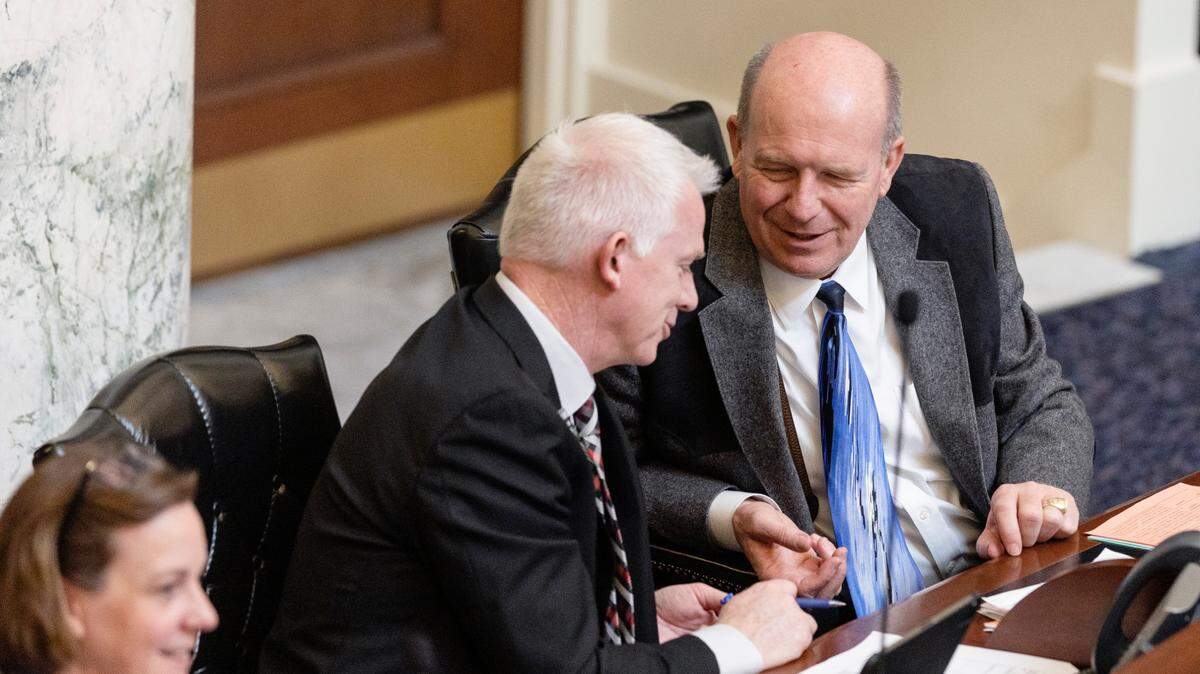
Idaho’s legislators have proposed three serious bills that could address the real problems causing skyrocketing residential property taxes.
As Idaho Statesman reporter Ryan Suppe reported, Republican legislators have introduced three bills – House bills 77, 78 and 79 – that would offer relief for homeowners.
Residential property taxes have been soaring the past few years because in Idaho, property taxes are linked to property values. And because residential property values have been increasing at a much faster rate than other types of property – such as commercial and agriculture – residential property values take up a greater and greater share of overall market value.
The city of Boise last year reported that even if it had frozen its property tax levy, the tax bill for an average homeowner still would have gone up by $293.
Going back to 2001, the split between residential and commercial tax burdens in the city of Boise was 50-50, according to a budget presentation in 2022 by city budget manager Eric Bilimoria. In 2013, the property tax burden in Boise was about 55% residential and 45% commercial. By 2021, that gap grew to 71% residential and 29% commercial, according to Bilimoria.
Two things happened between 2013 and 2021. First, demand for housing outstripped supply, causing home prices to rise dramatically, leading to much higher residential property values and assessments. Second, in 2016, the Idaho Legislature capped the homeowners exemption at $100,000, which meant that as property values went up, so did the taxable value.
The simplest and most direct bill, House Bill 78, comes from Rep. Bruce Skaug, R-Nampa. His bill rightly recognizes that we’re in this mess because of the cap on the homeowners exemption.
“In 2016, indexing was removed from the formula resulting in a significant shift of the property tax burden to owner-occupied residential properties,” according to the statement of purpose for his bill. “Conversely, non-homeowner properties have enjoyed significant property tax reductions during this time, to the detriment of the homeowner.”
Skaug’s bill would remove the cap on the homeowners exemption and restore indexing it. Had it not been capped in 2016, the homeowners exemption would be worth $224,360 today – nearly $100,000 more than the current exemption of $125,000.
Skaug’s bill would immediately set the homeowners exemption at $224,360.
I can understand how that might be a shock to the system. While residential property taxes have gone up precipitously over the past six years, reducing residential taxable value by $100,000 for thousands of homeowners would spike the tax burden for commercial and agricultural properties overnight. A phased approach would be better.
That said, Skaug’s bill identifies the right problem with the right solution.
House Bill 77 from Sen. C. Scott Grow, R-Eagle, would divert $150 million of sales tax revenue directly toward property tax relief for homeowners. This seems like a Band-Aid, taking tax revenue from one source and applying it to reduce a completely different category of taxes.
House Speaker Mike Moyle’s bill, House Bill 79, is much more complicated (of course), but parts of it have merit. Moyle, R-Star, rightly recognizes that a big chunk of most people’s tax bills goes toward school buildings. His plan earmarks $300 million for school districts to reduce bonds and levies, and to pay for school safety projects and future building needs. His bill also takes public defense off the hands of the counties, which would provide property tax relief.
His bill also raises the homeowners exemption to $150,000, but as Skaug’s bill illustrates, that’s woefully inadequate.
The best course out of all these bills is to raise the homeowners exemption, but phase it in over three to five years, and combine that with Moyle’s proposal to earmark state funds for school bond relief.
Instead of wasting time on frivolous and fringe issues, legislators should be working on these bills instead.

Scott McIntosh
Opinion Contributor,
Idaho Statesman