
Proposed House rule would put the focus where it belongs: governing, not campaigning | Opinion
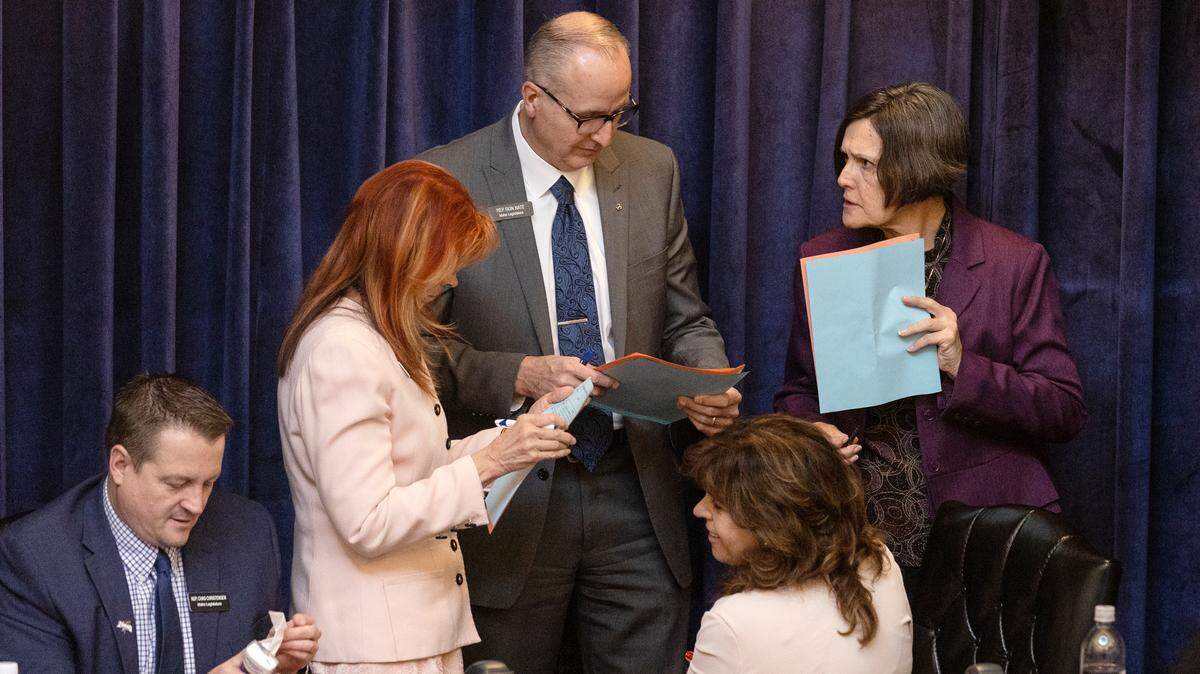
For several months every two years, prospective Idaho lawmakers make their pitch to voters. Then there’s an election. Then the focus is supposed to be on governing.
A House resolution jointly sponsored by Reps. Britt Raybould, R-Rexburg, and Brent Crane, R-Nampa, would go a long way toward restoring that focus by ensuring bills have to go through the normal legislative process.
Understanding the resolution requires some background.
“A personal bill” is a bill that gets printed without going through vetting in committee.
Old hands at the Idaho Legislature generally considered the personal bill process a measure of courtesy from the majority Republican Party to the minority Democrats. It was a way they and other minority voices could codify ideas committee chairs refused to hear in a bill to show voters what they would do if they had power.
But the bills were born, lived and died quietly in a desk drawer.
That is, until the far-right began using them as a campaign ploy.
The prime offender was former Rep. Ron Nate, R-Rexburg, who worked throughout his career to turn the House rotunda into a circus. When giving a floor speech, instead of speaking to his colleagues — the people he needed to join him if had any real intention of passing legislation — his habit was to speak to the camera in the corner broadcasting the floor session. The cheapest campaign videos are those produced on the taxpayers’ dime, after all.
Last year, during Nate’s final session in the House, he found a new tactic. He repeatedly disrupted floor sessions by making an obscure motion to pull one of his personal bills out of the Ways and Means committee. With allies like Rep. Heather Scott, R-Blanchard, Nate would then force an extended debate and vote on this motion, which was defeated each and every time by a wide margin. Hours were wasted this way.
Opponents of the change are likely to object that it will remove a way for popular ideas to bypass obstruction by committee chairs. But there’s no evidence of that.
Nate was pitching a fit because he couldn’t get a hearing for a policy that we support — ending the grocery tax. If Nate had moved the needle even one inch in the direction of repealing the tax, maybe his showboating would have had some value.
But Nate’s antics were singularly ineffective, even counterproductive, toward that end. Often, Nate’s motions gathered fewer than a dozen votes exclusively from the furthest reaches of the far right. That’s despite the fact that many House members, including most or all of the Democrats, also support repealing the grocery tax. Nate was so obnoxious he managed to make it look like there was far less support for repealing the grocery tax than there actually was.
The only real effect of Nate’s repeated motions was to give him more personal time in the spotlight — which was the real objective.
(That didn’t work out so well either, though; Nate lost his election to Raybould in May.)
House members should adopt House Resolution 1. It retains the option for personal bills, now rebranded “informational bills.” Each lawmaker could have three printed per session so that voters can see how minority factions would govern if given the opportunity, but there couldn’t be a motion to pull them onto the floor. It treats these bills as what they are: a press release with a bill number, not a monkey wrench to be tossed in the gears of the Legislature.
It would put an end to the time- and money-wasting tactics of the last session. And it would return the focus of the Legislature to governing, rather than campaigning.
BEHIND THE STORY
MOREWhat is an editorial?
Statesman editorials are the consensus opinion of the Idaho Statesman’s editorial board. The editorial board is composed of journalists from the Idaho Statesman and community members. Members of the editorial board are Statesman editor Chadd Cripe, opinion editor Scott McIntosh, opinion writer Bryan Clark, assistant editor Jim Keyser and community members John Hess, Debbie McCormick and Julie Yamamoto.
How does the editorial board operate?
The editorial board meets weekly and sometimes invites subjects to board meetings to interview them personally to gain a better understanding of the topic. Board members also communicate throughout the week via email to discuss issues and provide input on editorials on topics as they are happening in real time. Editorials are intended to be part of an ongoing civil discussion with the ultimate goal of providing solutions to community problems.
Why are editorials unsigned?
Editorials reflect the collective views of the Statesman’s editorial board — not just the opinion of one writer. An editorial is a collective opinion based on a group discussion among board members. While the editorial is written by one person, typically the opinion editor, it represents the opinions and viewpoints expressed by members of the editorial board after discussion and research on the topic.
Want your say?
Readers are encouraged to express their thoughts by submitting a letter to the editor. Click on “Submit a letter or opinion” at idahostatesman.com/opinion.
Want more opinions each week?
Subscribe to The Idaho Way weekly email newsletter, a collection of editorials, columns, guest opinions and letters to the editor from the Opinion section of the Idaho Statesman each week. You can sign up for The Idaho Way here.