
Idaho didn’t have to wait long for the first truly terrible bill of the session | Opinion
The Legislature is just getting into gear, but it has already printed its first deeply flawed bill.
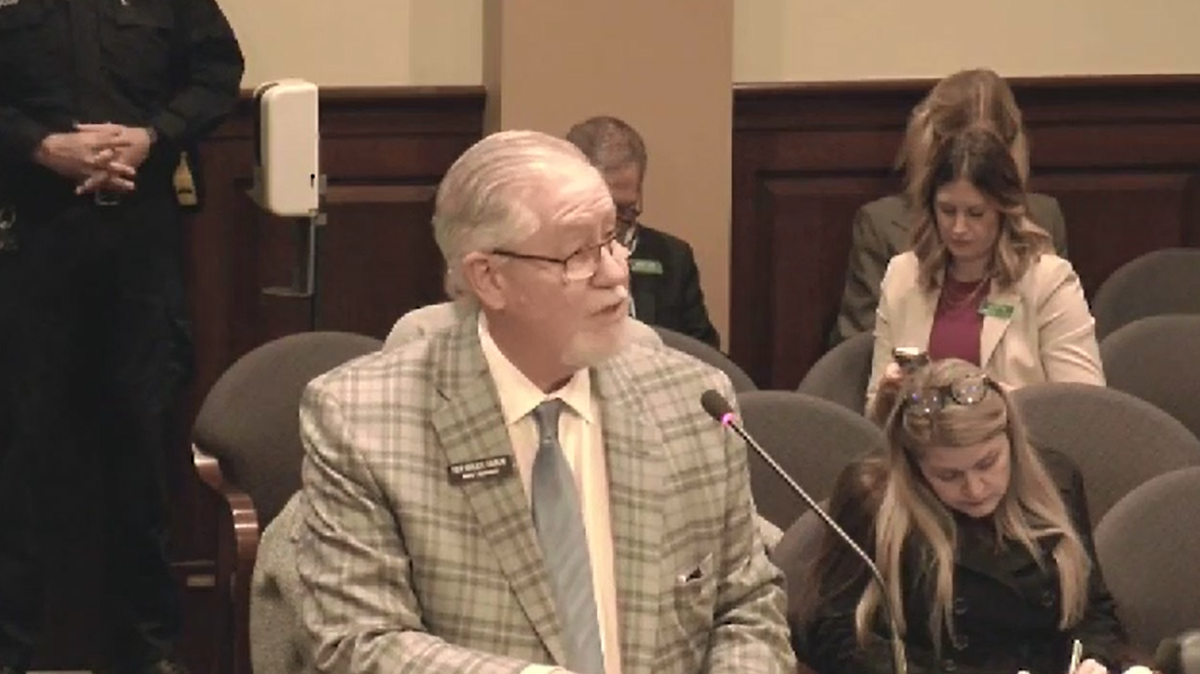
House Bill 2, authored by Rep. Bruce Skaug, R-Nampa, would withhold sales tax distributions to any city that refuses to enforce Idaho’s abortion ban.
Withholding sales tax would be a crippling blow to any Idaho city. In its latest budget, Boise expected to get about $24 million from sales tax, between a third and half of what it spends on the fire department in a year.
Skaug’s bill comes in reaction to the Boise City Council’s resolution, passed in the wake of the Dobbs ruling, directing that additional police resources would not be used to enforce Idaho’s abortion trigger laws.
That wasn’t the most circumspect move.
In doing so, the Boise City Council invited this fight. Another option was simply to deprioritize abortion policing without making a fuss. Cities make decisions all the time about what crimes to prioritize and which to ignore or emphasize less. They do not always seek headlines for those decisions.
That being said, Skaug’s bill is a mess. Not only is its intention bad — to strip authority over law enforcement decisions from the government entities closest to the people — it also has deep flaws in the way it was written.
An old quote variously attributed to Abraham Lincoln and Mark Twain goes: “Better to remain silent and be thought a fool than to speak and to remove all doubt.”
At the bill’s print hearing on Jan. 11, it was immediately apparent that Skaug was unfamiliar with that bit of wisdom.
“If we allow cities to start sliding away from the laws that are felonies in this state, to say, ‘Well, we’re just not going to enforce those,’ then we’re going to end up like Portland or Seattle,” he intoned gravely to the House State Affairs Committee.
Strange that Skaug had no worries about impending anarchy when writing bills that would defy federal authority, as when he authored a 2021 bill that would have made it a civil rights violation for federal contractors in Idaho to comply with federal vaccine mandates for their workers.
It’s yet another demonstration that when members of the Idaho Legislature like Skaug invoke federalism, the term has a special meaning. The implied understanding of federalism commonly in use in the Idaho House and Senate is: All government powers properly belong to the Legislature. If the federal government does something lawmakers don’t like, that’s a violation of federalism. If cities act independently, that is also a violation of federalism.
Skaug’s bill is modeled on the kind of mechanism conservatives have long decried — when the feds use it. The Affordable Care Act originally required states to expand Medicaid, at the risk of losing all Medicaid funding if they did not. The Supreme Court ruled that to be unconstitutional.
Skaug proposes to do the exact same thing to cities and counties.
Lucky for them, his bill is so poorly written, it probably wouldn’t work.
Though Skaug’s bill is clearly a reaction to Boise’s resolution, it’s not at all clear that the resolution would violate it.
Boise’s resolution says that additional police resources will not be dedicated to abortion enforcement, that abortion enforcement will not be prioritized and that city government will not collect records about possible abortions. Skaug’s bill penalizes cities for passing “an ordinance, resolution, executive order, proclamation, or similar official directive refusing to enforce the provisions of (Idaho’s abortion statutes).”
Boise’s resolution is certainly at odds with the spirit of Skaug’s bill, but does it violate the letter of the law? Ask five lawyers, you’ll get six answers. All five will agree on one thing though: They will be happy to argue either side of the matter in court at taxpayer expense.
Lawmakers would do well to hold this one in committee.