
Another Idaho water crisis averted, but will we keep getting lucky? | Opinion
State officials announced Thursday that a sort of gentleman’s agreement was reached with Idaho Power that will prevent a major water curtailment this year.
According to a news release from the Idaho Department of Water Resources, Idaho Power has promised not to pursue curtailment in exchange for a number of concessions.
But that piece of good news shouldn’t distract from a clear, emerging, yearslong trend: Idaho has faced repeated near-miss water crises over the past two decades. There have been repeated threats of water curtailment arising from an ongoing conflict between Magic Valley surface water irrigators and eastern Idaho. Another dealt with dropping spring discharges bound for fish farms near Thousand Springs. The problem has been growing geographically as well, looping in more distant watersheds like the Lost River Basin in Central Idaho.
Rather than putting out fires every year, the state needs to thoroughly examine longer-term solutions.
This year’s crisis involved so-called “trust water rights,” which were created by the 1984 Swan Falls Agreement. After extensive negotiations, that deal established minimum flows needed for Idaho Power to keep hydropower generation running along the Snake River. In exchange for those guarantees, Idaho Power allowed new water rights to be issued, with the proviso that if water levels ever dropped too low, that water could be cut off.
For four decades, that lower limit was rarely approached and never breached. This year, flows fell below the lower limit for the first time, and threatened to do so for an extended period. That caused the Idaho Department of Water Resources to warn 4,000 trust water rights holders — mainly farmers and ranchers throughout the southern half of the state — that they might have to stop irrigating.
Luckily, a series of recent rainstorms increased flows in the Snake River, which typically hit their low point in early July, said Nick Miller, water administration bureau chief of the Idaho Department of Water Resources.
“I think we’re coming out of the woods,” he said.
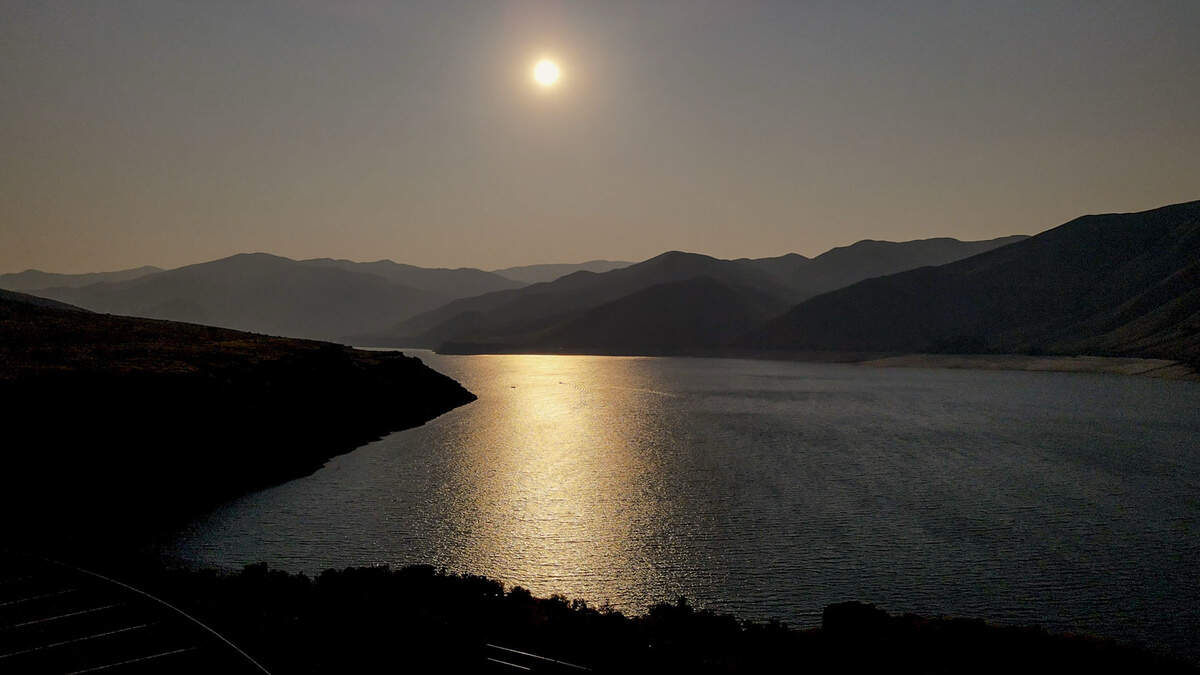
Gov. Brad Little recommended the Idaho Water Resources Board buy 5,900 acre-feet of storage water to offset low flows, according to the release. That’s an amount equal to a bit more than 2% of the total capacity of the Lucky Peak Lake, which should cost perhaps a couple of hundred thousand dollars. All told, that’s a minimal price to pay for averting a sweeping curtailment this year.
But how long before we face the next crisis?
It’s reasonable to expect that water is going to become harder to manage over time due to climate change. Among the predicted effects, many of which have begun to occur and accelerate, is more water flowing earlier in the year and less later, lower snowpacks and higher water demand by crops due to higher air temperatures. These are problems we will deal with, and which will likely get worse, for generations to come.
Water use in Idaho is almost entirely a story about agriculture, which accounts for 97% of water diverted from rivers and pumped from aquifers in the state. Cities and businesses are miniscule contributors in comparison.
Scrambling for a new set of deals every year greatly increases the uncertainty involved for the state’s agricultural sector, and uncertainty directly reduces economic productivity.
So while it’s welcome news that Little will convene stakeholders in the Swan Falls Agreement to meet and work on long-term solutions, Idaho desperately needs a broader look at reforms to the states’ overall water management system.
Idaho’s water users have proven remarkably adept at eventually meeting in the middle and cutting a deal each time a new crisis has surfaced. But every time we test the limits, there’s a new opportunity for negotiations to fail, with the potential for drastic economic consequences.
That’s not a set of dice we should roll year after year — sooner or later, they’ll come up snake eyes.
Bryan Clark is an opinion writer for the Idaho Statesman.