
Forty-year-old Idaho water deal being tested as never before | Opinion
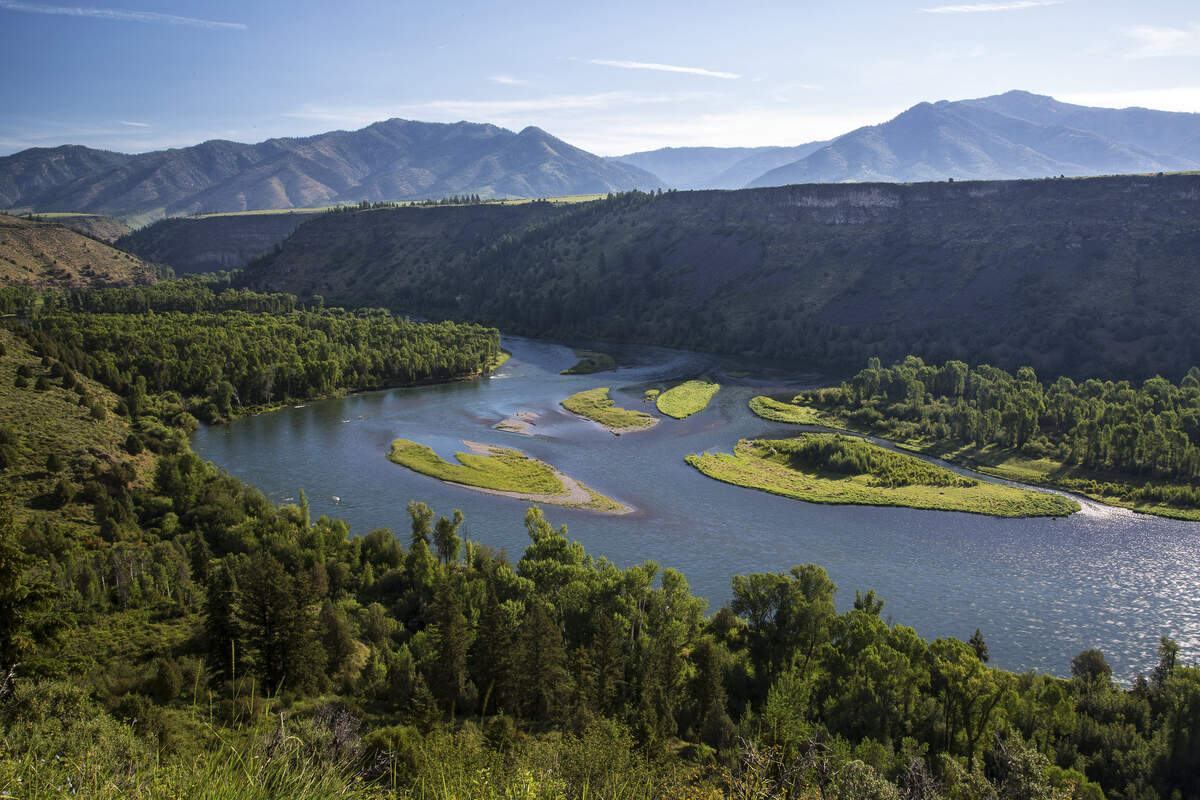
The Idaho Department of Water resources recently issued a notice to holders of so-called trust water rights, saying that due to declining levels in the Snake River, it’s possible that a curtailment order will be issued later this year.
“This underscores the kind of winter we did not have in many parts of the state, Southern Idaho and Eastern Idaho,” said Lt. Gov. Scott Bedke, long one of the state’s principle negotiators on water issues.
Trust water rights arose through the 1984 Swan Falls Agreement, which aimed to calm disputes between farmers across the southern part of the state and Idaho Power.
Idaho Power operates 17 hydroelectric plants on the Snake River in Idaho, from American Falls, which is a bit west of Pocatello, to Hells Canyon on the Oregon state line. The Swan Falls agreement is meant to keep water flowing at those dams, and power on at homes across the state.
“We fought and fought in the Legislature, in the courts, in the federal government to get that resolved, and finally came to an agreement whereby the power company agreed that subordination would only apply to 3,900 (cubic feet per second) in the summer and 5,600 in the winter,” said Jim Jones, who helped negotiate the early in his term as Idaho attorney general.
Trust water rights are those that were issued after that agreement, under the stipulation that Idaho Power’s minimum flows would be maintained.
But the Department of Water Resources projects that levels could fall below that later in the irrigation season. If that happens for a significant period of time, Idaho Power could call for more water, and that would risk shutting off wells and irrigation diversions throughout the state that were established after the Swan Falls Agreement.
There are about 3,300 of these water rights around Southern Idaho.
Bedke said it remains very possible that Idaho will avoid significant curtailments this year — a lot depends on how much more rain the state gets.
But bumping up for the first time against limits established in a 40-year-old agreement raises a set of deeper issues.
Idaho’s water system, which has fared much better than systems in many western states — with its complicated layers of agreements, settlements and court rulings — was built around a set of assumptions about what normal water years would be. It was understood that there would be significant variation around those normal levels — lean periods and times of plenty — but the assumption was that normal would stay, well, normal.
What if it doesn’t?
“I don’t think people realized that we would have outlier years in which the snowpack was insufficient all the way up the river. It’s an alarm bell for things going forward,” Jones said.
That’s exactly what’s happened this year. The Palisades Reservior on the Wyoming-Idaho state line is already below 40% capacity, and there is very little snow in the mountain ranges above it. The only major reservoir upstream, Jackson Lake in Grand Teton National Park, is expected to be “more mud than water” by year’s end, the Jackson Hole News and Guide reported in April.
And years like this may become more common in the future.
Scientists have long suggested that climate change is going to push the West in the direction of less overall precipitation and diminished snowpack.
“Nobody was thinking about global warming and the effects it would have on the West,” Jones said. “It could be coming to a problem into the future for us, especially if we keep shrugging off the idea that there is a changing climate.”
Bryan Clark is an opinion writer for the Idaho Statesman.