‘Very strong’ El Niño predicted in 2026. What does that mean for Idaho weather?
Forecasters are predicting a “very strong” El Niño weather pattern, potentially setting up Idaho up for intense drought conditions and elevated wildfire risks.
The National Oceanic and Atmospheric Administration’s Climate Prediction Center announced a 63% chance of a “very strong” El Niño and a 25% chance of a “strong” El Niño for the season running from November to January, Michelle L’Heureux, lead scientist of the El Niño-Southern Oscillation team, told the Idaho Statesman in an email.
If the temperature anomaly follows previous patterns, this year “would rank among the largest El Niño events in the historical record going back to 1950,” the prediction center said in its Thursday, June 11 update.
Here’s what that means for Idaho:
What is El Niño?
Weather can be incredibly unpredictable, so scientists do their best to track elements that may lead to severe weather.
“El Niño and La Niña are two opposing climate patterns that break these normal (weather) conditions,” NOAA said on its website. “Scientists call these phenomena the El Niño-Southern Oscillation cycle.”
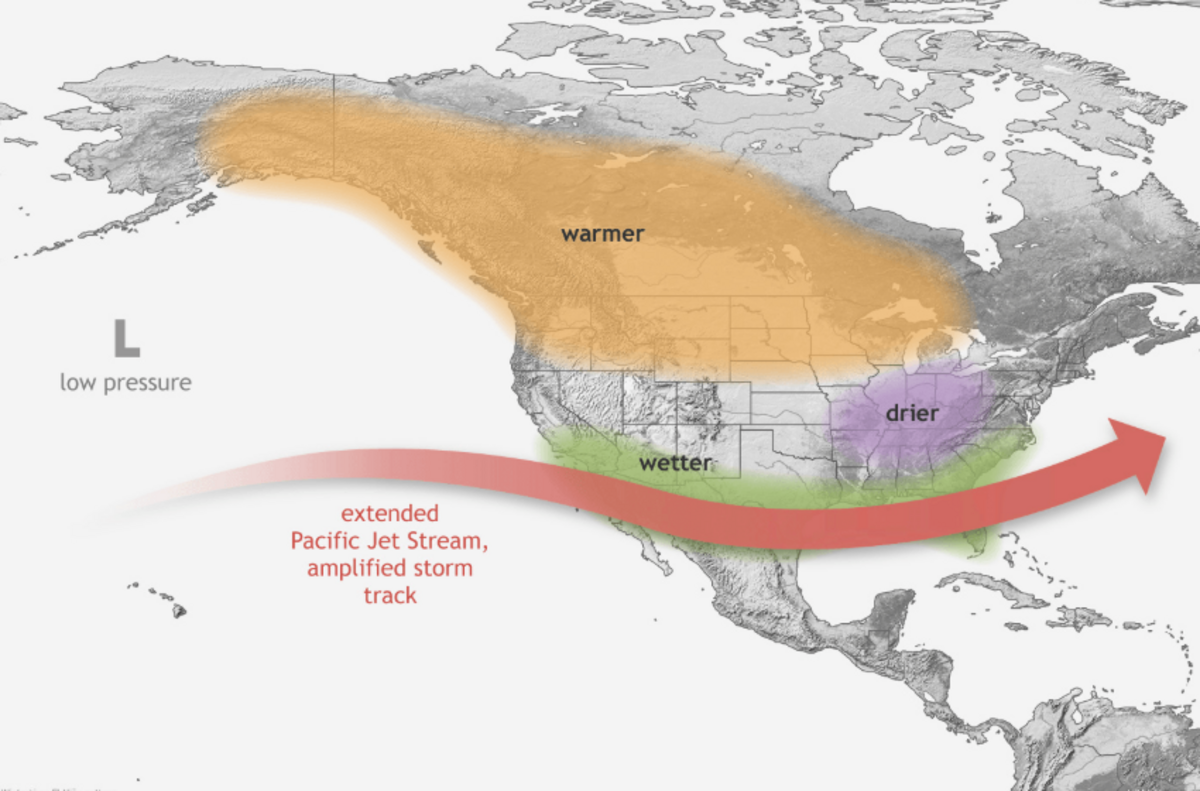
During El Niño, trade winds weaken and warm water is pushed toward the west coast of North and South America.
As a result, weather in the northern United States and Canada is “dryer and warmer than usual,” NOAA said, while the Gulf Coast and Southeast see wetter-than-normal weather with increased flooding.
“La Niña has the opposite effect of El Niño” as trade winds push more warm water toward Asia, the federal agency explained, leading to “drought in the southern U.S. and heavy rains and flooding in the Pacific Northwest and Canada.”
Jackson Macfarlane, a meteorologist at the National Weather Service’s Boise office, called El Niño “a climate driver.”
What causes El Niño?
The tropical trade winds that blow across the Pacific Ocean typically move warm waters east towards Asia, according to NOAA.
When surface level temperatures in the ocean are warmer than normal, however, the winds can weaken and possibly change direction.
This brings hotter temperatures to the western parts of the Americas, triggering El Niño effects.
How could warm weather pattern affect Idaho?
Idaho can expect to see warmer and drier conditions this summer, Macfarlane told the Statesman.
“It could mean that our average temperature here in Boise and the rest of Idaho is generally above normal,” Macfarlane told the Statesman.
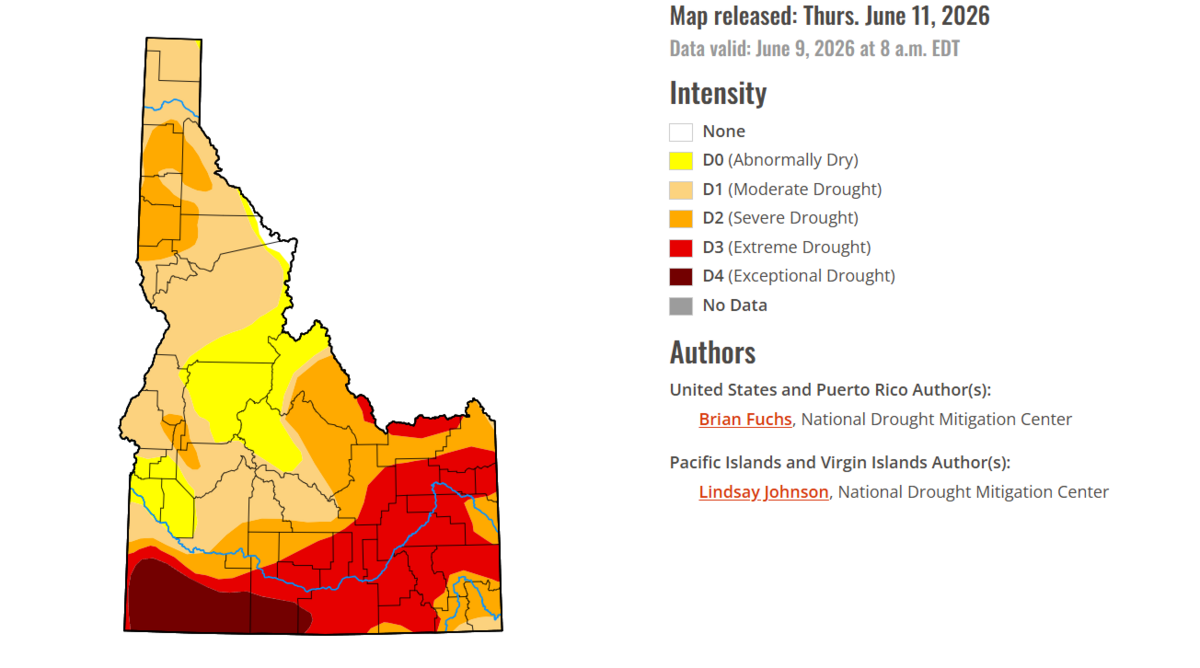
About 99% of Idaho was “abnormally dry” or worse as of June 9, according to the most recent data available from the U.S. Drought Monitor.
More than half of the Gem State was experiencing “severe drought” conditions, according to Drought Monitor data.
According to Macfarlane, significant heat waves and abnormally high summer temperatures should be expected statewide.
However, the meteorologist noted that weather patterns don’t always follow the predicted path.
The last time Idaho experienced an El Niño pattern of this strength was in 2014 and 2015, according to L’Heureux.
“Most of Idaho saw above-average precipitation” at that time, which is not typical El Niño behavior, L’Heureux told the Statesman.
As of Wednesday, June 17, Macfarlane and L’Heureux said, all models show 2026 following weather patterns that are reflective of the 2023 and 2024 El Niño seasons.
“2024, as most people probably remember, was a pretty active fire year for us,” Macfarlane said. “So seeing that El Niño leading into this winter and potentially next spring is keeping our attention as we head into next year.”
How long can El Niño last?
This summer, “almost all of the climate models ... are favoring a shift to El Niño from our winter La Niña and our springtime neutral conditions that we’re seeing,” Macfarlane said.
The odds for a strong El Niño season “are not fixed and will change in the months ahead as we receive new model forecasts and observations,” L’Heureux said.
According to NOAA, El Niño and La Niña periods typically last between nine months to a whole year.