Soft hail could blanket Boise area amid freezing temperatures. What is graupel?
Thunderstorms, rain showers and snow flurries are expected to sweep Boise as temperatures drop, according to the National Weather Service.
That “widespread precipitation” will be accompanied by “gusty winds and small hail,” the weather service said in its latest Idaho state forecast discussion.
The storm system could also result in another, odder byproduct.
Frigid temperatures on Wednesday, April 15, and Thursday, April 16, could create the perfect conditions for flakes to harden into small snow pellets known as graupel.
Here’s what to know:
What is graupel?
As the rain and snow fall, flurries can melt, mix together and refreeze just before hitting the ground, according to Jackson Macfarlane, a meteorologist with the weather service’s Boise office.
The resulting small, soft pellets differ a bit from the hailstones or sleet you’d typically expect to see.
“Graupel falls like hail, looks like small hail, but if you pick it up and crumple it in your hands, it will crumble into dust really easily,” Macfarlane told the Idaho Statesman via phone.
How is soft hail formed?
Also known as soft hail or snow pellets, graupel forms when “supercooled water droplets” freeze onto snow crystals, according to the National Oceanic and Atmospheric Association’s National Severe Storms Labratory.
This process is called riming,
“ If the riming is particularly intense, the rimed snow crystal can grow to an appreciable size, but remain less than 0.2 inches,” the storm laboratory said.
Sleet, in contrast, is formed by freezing liquid water drops, such as raindrops..
Hailstones begin life as icy embryos that include graupel or sleet, and then “grow in size,” according to the storm laboratory.
Are snow pellets dangerous?
Although experts say graupel particles are ‘particularly fragile” and usually disintegrate when handled, the pellets can still pose a threat if you find yourself caught outside in the storm.
“At the end of the day, it is clumped together ice,” the meteorologist said. “If you’re standing in the middle of a graupel shower without protection, it’s not gonna feel great.”
However, Macfarlane said, the hardened snowflakes are “softer” than hail stones, so property damage isn’t a concern.
“If it hits something hard, it’s gonna melt pretty quick, or it’ll just break apart,” Macfarlane said.
This form of precipitation is “common” in Boise in the spring and fall, the meteorologist said.
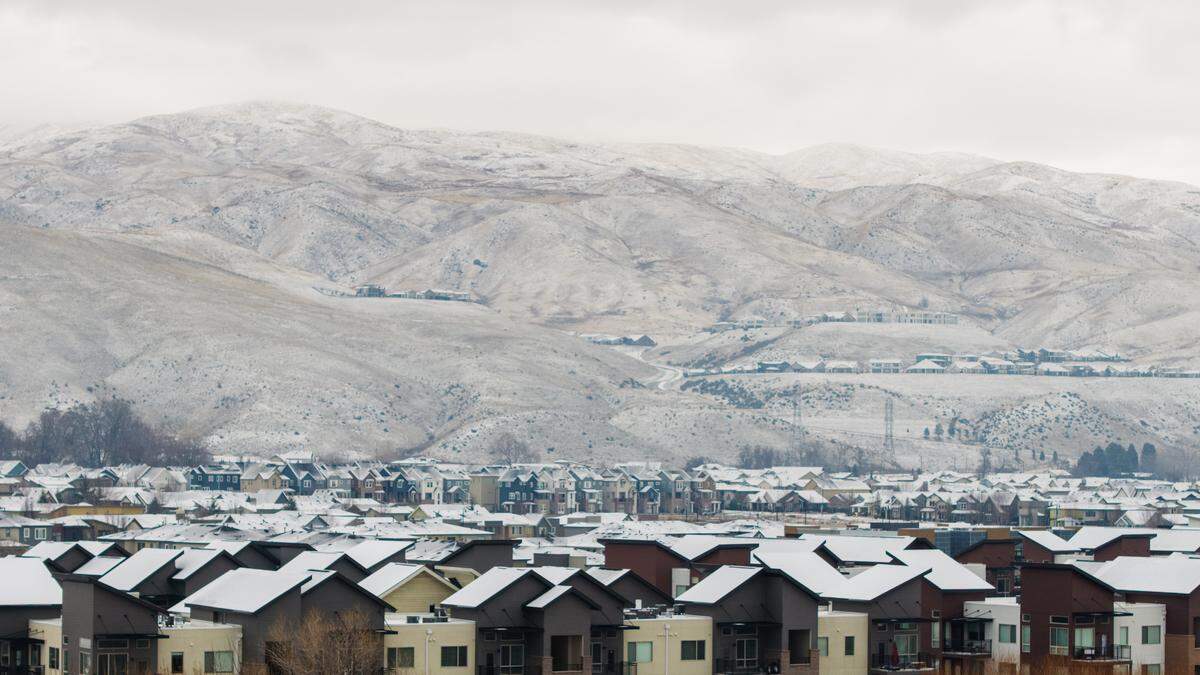
How long will freezing temperatures last in Boise?
According to Macfarlane, Treasure Valley could see temperatures “right around freezing” from Thursday, April 16, through Saturday, April 18.
“We’re coming out of a pretty long warm spell,” the meteorologist said.
Freshly planted spring gardens could be at risk as temperatures plunge, Macfarlane said.
According to the National Weather Service’s latest seven-day forecast, temperatures in Boise will start warming up this weekend.
Temperatures on Saturday and Sunday, April 19, are expected to reach highs in the 60s and lows in the low 40s.
This story was originally published April 14, 2026 at 4:00 AM.