Want to keep your child safe during an intense heat wave? These are signs of heat illness
Heat is by far the deadliest weather-related cause of death in the United States, and as a historic heat wave settles into the western U.S. this week, heat-conscious decisions are more important than ever.
Temperatures in the Boise area this week could reach as high as 111 degrees — the hottest ever recorded in Boise — prompting the National Weather Service to issue an excessive heat warning. The warning, which lasts through Friday, warns of “dangerously hot conditions” that “will significantly increase the potential for heat-related illnesses.”
Children are one of the most vulnerable groups when it comes to heat-related illness and death. Based on data from 1998 to 2022, an average of 38 children die per year from heatstroke. Additionally, more than 9,000 high school athletes are treated for heat-related illnesses every year, according to Scientific American.
As the heat moves in, what are the risks to children, how can they be avoided, and how can heat-related illnesses be identified?
Why are children at risk from heat?
One of the primary reasons that children are more at risk than adults of heat-related illnesses is because they have a smaller cardiovascular output and a higher metabolic rate than adults, according to the federal government’s HEAT.gov resource.
According to the Environmental Protection Agency, children’s bodies can warm 3-5 times faster than adults and sweat less.
The fact that children playing sports outside often ignore the signs of heat-sickness, according to Climate Central, puts children especially at risk.
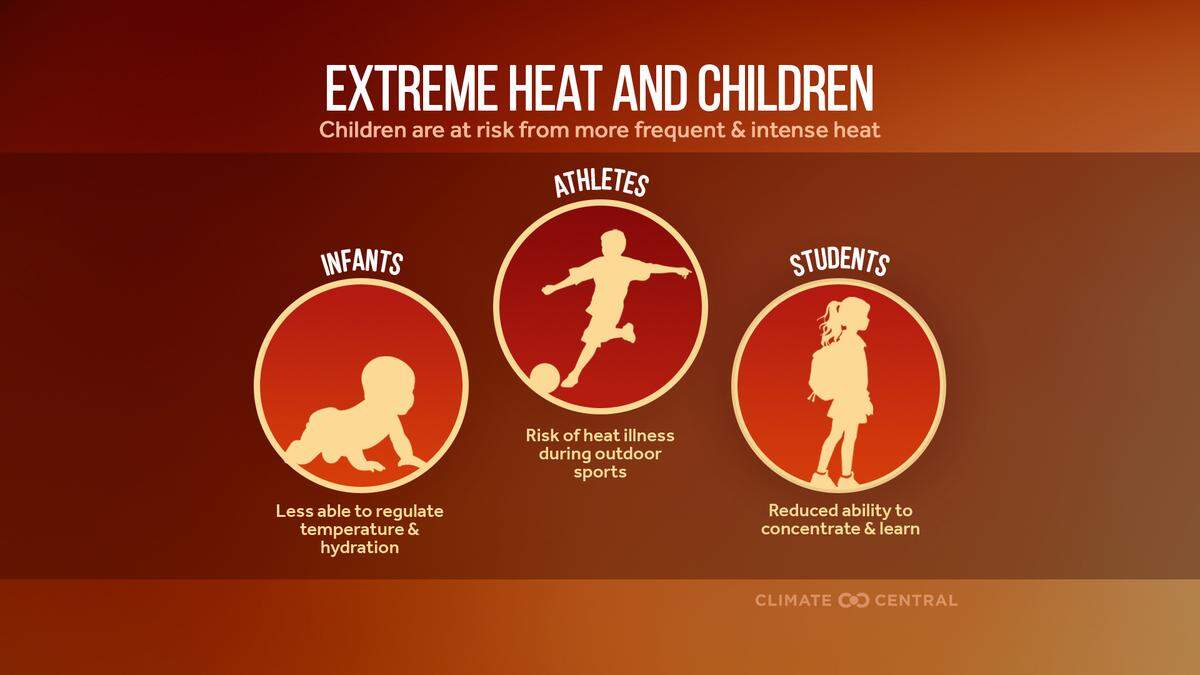
According to Climate Central, high levels of heat in children can even impact their ability and concentration to learn. This is because their cognitive functions tend to slow down in hotter temperatures.
What are the signs of heat-related illness?
According to the Centers for Disease Control and Prevention, heat stroke kicks in when the body cannot control its temperature and its sweating mechanism fails. This can result in body temperature rising as high as 106 degrees within 10 to 15 minutes.
Heat stroke can result in death or permanent disability if not immediately treated.
“People should be mindful to always have a place to cool off. Make sure if you go out or travel, have something to drink,” National Weather Service meteorologist Les Colin told the Idaho Statesman.
The Weather Service tweeted tips on avoiding heat exhaustion and stroke and the next step to alleviate the issue.
Heat exhaustion
Dizziness
Thirst
Heavy sweating
Nausea
Weakness
What to do: Move to a cooler area, loosen clothing and sip on cool water. Seek medical help if the symptoms don’t improve because heat exhaustion can lead to heat stroke.
Heat stroke
Confusion
Dizziness
Becoming unconscious
What to do: Act fast and call 911. Move the person to a cooler area, loosen clothing, remove any extra layers, and cool with water or ice.
This story was originally published July 10, 2024 at 4:00 AM.