The days are getting short in Idaho. Here’s how much sunlight we’re losing daily and why
Remember waking at the start of September and being able to throw open your curtains to rays of sunshine as early as 7 a.m.? Or how about getting home from a busy day and enjoying the outside sun until as late as 8:30 p.m.?
Hold on to those memories. By the end of September, that’s all they’re going to be.
As the days tick toward and on from the autumnal equinox, when the sun sits directly above the equator, the days become shorter than the nights. The angle of the Earth in relation to the sun means the Northern Hemisphere sees less daylight as we slip toward the winter.
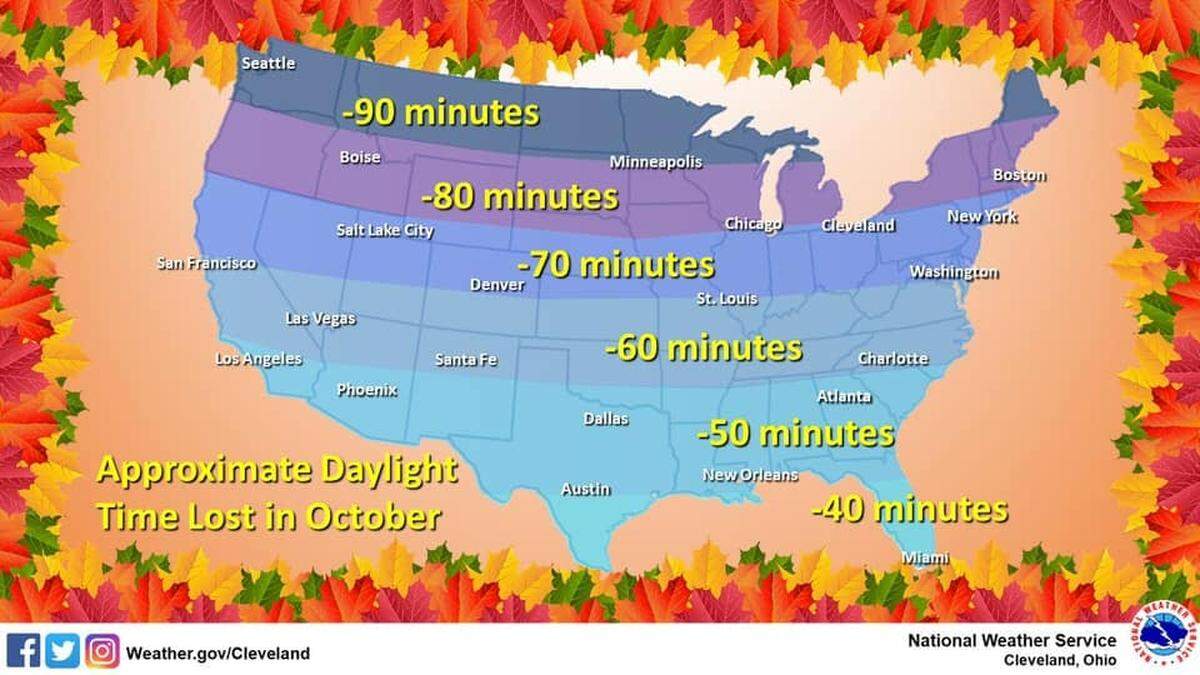
October is the month with the most drastic loss of daylight and dipping temperatures, according to Time and Date, but September’s loss is not far behind.
But just how fast are we losing sunlight? Probably more quickly than you imagine.
October: the most dramatic month of fall
The autumnal equinox in the Northern Hemisphere is on Saturday, Sept. 23, when days become increasingly shorter than nights until the winter solstice in December.
As the sun crosses the equator southward, it takes slightly longer to rise and slightly quicker to set each day as the axial tilt points the Northern Hemisphere away from the sun’s rays.
But despite the equinox occurring in late September, October sees just as much of a change in sunlight.
The transition is also fast during October because directly after the equinox, the tilt causes the sunlight that hits a region to decrease more rapidly than in the dead of winter. The sun is positioned at one end of the spectrum during the summer and winter solstices, when the days are either longest or shortest, respectively, and therefore the change in daylight isn’t as drastic.
The dramatic decrease in daylight in October also coincides with a quick decrease in temperature. The average high temperature in Boise at the start of the month is 73, but it plummets to 57 by the end of the month.
The same phenomenon regarding daylight and temperature can be flipped for April each year, shortly after the spring equinox: The days get longer more quickly, and the temperature increases most dramatically during April.
So how much daylight do we lose per day?
On Sept. 1 in Boise, the sun rose at 7:08 a.m. and set at 8:20 p.m., for a total of 13 hours and 12 minutes of daylight.
On Sept. 30, the sun will rise at 7:41 a.m. and set at 7:27 p.m., totaling just 11 hours and 47 minutes of daylight, nearly a 90-minute difference.
That difference is even more drastic in October. By the end of October Boise will receive just 10 hours and 18 minutes of daylight, resulting in a noticeable difference between light and dark hours.
On average, Boise loses just under three minutes of daylight per day in October. Compared to December, when the winter solstice occurs, the difference in daylight from the start of the month to the end is approximately 11 minutes.
This story was originally published September 18, 2023 at 12:04 PM.