Idaho’s trees are green, but not for long. Here’s when fall foliage will arrive in Boise
Many people consider fall to be one of the prettiest times of the year as the weather cools and the trees turn beautiful shades of yellow, orange and red.
But there’s one problem: the height of beautiful fall foliage doesn’t last long.
For most locations nationwide, including Idaho, the peak time to see fall foliage only lasts about two weeks, according to the Farmers’ Almanac.
Farmers’ Almanac forecasts that Idaho’s fall foliage will peak between Oct. 5 and Oct. 21.
The almanac also doesn’t differentiate between different parts of the state. But the website smokymountains.com, a Tennessee-based company specializing in vacation experiences in national parks, uses over 50,000 predictive data points to determine the peak time for fall foliage in every U.S. county.
The interactive map below shows you when fall foliage will be at its peak in your county.
Smoky Mountains uses data from the National Oceanic and Atmospheric Administration, including historical and forecasted temperature and precipitation, historical leaf peak trends and user reports.
“Our model ingests multiple data points including NOAA precipitation forecasts, historical precipitation, average daylight exposure and temperature forecasts,” Smoky Mountains founder and researcher David Angotti stated in a news release.
“We process hundreds of thousands of data points from a variety of private and government sources to accurately predict the precise moment fall will occur for the entire United States.”
When will fall arrive in Idaho?
According to Smoky Mountains’ map, early signs of widespread fall foliage will begin to appear in North Idaho as early as Monday, Sept. 11. Still, the most vibrant colors won’t reach their peak until the first week of October.
The Treasure Valley will follow the same pattern, with the leaves starting to turn around Monday and hitting their peak Oct. 3-10.
By Oct. 9, the foliage will be past its peak in Boise, but the trees will remain colorful through Central Idaho, including in the Sawtooth Mountain Range, clear through to early November.
By Halloween, Idaho will have said goodbye to the last of its colorful leaves.
Why do the leaves change color?
Leaves don’t change color just for our enjoyment; they do so to keep the tree they are on alive.
Leaves are bright green through the summer because of a green pigment called chlorophyll, which helps turn sunlight into glucose and, in turn, feeds the tree.
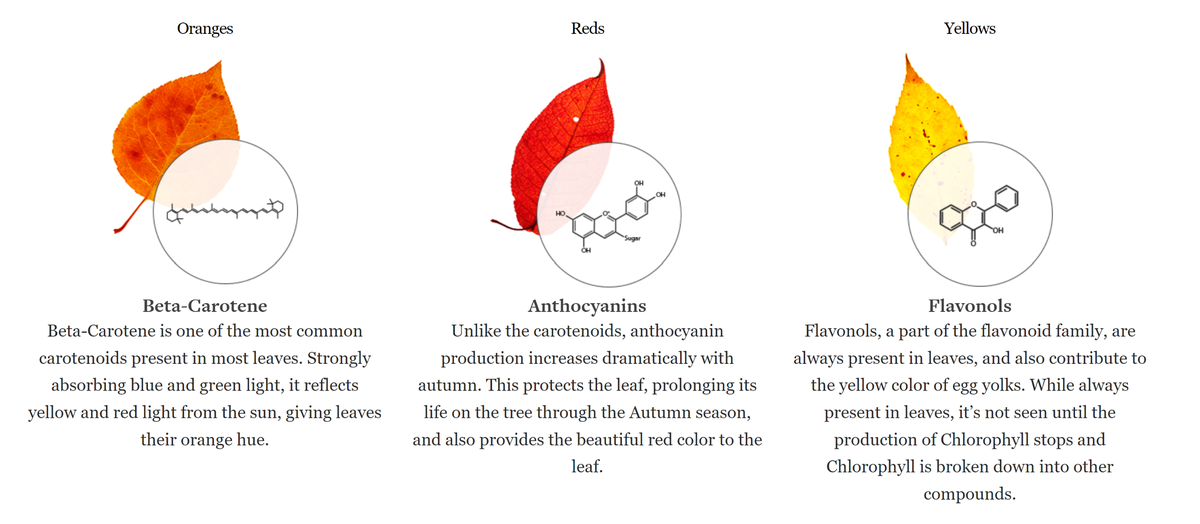
As the days get shorter and sunlight becomes harder to come by, the leaves stop producing chlorophyll. As the chlorophyll production shortens, the “true” color of the leaves begins to show — colors that have always been there but were hidden by the green pigment.
These true colors result from carotenoids, naturally occurring pigments that color plants and other vegetation worldwide.
Eventually, the trees shed their leaves for the winter to protect themselves from the damaging cold, according to Smoky Mountains.
If leaves remained on the trees, the cold temperatures would easily access the veins that carry water and nutrients to and from the leaves and kill the tree. Instead, the tree forms a protective layer of cells at the base of each leaf and cuts off nutrient flow to the leaves, enabling them to die and shed to the ground.
This story was originally published September 7, 2023 at 4:00 AM.