Rainstorms are moving into Boise. Will there be more flooding? Here’s what to expect
Boiseans have been spoiled the past week or sowith temperatures in the 80s and no rain, but good things never last forever.
Starting Thursday night and continuing through Saturday afternoon, about half an inch of rain is expected to fall in the city, and high temperatures will drop to the 60s over the weekend, according to the National Weather Service.
“We’re going to be kind of unstable (Thursday) and we could be seeing some thunderstorms,” Chuck Redman, a meteorologist in Boise, told the Idaho Statesman. “And then the main low-pressure system itself, the main weather maker, is going to be coming over us on Friday.”
Redman expects a consistent and dreary pattern for Boise, while the mountains north of the Treasure Valley will be subject to stronger but spottier thunderstorms.
And a half-inch of rain might not sound like a lot, but combined with other factors, it could spell trouble for some rivers.
Where is this rain coming from?
It officially hit 90 degrees at the Boise Airport on April 30, just the 13th time since 1875 that temperatures have hit that mark in April in Boise.
Less than a week later, the high temperature will be 25 to 30 degrees cooler, and storm clouds will cast a murky shadow over the city. It’s all because of a low-pressure system that’s been off the coast of California, according to Redman.
The system has been gathering moisture from the Pacific Ocean and is now set to move inland through Nevada.
“As this thing starts coming in, the flow around it may be trying to pull some moisture from the central United States, which is a little bit richer in moisture, and that may try to make its way up here as well,” Redman said. “So two different areas where the moisture is coming from, but it’s one main weather maker, the low-pressure system itself.”
Redman expects a chance of rain every day through at least next Wednesday. As of Wednesday afternoon, the Weather Service was issuing the following figures:
Friday: 80%
Saturday: 30%
Sunday: 30%
Monday: 40%
Tuesday: 20%
Flooding issues across the Gem State
Boise is primed for about half an inch of rain, but the higher elevations could receive up to three-quarters of an inch. The prospect of heavy rain in the mountains worries National Weather Service meteorologist Josh Smith, who fears that already fast-flowing rivers could overflow when the rain adds to the snowmelt.
“The snowpack is holding a bunch of water,” Smith said. “And so when it melts, we get that water release, but now we’re going to be adding on some moderate to heavy precip at times to the already warm temperatures and water in that snowpack.
“It’s just another extra dose of water that’s going to be coming down than you would normally see.”
Current Snow Water Equivalent levels — the amount of water held in existing snow — in the Boise-area mountains are 146% above average and 140% above normal around the Payette River.
The Boise River already has caused minor flooding, resulting in the Boise Fire Department issuing a Dangerous River Condition notice. A kayaker went missing on Monday and has not been found.
The Boise River’s water-flow levels are partly controlled by the U.S. Army Corp of Engineers, which decides how much water will be released from reservoirs into the river. Jon Roberts, the water management lead for the Corps’ Walla Walla District, told the Statesman that he is not that concerned about more flooding along the river this weekend.
Roberts said the river flow would remain at about 6,000 cubic feet per second, indicating the water volume that passes a specific point in a second.
But he also doesn’t rule out the possibility of some localized minor flooding in low-lying areas.
“There might be some slight variation of that as local rainfall comes in,” Roberts said. “But as the storm system passes through areas that are not capturing the water in our reservoir system, we would expect some potential low-lying inundation in some areas of concern.”
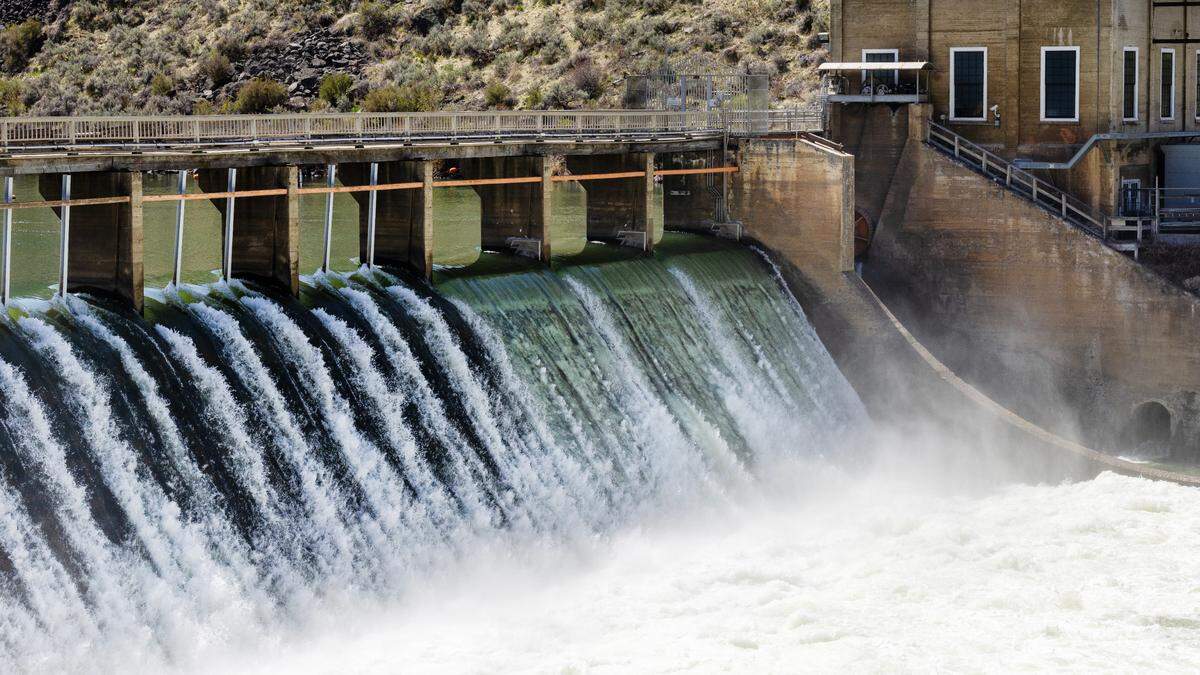
The Anderson Ranch, Arrowhead and Lucky Peak reservoirs all manage the Boise River system, and the Army Corps manage each one to ensure adequate room for snowpack runoff. Roberts said the three-reservoir system is only at 62% capacity, meaning there is no need to increase the flow into the Boise River.
Smith said he was more worried about flooding in other areas of the state, such as the Weiser River Zone and the Middle Fork Zone in west-central Idaho around McCall.
“In the end, it’ll be good for us in the long term,” Smith said. “It’s just never good running off this much water at once.”
This story was originally published May 4, 2023 at 4:00 AM.