‘Meaningful progress’: After advocacy, Idaho has two new child protection laws
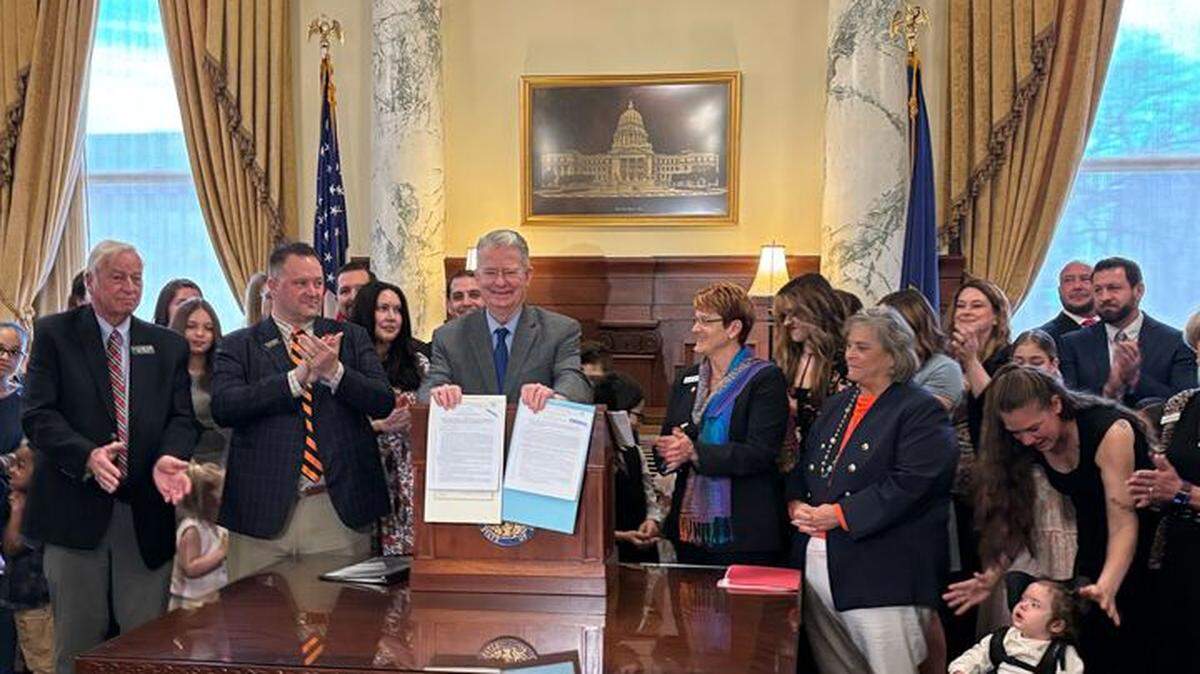
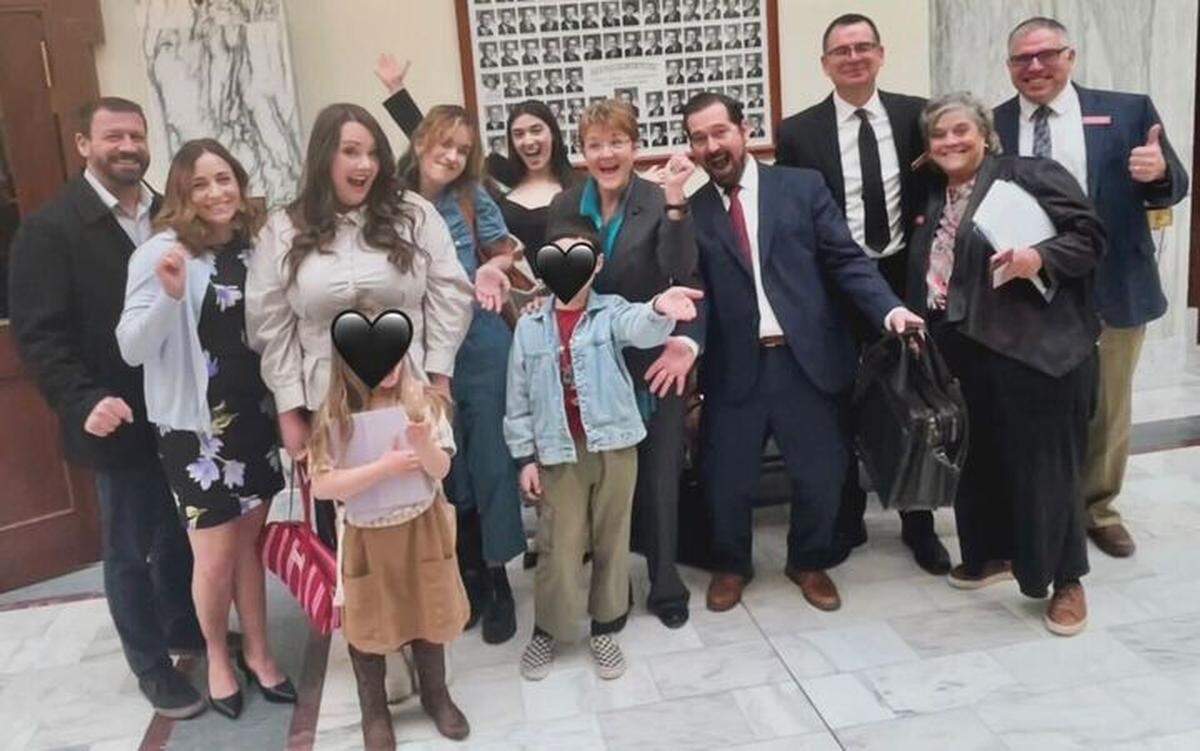
A group of foster parents made their presence felt at the Capitol the past two months advocating for child protection legislation, largely driven by the death of an infant in Nampa.
Gov. Brad Little signed two of those bills into law this week, and a third is still in the Senate.
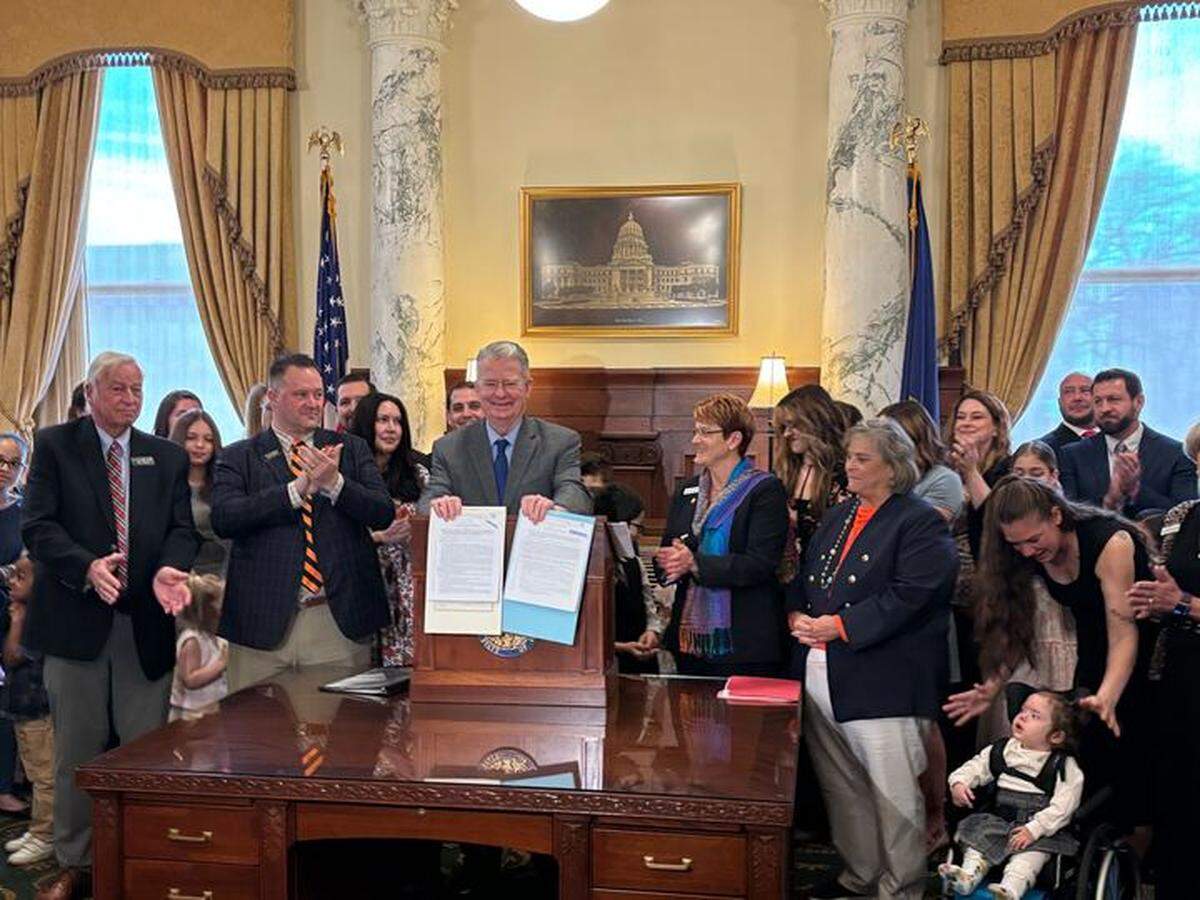
On March 25, Little invited foster families and members of the public to witness the signing of House Bill 724, known as the Foster Care Safety Act, and Senate Bill 1257, known as Isaiah’s Law.
The two laws — one lays out regulations for the safety and care of children in foster care, and one gives courts guidelines for how to handle parental visits in cases of substantiated abuse — represent “great progress” for children in Idaho, Little said.
The foster parents over a period of weeks shared more than a dozen stories about children getting away from abuse and going through the system in Idaho, and on Wednesday, they stood next to Little as he signed the bills into law.
“This took a village,” Little said as he addressed the room. He commended the group’s effort in advocating for the laws, and said the state has been looking at legislation around foster care for while.
“Each year, hundreds of Idaho children enter foster care and endure some of the most difficult moments in their lives. Foster families, kinship givers, case workers, courts, community partners — they all play a critical role in helping children find stability and needs,” the governor said.
“Idaho has made meaningful progress in recent years, but the work is ongoing, especially when it comes to safety, permanency, and supporting children and caregivers.”
The push for more new laws was prompted after a 12-day-old named Benjamin was found dead in a Nampa residence in December. The infant’s parents had previous child abuse convictions and lost parental rights. They were arrested and charged with injury to child and failure to notify of a death.
Advocates and legislators were spurred into action, and in January bills gained steam to put in place new rules and regulations.
A ‘bill of rights’ for youths in foster care
The Foster Care Safety Act, sponsored by Rep. Josh Wheeler, R-Ammon, is essentially a “bill of rights” for children in the foster care system, Little said. It went into effect immediately after passage and approval.
The new law lays out several overarching protections for children that might seem obvious, such as the right to live in a safe and healthy environment, and appropriate safety considerations in visitation and placement decisions.
The law also requires the Department of Health and Welfare to provide those rights in a written notice to all children who enter foster care.
Wheeler said the bill came to life with the help of several people, including foster parents and the former director of Health and Welfare, Alex Adams. The bill swept through both chambers, with a 58-7 vote in the House and a 30-2 vote in the Senate.
Legislators said several foster parents shared their stories during the process. Monique Peyre, the foster mother of three children who are at least half-siblings of the infant Benjamin, said that when she first met her youngest, he was “extremely ill.”
“He was pulling hard for every breath, you could see his ribs and collarbone. With every inhale, he could barely keep his eyes open and appeared very lethargic,” she said in testimony to the Senate Health and Welfare committee.
Doctors said he was malnourished and dehydrated, Peyre said, and X-rays showed he had bronchiolitis and inflammation in his lungs. She said physicians believed his lungs were inflamed due to environmental exposure.
Still, she said, the child’s parents were granted visitation rights. Peyre said the child would return struggling to breathe and would have severe asthma flareups. He was hospitalized 17 times for acute hypoxemic respiratory failure, she said.
Peyre said she repeatedly brought her concerns to Health and Welfare, but under the laws and rules then, it took a year before action was taken and visitations were halted.
“I still have messages on my phone where I was pleading with the department not to require him to attend because he was always struggling,” Peyre said. “I said, ‘I understand parents have rights to visitation, but this baby has a right to breathe.’”
Wheeler said part of his bill’s intent was to provide good guidance to both the Department of Health and Welfare and the judicial branch regarding decisions that best serve the kids.
“It affirms that children in foster care have rights to a safe and healthy placement environment, protection from abuse, timely medical assessments following abuse disclosures and access to basic necessities,” Wheeler said.
Senator: Isaiah’s Law in Idaho strikes a balance
SB 1257 was named after Peyre’s oldest child, whose story in the foster care system inspired it. Sponsored by Sen. Melissa Wintrow, D-Boise, it aims to provide clarity in the state’s child protection statutes regarding visitations for those in foster care.
This bill will go into effect July 1. Its language outlines an update to visitation rules that include in-person, video, phone and written contact. It establishes safeguards to halt or limit visitation when there are substantiated findings of abuse, and it clarifies how courts may consider cases when a parent is likely to be incarcerated for the majority of a child’s adolescence.
In cases of abuse, an in-person visitation would be allowed afterward only if the court determines that is somehow in the child’s best interest. The court then would set very specific conditions to ensure the child’s safety, according to the law.
Wintrow previously told the Statesman that the legislation was intended to strike a better balance between parental rights and child protection, giving the courts the tools they need to properly weigh the child’s best interests.
“What we’re talking about here is providing that guidance to the courts when the abuse has been substantiated,” she said. “We’re talking about egregious acts ... and we really need to safeguard when the child is in the custody to state their best interest in safety.”
Peyre shared Isaiah’s story in front of a House committee in March, explaining that he went into foster care at age 5 for the second time after Health and Welfare found substantiated abuse. His biological parents had prior abuse convictions.
Peyre said that two weeks after he was removed, weekly court-ordered visits began. Peyre said she saw Isaiah’s traumas resurface, including having nightmares, and on visitation days, he would regularly hide.
When Isaiah and her other children returned from visits, it would take days for them to “emotionally regulate,” she testified. It went on like this for 18 months, according to Peyre.
“Children in foster care do not choose the abuse they endure, the court process that follows, or the trauma that they are asked to relive week after week,” Peyre said.
Ivy Walker, a member of Idaho Voices for Children, testified in front of the House Health and Welfare Committee in favor of the bill and spoke about her own experience growing up in Idaho’s foster care system.
She told legislators that she was required to have ongoing visits with a biological parent who abused her, after being removed from their care for her own safety.
“(This bill) says what should be very obvious, when sexual or physical abuse has been confirmed, we should not presume mandatory in-person visitation is safe,” Walker said. “Children’s safety must come first.”
Jean Fisher, an administrator in DHW’s Division of Youth Safety and Permanancy, answered questions lawmakers had about the possibility of courts overstepping in cases of terminating visitations.
At the signing, Fisher said that in her career, she has seen cases of abuse and neglect go forward in the court system and not receive the attention they should to protect the child. She said this bill will change that.
“This bill, which I’m so proud of, will finally give the courts the opportunity to look at these cases individually, make decisions that are in the best interest of children, recognizing that our job within the Department of Health and Welfare in the state of Idaho is for the safety of children first,” Fisher said.

Advocates now look to Benji’s Law as well
The last bill Peyre worked on and hopes to see signed is Benji’s Law, named after the infant who died in December.
The bill would require DHW to respond more quickly and with escalated action when notified of an infant living with parents or guardians with a “high-risk history” — meaning they have convictions of child abuse or sexual abuse, parental rights were previously terminated, or there could be exposure to narcotics use.
In Benji’s case, his situation was prioritized as the lowest level for the department, and staff members were not able to check on the child quickly. Health and Welfare officials could not confirm the location of the parents, which made it more difficult.
After the death, the Idaho Office of the Ombudsman completed a review and determined that the department acted in accordance with Idaho law and established procedures. The report also noted that preventative measures could be taken through a change in legislation or policy to adjust priority levels for similar cases.
Benji’s law passed the House on March 18 and is now on its third reading in the Senate; it awaits a vote there.