This was the Idaho crop that ‘paid the mortgage.’ Why are farmers struggling?
AI-generated summary reviewed by our newsroom.
- Tariff unchanged since 1990s lets cheaper foreign sugar undercut U.S. prices.
- Growers face price drops, higher costs and financing pressure heading into 2026.
- State resolutions and $150M USDA aid provide short-term relief, not fixes.
Just as Galen Lee’s great-grandparents were preparing to start their second Idaho homestead, his great-grandfather was fatally stabbed by the pitchfork he was carrying after someone spooked his horse.
Left to raise the family on her own, Lee’s great-grandmother managed to keep the family’s first farm running, while camping out and baking bread on the new land at night to make sure the family met government requirements to keep it.
With just a horse and a chain, she and her children painstakingly removed sagebrush from the land, preparing to farm it for forage crops and, starting in the 1940s, sugar beets, Lee told the Idaho Statesman.
So, keeping the family’s New Plymouth farm running for four generations hasn’t always been smooth sailing, to say the least.
But recent years have posed a new challenge for Lee — and for many of the 700 or so southern Idaho sugar beet farmers like him. A tariff designed to protect American sugar farmers hasn’t been raised since the 1990s. The excessively low rate, called a “tier 2” or “over-quota” tariff, has allowed cheaper foreign sugar to flood the U.S. market, said Zach Patterson, president of the Snake River Sugar Beet Growers Association and a farmer in Paul.
The outdated tariff structure, combined with inflation, lower-than-usual demand for sugar and high-yield, successful years of production in the U.S. has made it difficult for farmers to turn a profit, Patterson told the Statesman.
“The last couple of years, it just got to a point where the sugar market just fell off,” he said. “It just fell off a cliff.”
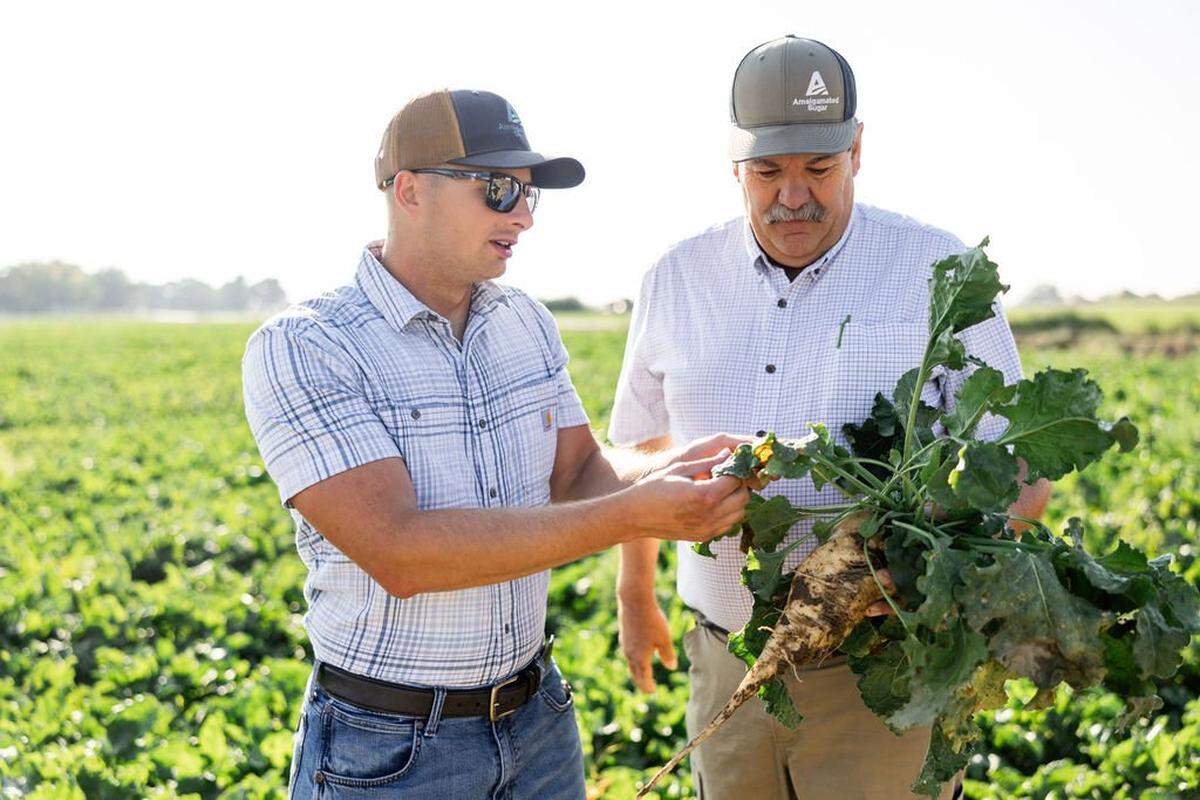
A ‘scary’ time for sugar beet farmers
For Idaho sugar beet farmers — many of whom, like Patterson and Lee, are the third and fourth generations in their families to work the same land — sugar beets have long been a reliable source of income.
Traditionally, they were “the crop that paid the mortgage” amid the uncertainty of prices of other crops, said Lee, who also serves on the board of the grower-owned Amalgamated Sugar Co. and the Snake River Sugarbeet Growers Association.
Lee, who farms about 230 acres of sugar beets, was earning about $1,800 an acre until 2025, when he saw prices drop about 30%. That pain was compounded by a 30% increase in expenses — equipment, gas, labor — over the last five years, he said.

“Our inputs have gone up, and our income has gone down, and we’re at the point now that those lines have crossed,” he said.
In many years, one commodity’s high price could offset another’s low price, but the outlook is grim across the board for 2026, Lee said. As farmers talk to their banks about refinancing this year, bankers are asking: “You didn’t show a big profit last year. What’s different this year?” Lee said.
“And there’s really nothing different from what we had last year,” Lee said. “So that’s scary.”
He warned that if nothing changes, some older farmers might decide it’s time to quit and sell their land. Idaho sugar beet farmers own shares in Amalgamated Sugar that commit them to farming a certain number of acres each year, and they co-own three processing plants in the state, including one in Nampa.
If enough people decided to stop farming sugar beets that a factory shut down, it would almost certainly not reopen, Patterson said.
“Once one shuts down, it’s gone,” he said.
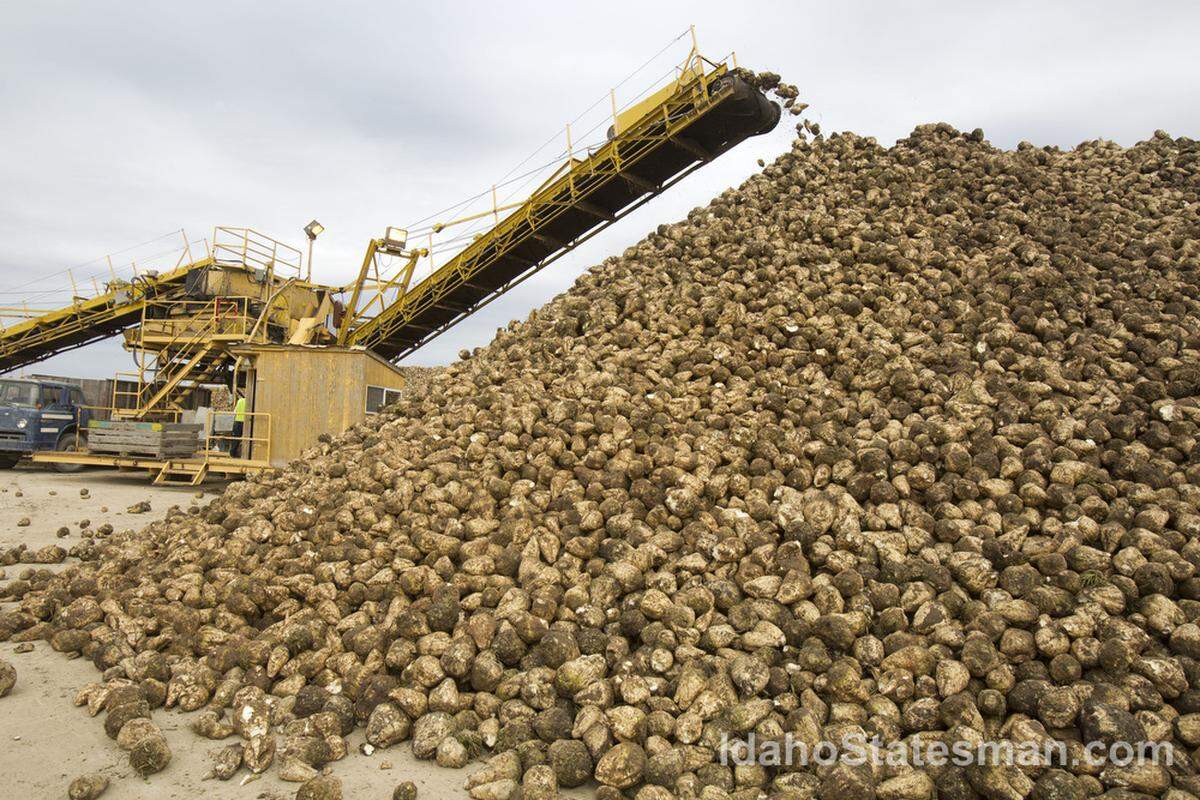
Without a federal fix, ‘our hands are tied,’ farmer says
U.S. sugar farmers have historically produced about 9 million tons of sugar — three-quarters of the amount Americans demand. So the federal government created a tariff to fill in the gaps with sugar grown overseas, including in India, Thailand and Brazil, without allowing those countries’ lower-priced sugar to put American farmers out of business and leave the U.S. dependent on a foreign product.
Idaho is the second-largest producer of sugar beets in the U.S., with nearly 200,000 acres of sugar beet farmland under production that generates over $1 billion each year.
In late February, farmers traveled to Washington, D.C., to ask federal officials to update the tariff to reflect inflation and changes in demand, a fix that would require an act of Congress, Lee said. He said lawmakers were “receptive,” but whether they’ll take action remains uncertain.
A week before, the U.S. Department of Agriculture announced that it would provide $150 million in one-time “bridge” payments to American sugar farmers in response to “temporary market disruptions and increased production and processing costs,” according to a Feb. 20 news release.
That payment is “certainly helpful in providing short-term support” for sugar beet farmers, but it doesn’t solve the long-term structural issues in the market, Lee told the Statesman by email.
In the meantime, state lawmakers have been supportive — though there’s little they can do. On March. 5, the Idaho Senate adopted a nonbinding joint memorial calling on Congress to raise the tariff, which “no longer provides effective protection” against foreign sugar. That memorial has now moved to the House for a vote, after which it would head to Gov. Brad Little’s desk.
“Strengthening this safeguard will help restore fair trade and protect domestic producers,” wrote sponsor Sen. Tammy Nichols, a Caldwell Republican and the chair of the Senate Agricultural Affairs Committee, in the resolution’s statement of purpose.
But Patterson was sober about the levers available to individual farmers, companies and even state lawmakers.
“It’s frustrating to me, because I can be as efficient as I can on my farm,” and factories “can be as efficient as possible,” he said. “But until a federal fix comes in, nothing can really happen.”
“At the end of the day, our hands are tied,” he added. “If they allow cheap sugar in, we can’t compete. We’ll be out of business.”