Could Idaho sugar beets help save taxpayer money on cement? ITD officials want to try
AI-generated summary reviewed by our newsroom.
- ISU and ITD will test a new concrete made from a sugar beet processing byproduct.
- Dubbed "Sweetcrete," the substance is cheaper and more sustainable.
- The project's next phase will begin July 1, with hopes for field testing within a year.
Outside of Amalgamated Sugar’s Nampa factory, piles of a pale, chalky substance loom like flat-topped hills. The company said that for over a century, since its first Idaho factory opened, its workers have been stockpiling the waste product created from the process of turning beets into sugar, waiting for someone to find a use for it.
Now, it’s on the verge of becoming a key part of state infrastructure.
Idaho State University has partnered with the Idaho Transportation Department to field test a new concrete made from the powdery substance, known as precipitated calcium carbonate (PCC).
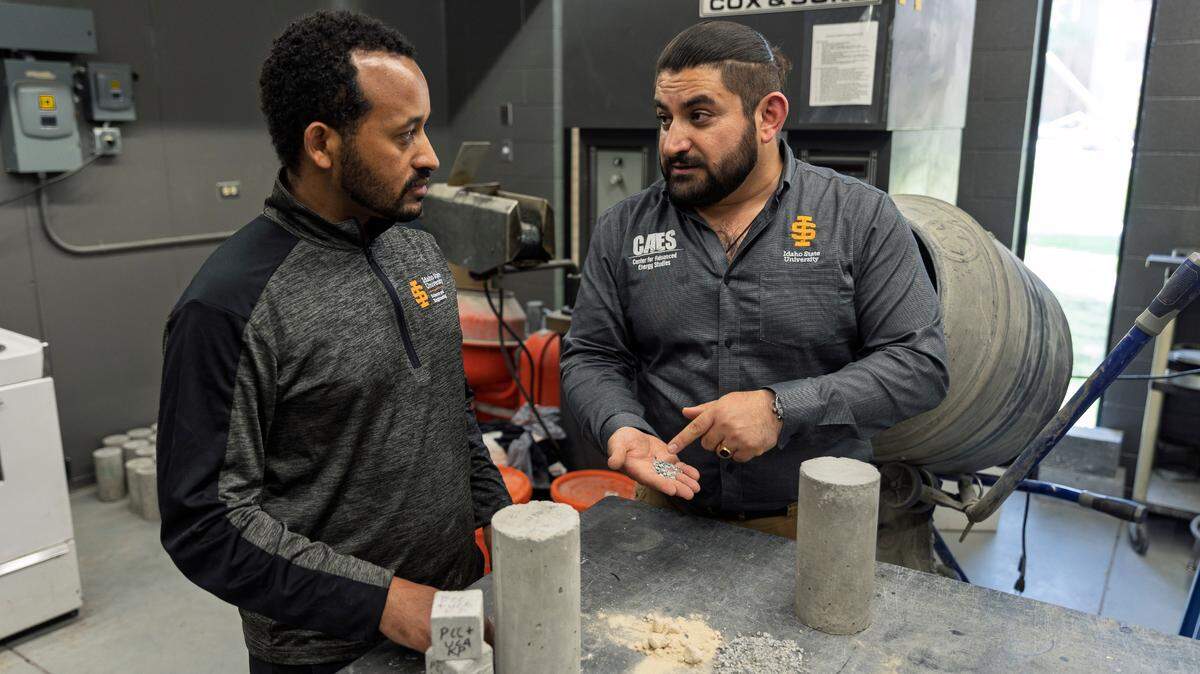
University researchers for the past four years have been developing the concrete they called “Sweetcrete” as a more sustainable, less costly alternative to traditional concrete, said Mustafa Mashal, an ISU civil and environmental engineering professor and lead inventor of the material. Starting in July the researchers said they will collaborate with industry partners, including ITD, to test the new product.
Mashal told the Idaho Statesman that they hope to have implemented a project using Sweetcrete within a year. That project “could be anything,” Mashal said, like using it for a sidewalk, a foundation or retaining wall. It’s a much better use of the state’s agricultural waste products than to throw them away, he added.
“We understand that it’s not the right solution to just go and landfill them,” Mashal said. “So we always look into opportunities where we use practical, applied research to benefit Idaho, the economy, and also reduce the consumption of fresh materials.”
Zak Johnson, ITD engineer manager, told the Statesman that they were considering some Sweetcrete projects in Pocatello, emphasizing that it would not be used in structural components or high-traffic areas during the testing phase.
He said Sweetcrete had the potential to save Idaho taxpayers money and conserve fresh materials.
“If we can use something that another manufacturer is wasting that will help out hundreds of thousands of people, then by all means, we’re all ears for seeing what we can do to use that and make our infrastructure and our impact in this world, and the state of Idaho, better,” Johnson said.
ISU plans more projects with Amalgamated Sugar
The Sweetcrete project began in 2021, when ISU civil engineering student and deputy structural lab manager Joe Shurtleff saw his brother-in-law using PCC for a landscaping project. Shurtleff told the Statesman that he became curious about whether the material, which was available in abundance from Amalgamated Sugar, might be useful for research, and brought samples to Mashal, his professor.
From there, Mashal workshopped the idea of using PCC to replace cement in concrete. Although the words “cement” and “concrete” are often used interchangeably, concrete is a blend of cement, water and aggregates, Mashal said. Aggregates are solid particles like sand and gravel that, when combined with water and cement, lock into place in the mixture.
“The most expensive product in concrete is cement,” Mashal told the Statesman. “And cement is a very environmentally unfriendly material. For every pound of it, pretty much 1 pound of carbon dioxide is emitted to produce it.”
The project became the basis of the master’s thesis of Kabiraj Phuyal, who graduated from ISU’s structural engineering program in 2023.
Phuyal told the Statesman he found that replacing all of the cement in concrete with PCC compromised the strength and mixability of the concrete. So he increased the amount of PCC by 5% at a time, and discovered the sweet spot was around 30% PCC and 70% cement.
“If we can replace a portion of cement with a little bit of PCC … then we’ll be able to reduce carbon emission (by) a huge amount,” Phuyal said.
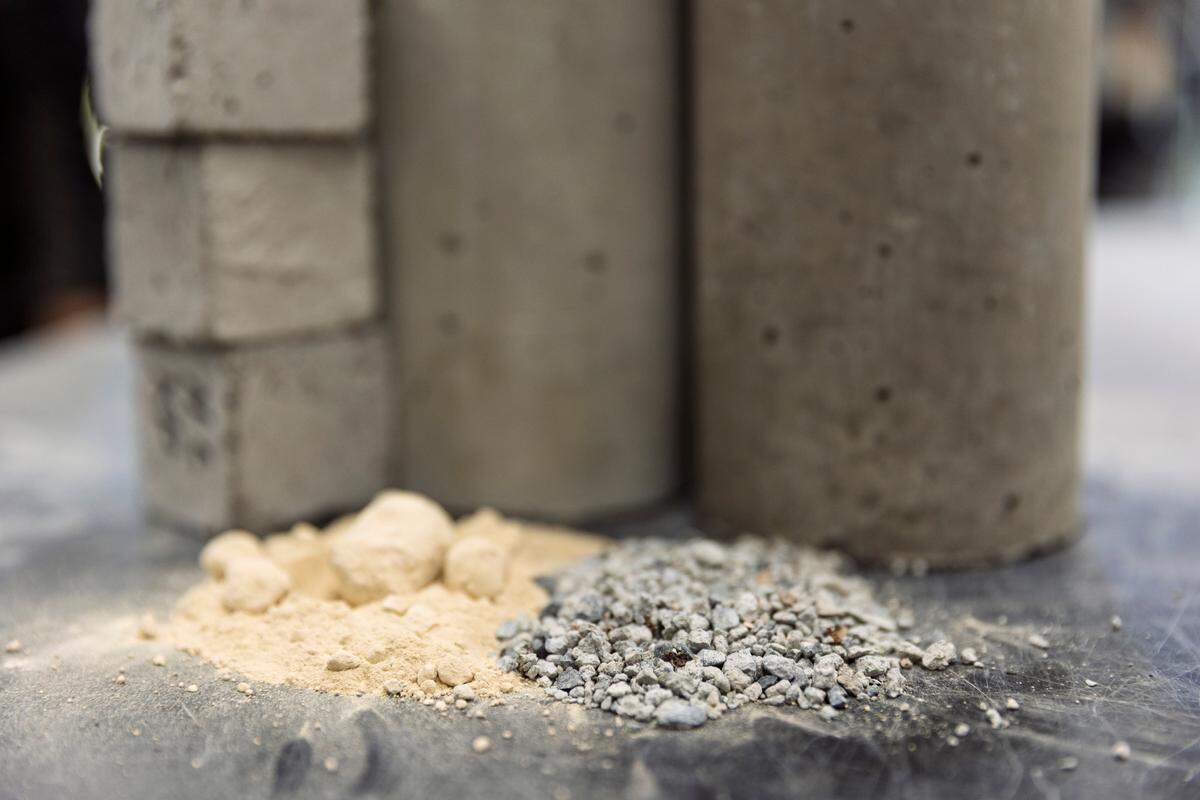
The Sweetcrete project hopes to make the water and aggregate ingredients in concrete more sustainable, too. Mashal said researchers will replace new aggregates with upcycled concrete from demolished structures and test replacing fresh water in the mixture with treated wastewater. They also plan to develop a software tool that uses artificial intelligence to identify the perfect Sweetcrete blend of PCC and cement for specific construction projects. Different uses for the concrete would need different levels of strength or pliability.
In addition to ITD, ISU researchers will be partnering with Amalamated Sugar, Oldcastle Infrastructure and Colliers Portneuf Valley, according to ISU. Oldcastle and Colliers will explore using Sweetcrete in construction projects, and Amalgamated Sugar will continue to provide a source of PCC to researchers.
“We’re working with such a diverse number of industry champions,” Mashal said. “We want to make sure that we benefit everyone and keep all our options open.”
This story was originally published June 27, 2025 at 4:00 AM.