‘In my America’: Lawmakers debate bills to ban Boise Pride flag
AI-generated summary reviewed by our newsroom.
- Bills could stop Boise Pride flag; one would add $2,000/day fines.
- Lawmakers worried bill could bar banners like 4-H or grad flags
- Debate was partisan; public turnout largely opposed while cities defend compliance.
Idaho lawmakers unhappy with the city of Boise and Mayor Lauren McLean for flying a Pride flag at City Hall have introduced two bills that could stop it. But one of the bills could also prevent local governments from flying banners celebrating things like 4-H or high school graduates.
The legislation stems from the aftermath of the Legislature’s 2025 session, when Gov. Brad Little signed a law banning governments from flying most flags. Legislators then were given photos of the Pride flag on the House floor. But they didn’t include an enforcement mechanism in the law, and Boise and Bonners Ferry found ways to still fly the Pride flag and the Canadian flag, respectively.
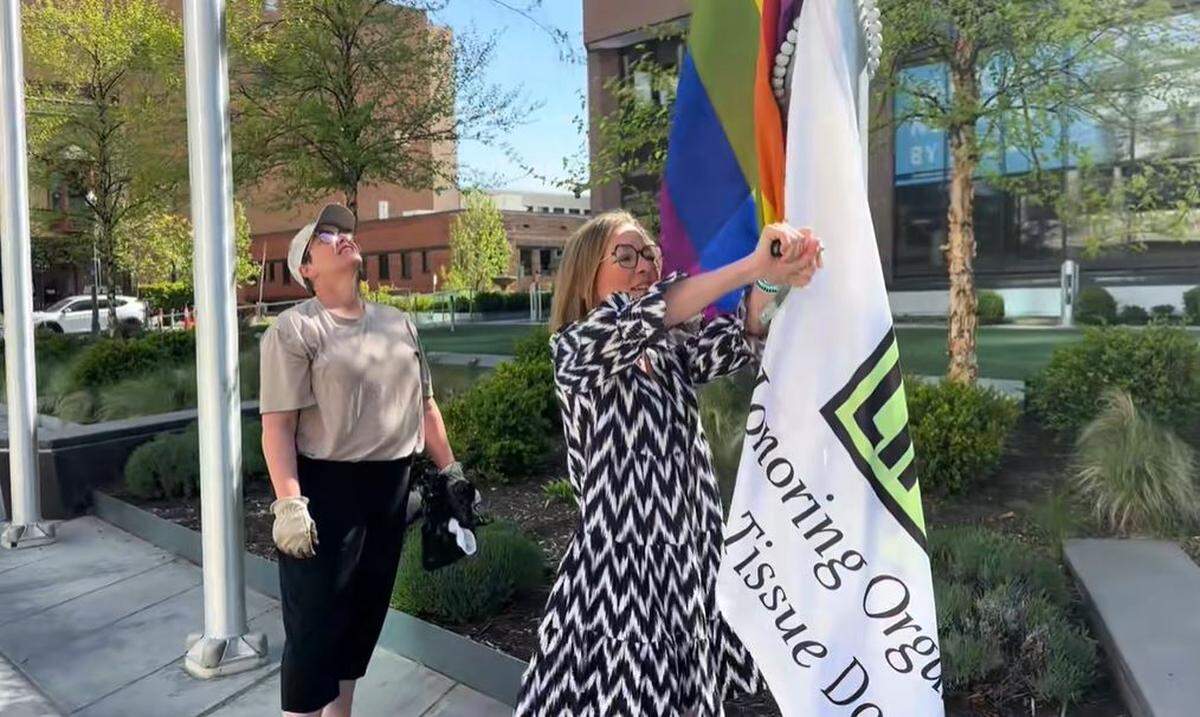
This year, lawmakers have made clear that their efforts are in response to Boise’s Pride flag, which made the rainbow banner and an organ donor flag official city flags that still fly at City Hall. Rep. Ted Hill, R-Eagle, acknowledged that losing community banners was “unfortunate” but said the flags could easily be moved to nongovernment flagpoles.
“The reason why we’re here today, on this bill, was to respond to the local mayor,” said Hill, the bill’s sponsor. “I’m a donate family. We donated my 16-year-old daughter’s organs. So yes, the donate life is good for me, I like that flag, it fits me, it’s great. So that’s the collateral damage because that no longer will be there.”
Hill’s bill would add a $2,000-a-day penalty per flag assessed against the governmental entity, and it would allow the Attorney General’s Office to enforce the law. It’s unclear where the $2,000 would go. The legislation replaces an earlier attempt by Hill to bring down Boise’s Pride flag after lawmakers amended the bill in a way that undid his intent.
His plan drew massive opposition on Monday. Dozens of people lined the hallway outside the hearing room, many of them holding Pride flags.
Inside, the overwhelming majority of those who spoke were against the bill.
“In my America and I believe, in my grandfather’s America, we embrace ideas. We embrace the freedom that we hold so dearly,” said Rep. Anne Henderson Haws, D-Boise, hand on her chest and looking at Hill, who did not return her gaze. “I would just challenge the members of this committee to really think about what it means to be unified in America. In my America, in my grandfather’s America, that’s a place we’re not scared of ideas or other people.”
Rep. Joe Alfieri, R-Coeur d’Alene, said he was “offended” by the Boise flag.
“The point of this is that government must remain neutral,” Alfieri said. “We should not be picking sides. We should not be picking winners and losers.”
Lawmakers voted 12-2 along party lines to move the bill to the full House.
One question that came up is what else any city would be willing or unwilling to fly. One lawmaker brought up what to do if a city wanted the Nazi flag or whether city halls should fly a flag representing Muslims. Lynn Bradescu, who lost a 2025 campaign for the Boise City Council, said she had asked the city to fly an Israeli flag for a day to commemorate Israel’s creation and was rejected.
Boise Mayor responds
Boise Mayor Lauren McLean also testified in opposition. At a press conference afterward, McLean didn’t directly answer why the city didn’t let that flag fly but said that the city responded that it would be flying only the official flags.
McLean said the one exception was flying the Basque flag when the Basque president was in town for Jaialdi in 2025. The law allows for governments to fly other countries’ flags for special occasions.
“I remain committed to ensuring that we’re doing all that we can to make clear that everyone is welcome. Discrimination is not OK. Anti-semitism is not OK,” McLean said, standing outside Boise City Hall with the Pride flag hanging behind her. “Neither is targeting a group of people, constantly, by a legislative body that makes it harder and harder for them to feel as though they’re welcome anywhere in the state.”
Later on Monday, Sen. Todd Lakey, R-Nampa, presented another bill that could affect Boise’s ability to fly the Pride flag. Under his proposal, the Attorney General’s Office would have the ability to obtain court injunctions to stop people who are violating any section of Idaho code. McLean maintains that Boise’s flags are “in compliance with Idaho law.”
The flag bill is an example of where the law would apply, Lakey told the Senate Judiciary and Rules Committee. He told the Statesman in an interview after that he could not think of any other recent examples. The committee voted to send his bill to the full Senate.
McLean’s spokesperson, Emilee Ayers, said in an email that “we are aware of and tracking this bill.”