Take a ‘chainsaw’ to the budget? Tension rises before an Idaho legislative vote
AI-generated summary reviewed by our newsroom.
- Committee approved 4% cuts for FY2026 and 5% for FY2027.
- Some members said sweeping cuts would sideline prior targeted program work.
- Aligning with federal tax changes will cut state revenue by millions annually.
It was a tense Friday morning in the Idaho Capitol.
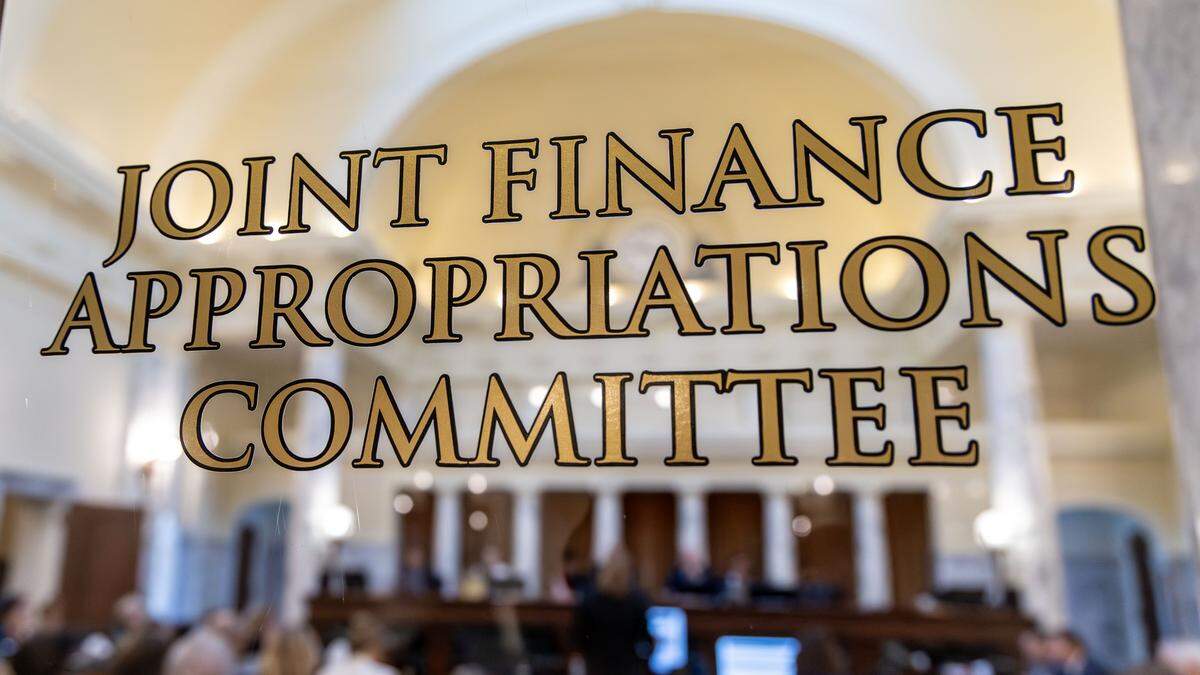
Outside the Joint Finance and Appropriations Committee meeting room, a dozen or so demonstrators held up signs urging lawmakers to keep their “hands off” Medicaid.
Inside, members of the powerful legislative committee pushed back against its leaders as they prepared to vote on across-the-board cuts to the state’s budget for fiscal years 2026 and 2027.
Months ago, committee members knew that the state faced a revenue shortfall, and many of them combed through state budgets “line by line,” looking for “cuts that wouldn’t hurt people, cuts that would not come back (in) two to four months and cost the state millions of dollars in jails and hospitals and emergency services,” Sen. Kevin Cook, R-Idaho Falls, told his committee colleagues.
Friday’s vote, on whether the state would cut nearly every agency’s budget by 3%, 4% or 5%, called on those members to “lay aside everything that we have done, all of our work,” he said.
“Why would we do that? Why would we ignore the work that this committee has done?” he asked. “That approach is not precision. It is taking a chainsaw to their budget.”
In August, amid projected revenue shortfalls, Little called for nearly all state agencies to cut their spending by 3% for fiscal year 2026, which ends in June. In his annual State of the State address in January, he proposed a budget that would have relied heavily on large, one-time cuts to offset low revenues after years of tax cuts. But the finance committee’s leaders have called for deeper, ongoing cuts. They have said Little’s approach doesn’t address long-term, structural problems in the budget and is not sustainable.
Lori Wolff, Little’s budget director, told the Idaho Statesman on Friday that she still believed Little’s proposed budget was balanced and “responsibly” reduced spending “without cutting too deep.”
Her team sought to “minimize the impact to rolling those costs down to communities, counties, to cities, where eventually they’re going to just have to pick up those costs,” she said during a conversation with reporters on Tuesday.
In recent years, working groups within the committee have collaborated with agency heads to assess budget needs — and find possible cuts — by combing through individual programs, said Sen. Janie Ward-Engelking, D-Boise, who has served on the committee for 10 years.
To instead vote first on sweeping changes, some committee members said, effectively took away committee members’ power.
Many state agencies have already “trimmed the fat,” said Rep. Rod Furniss, R-Rigby, and may have little room to make further cuts. Normally, committee members would work with those agencies to make nuanced decisions about their specific cases, he argued.
“Our job would have been to go to the agency, the budgets, find that money and report back,” he said. “We didn’t have a say in this.”
The committee’s leaders pushed back on that characterization. Setting a balanced budget across the board “does not in any way prevent all the work that you’ve been doing to come to full fruition,” said Co-Chair Sen. Scott Grow.
The committee’s working groups will still get the chance to add spending back in later this session, though they’d have to make cuts elsewhere to balance such spending, the Eagle Republican said.
Committee leaders aim to “give the working groups a fighting chance to actually work within the means of the current budget,” said Rep. Josh Tanner, R-Eagle, the committee’s other co-chair.
But lawmakers — and the Legislature’s lead budget analyst — were skeptical that individual program cuts could be reversed so easily, given the magnitude of the overall cuts.
“That’s going to be a really high bar,” said Keith Bybee, the manager of budget and policy analysis in the Legislative Services Office.
Ultimately, a divided committee mostly went along with Grow and Tanner and voted 14-6 to approve 4% total budget cuts in fiscal year 2026, which ends in June, and 13-7 to approve 5% total cuts in fiscal year 2027. Medicaid, the Department of Correction, Idaho State Police and the state’s K-12 public school system are exempted from the additional cuts.
Those deeper cuts will affect staffing levels and the quality of government services, Wolff said Friday.
Grow said Friday that he aimed to mirror the approach to budget cuts the committee took during an economic downturn in 2009 — though Little has said repeatedly that the state’s economy is strong.
This year, Grow said, the need for cuts beyond the 3% Little called for mid-year stemmed in large part from lawmakers’ decision to align the state tax code with the federal one. The federal code includes several new tax breaks and credits for individuals and companies and will dock millions of dollars from the state’s revenue each year.
Hours later, the Senate voted to pass a bill proposing near-complete conformity with those federal cuts starting retroactively with calendar year 2025. The bill is set to head to Little’s desk to be signed into law.
Wolff didn’t say whether Little would sign it.
“I think he’ll look carefully at what some of these budget decisions are,” she said. “More to come on that, I think, as we assess all of these moving pieces and parts.”