‘Rampant cancel culture’: Idaho bill would require state approval to remove monuments
Following years of controversy around Confederate monuments in other states, Idaho legislators are again proposing a bill that would make it more difficult for cities to remove a historical monument or rename a public building.
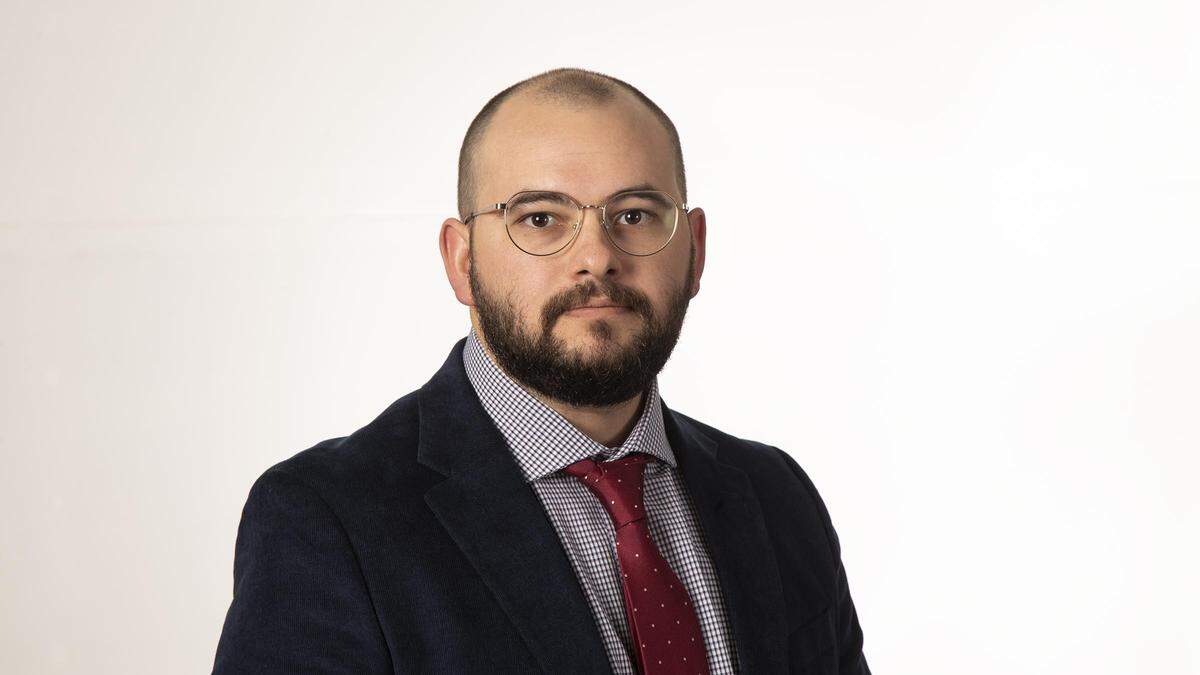
The House on Tuesday passed the bill, sponsored by Rep. Doug Okuniewicz, a Hayden Republican, which would require approval by the majority of the Idaho State Historical Society’s board of trustees before historical monuments and memorials on public property are removed. It would require the same approval for the rededication of schools, bridges, parks and other public areas named after historical figures.
The bill would encourage anyone seeking to remove a monument to relocate it rather than destroy it, Okuniewicz said Tuesday.
It’s similar to a bill that Okuniewicz introduced last year. That measure would have required the Legislature’s approval before removing monuments and renaming public areas. The former legislation never received a hearing in the Senate.
The new bill had bipartisan opposition Tuesday as 10 Republicans joined the 12 House Democrats to oppose it.
Rep. Scott Syme, a Caldwell Republican, argued in favor of local control over monuments and names, which are driven by citizen input.
“Now we’re telling those citizens, ‘You have no idea what you’re talking about. We know best up here,’” Syme said.
Maintaining local control over historical monuments and memorials is “an absolute must,” said Rep. Sally Toone, a Gooding Democrat. Her city is named after former Idaho Gov. Frank R. Gooding. When the school district decided to change the name of the Gooding High School football field to honor a superintendent, the move could’ve been blocked by the state, Toone said.
“Whose history takes precedence, our local history, which is very much apart of Idaho history, or state history?” she said.
Rep. Julianne Young, a Blackfoot Republican, defended the state’s authority to supersede local governments. The state government should intervene on “bigger issues,” she said.
“In light of the rampant cancel culture that we saw across the United States, this is a prudent attempt to balance the interests of citizens across the state,” Young said.
U.S. cities remove Confederate monuments
In recent years, many American cities have removed Confederate monuments. Following a white supremacist rally to oppose the removal of a Confederate statue in Charlottesville, Virginia, the state government repealed a law that preempted cities from removing similar monuments. Other cities, facing protests and potential efforts to pull down monuments, have acted swiftly to remove them to avoid violence or public endangerment.
In 2020, one of Boise’s largest churches, the Cathedral of the Rockies, removed a stained-glass window featuring Confederate Gen. Robert E. Lee. It wasn’t the only Confederate memorial in Idaho.
In the Boise National Forest there is a creek, and possibly a campground, named after Lee.
A Treasure Valley tributary of the Boise River, called Dixie Drain, is thought to be connected to the Confederate sympathies of former Missourians who settled in the area.
Rep. James Ruchti, a Pocatello Democrat, said Tuesday that he grew up in the shadow of a mountain with a derogatory name.
Now called Chinese Peak, the name of the Pocatello mountain previously included a racial slur. A local member of an Asian American advocacy group in the late 1990s lobbied a federal panel with the authority to change the names of natural features after consulting with local officials.
The Idaho Geographic Names Advisory Council, a board within the Idaho State Historical Society, rejected one proposal to remove the slur and honor Chinese miners and laborers by calling it China Peak, the Associated Press reported at the time.
Ultimately, the federal board settled on Chinese Peak.
“This is why the principle of local control is so important,” Ruchti said. “Our community members come together and they decide what’s important to them. This goes right to the heart of that principle.”
Okuniewicz’s bill now heads to the Senate.
This story was originally published February 15, 2022 at 3:51 PM.