More than $85K raised. Zero challengers. What’s up with these Meridian ‘races’?
More than $85,000 has flowed into City Council races in Idaho’s second-largest city.
The amount is not unheard of — Meridian, whose population is quickly nearing 150,000, has been home to high-profile elections and candidates with typically deeper pockets than those in neighboring Boise suburbs such as Eagle or Star.
But there is something odd: None of the races on the ballot Tuesday are contested.
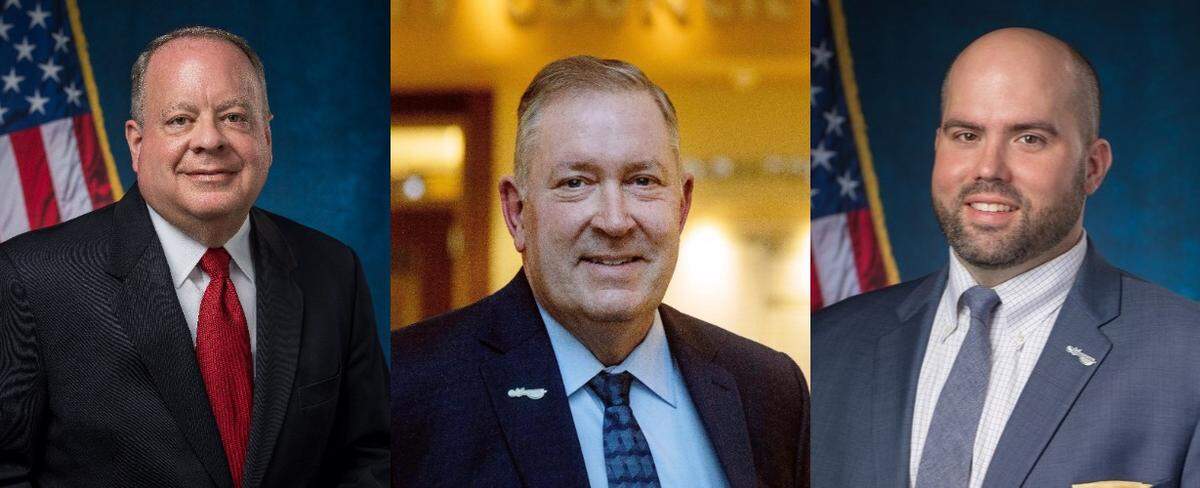
Three incumbents, including City Council President Luke Cavener, are running for reelection. He’s joined on the ballot by council members John Overton and Brian Whitlock.
Cavener has raised the third-most funds of any candidate in the state this election cycle, according to data from the Idaho Secretary of State’s Office. But he has no challenger for his seat, with Overton and Whitlock in the same position.
That’s unprecedented, according to Mayor Robert Simison, who said uncontested races have been few and far between in the nearly two decades he’s spent working for the city.
“If I look back on my time with the city ... we probably have as many on this ballot with no opposition as we did the previous 19 years,” he told the Idaho Statesman.
It also doesn’t appear to be the norm across the Treasure Valley for this election cycle. Simison pointed to crowded City Council races in neighboring cities, such as Boise and Nampa, where some incumbents drew multiple challengers, with one seat in each city uncontested. In Eagle, seven candidates are jockeying for two open seats.
So why not in Meridian?
Simison’s explanation was of the glass-half-full variety: Maybe voters are happy with the way things are going at City Hall.
“We have a city that’s firing on all cylinders,” he said.
The candidates, who have raised on average more than $28,500 apiece, mostly in the time before they knew they would be unopposed, were mostly inclined to agree. In interviews with the Statesman, they expressed both surprise at the lack of challengers and hope that it indicated a mandate from voters.
But according to Jaclyn Kettler, a political scientist at Boise State, there are many factors that go into prospective candidates’ decisions on whether to run, and incumbents’ large coffers can be one of them.
‘Magic formula’? In Meridian, incumbents are well-funded
Overton, who joined the City Council in 2023 to fill a vacancy left by state Sen. Treg Bernt, told the Statesman that he keeps getting asked: “How on earth did all three of you in Meridian end up without an opponent when all of the neighboring communities have these highly contested positions?”
“And I’ll tell you, there’s no magic formula in Meridian,” Overton said.
Still, he’s taking it as a good sign. While door-knocking both for his campaign and for a $5 million public-safety levy that’s on the ballot, Overton said, he’s heard overwhelmingly positive feedback.
“I have to believe that’s a substantial part of why we don’t have anybody running against us, is we’re doing the best job for the city of Meridian, and a majority of people believe that,” said Overton. “I say a majority because I’m sure there’s still a section of people that live in the city that just really don’t pay attention to elections ... So we’ve got those folks, too.”
Overton said the most important issue he’s heard from voters is public safety. A retired Meridian police officer of nearly 30 years, Overton said he’s had people tell him, “Who’s going to come in and do a stronger job of standing up for what we think is most important in our community going forward? ... No one wants to take you on.”
Whitlock, who heads the Idaho Hospital Association, said the lack of challengers suggested to him that there isn’t a “clamoring for change.”
Whitlock said each member of the City Council fills a different niche, and he believes “most people would agree, we are a pretty cohesive unit.”
Districts may play a role, council president says
Cavener told the Statesman by phone that he didn’t have “a good answer” for why the races were uncontested.
“I’m more cynical,” said Cavener, who has served on the City Council since 2014. He said he’s heard that “people are pleased” with how the city is run — and he agrees — but he has trouble believing that people don’t have any concerns.
Other factors, such as the creation of council districts, could inform the absence of challengers, he said.
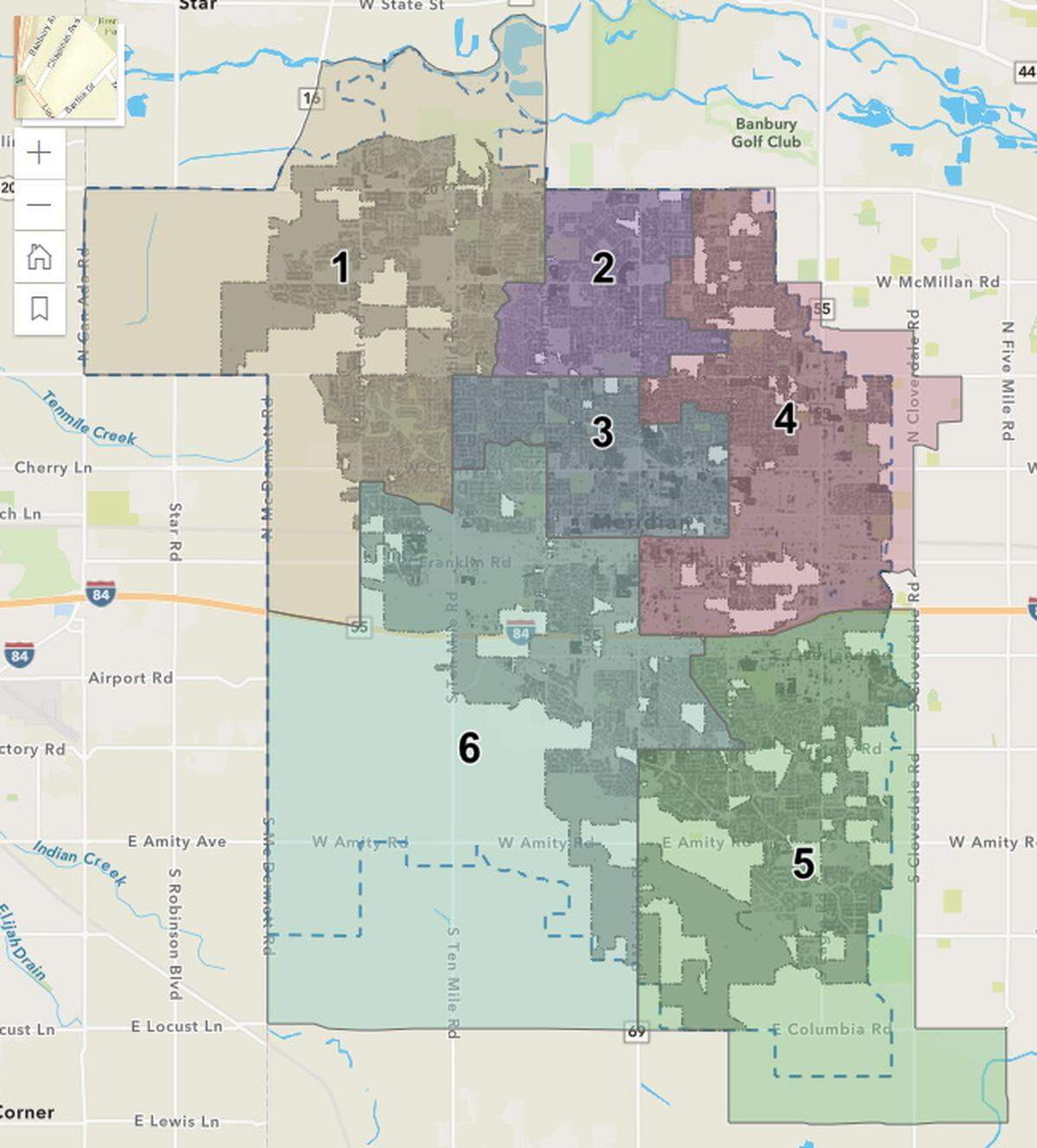
Under a 2020 state law, Meridian transitioned from at-large City Council races to districts in 2023, after it surpassed 100,000 residents. This will be just the second election in which council members will be chosen by district.
Cavener said an “unintended consequence” of the city moving to districts could be that prospective candidates may want to wait for a seat to open up instead of going head-to-head with an incumbent.
“I may think that I can do a better job of serving the city, but where I live, that seat isn’t up yet, and so I’ve got to wait,” said Cavener. “I think there’s a certain element of that.”
Cavener, who works as a managing director for the American Cancer Society’s nonpartisan advocacy arm, expressed some disappointment at being unopposed.
“This is probably not the right thing to say (from) a campaign perspective, but I think contested races are good for the city,” he said. “I think that I have been a better City Council member because I’ve faced competition that have brought up issues or topics that maybe weren’t on my radar.
“I really believe that iron sharpens iron.”
Boise State political scientist says money is important
Kettler, the Boise State professor, told the Statesman that potential candidates weigh several factors when deciding whether to run for a seat. A big one is financing.
“There is some research that suggests when incumbents have a really large campaign account, so their kind of war chest is large, that can be intimidating to potential challengers,” said Kettler. “So people possibly interested in running ... may decide to wait another election cycle to where maybe there’ll be a seat that’s open, or for one reason or another it seems like the incumbent is more vulnerable.”
Kettler also noted that the amount of money in local elections is on the rise nationwide. That comes from rising campaign costs, a growing share of individuals who decide to make political donations, and increased financial involvement from local industries, such as developers, she said.
As for the impact of districting? It may be too soon to tell, according to Kettler. She pointed to some emerging research that uncontested City Council races have been on the rise in California as cities have switched to district voting, as well as some findings that at-large city races can be more competitive.
This could suggest that incumbents can grow stronger name recognition or support within their district, she said.
“This could increase satisfaction with them or increase the perceived costs of challenging them,” Kettler said.
In Idaho cities, district elections are still new, and Kettler said she’s interested in what effect they’ll have over the next decade. For now, she said, the creation of districts “just adds another element.”
This story was originally published November 4, 2025 at 4:00 AM.