How important is the Idaho lieutenant governor? What you should know about the role
Idaho’s lieutenant governor has limited authority. Yet the office has drawn increased attention in recent years, as Gov. Brad Little has sparred with his No. 2 in the executive branch and amid a hotly contested race before next week’s Republican primary election.
Despite its narrow charge and small budget, the part-time job is sought after, as it often serves as a springboard to higher office. This year’s campaigns have drawn significant fundraising — more than $1.4 million, according to the secretary of state’s office.
“It’s been a stepping stone to higher a public office in the state, namely the governor,” Bob Geddes, former Senate president pro tem who temporarily served as lieutenant governor twice, told the Idaho Statesman by phone.
Ten Idaho governors, including Little, once served as lieutenant governor. Five of nine lieutenant governors since 1975 later became governor. Just one, now U.S. Sen. Jim Risch, was never elected governor.
What a lieutenant governor actually does largely depends on their relationship with the governor, and whether they decide to undertake their own tasks.
“You’re either the loneliest guy or gal in the Capitol or you can be very busy,” Geddes said.
Duties in Idaho Legislature limited
The Idaho Constitution lists just two duties for the lieutenant governor.
First, the lieutenant governor fills in when the governor is absent, and the constitution places the lieutenant governor second in the line of succession if the governor resigns, dies or is impeached.
Gov. Brad Little took the line of succession seriously during his nine-year run as lieutenant governor, Greg Wilson, Little’s chief of staff from 2013 to 2018, told the Statesman.
“He could be in the role of governor, so he wanted to make sure he was as prepared as possible,” Wilson said by phone.
Second, the lieutenant governor is president of the Senate. While a lofty title, the Senate president’s primary function is supervisory. They have no authority to shape legislation.
During Senate floor sessions and debates, the lieutenant governor maintains decorum and calls on senators when they ask to speak — like the “traffic cop” of the Senate, said Joe Stegner, former Senate assistant majority leader.
But “that might not even be the best example,” Stegner told the Statesman by phone, because senators are guaranteed the ability to speak regardless of whether the lieutenant governor calls on them.
The Senate president may seem similar to speaker of the House. Both preside over their respective chambers. But in reality, the House speaker has far more authority. The speaker, for example, assigns House members to committees, and they can remove members from their committees at any time, for any reason.
The House speaker also votes on legislation.
“The speaker of the House, by rule, has just a tremendous amount of power,” Stegner said.
The president of the Senate votes on legislation if there’s a tie, but that’s rare for the 35-member body. On top of the odd number, the Senate is dominated by Republicans, and consensus is often reached before a bill reaches the full body.
“We worked pretty hard to not ever allow a vote to be settled by a tie,” Geddes said of his tenure as Senate president pro tem.
‘Effectiveness’ based on cooperation with governor
The lieutenant governor makes about $48,000 a year, compared with the governor’s $138,000 salary. The lieutenant governor this fiscal year was responsible for a $183,100 office budget.
With few constitutional duties, Idaho lieutenant governors have the ability to pursue the goals of their gubernatorial administration, or their own.
“The effectiveness of the lieutenant governor’s job might be in their relationship with the governor and how they can help the governor and the administration,” Stegner said. “Normally, that’s a good relationship, and normally the governor trusts the lieutenant governor and asks for any number of things to help out the administration.”
Under former Gov. C.L. “Butch” Otter, Little led working groups on transportation and cybersecurity. He also vetted gubernatorial appointments to state boards and commissions. Otter also directed Little to pursue economic development opportunities by encouraging businesses to open shop in Idaho.
Otter and Little had a “very cooperative relationship,” as Little represented the governor’s interests behind the scenes, Wilson said. And Little “knew that Gov. Otter was the duly elected governor and he was the second guy.”
Little and Lt. Gov. Janice McGeachin have been public about their strained relationship.
In 2019, Little assigned McGeachin to head up a task force, the Regional Government Efficiency Working Group, to trim the fat from state agencies. The task force wrapped up its meetings in August 2020 and issued three recommendations at the end of the year.
But the following year, McGeachin, who is now challenging Little in the governor’s race, started to go off-script. She defied the governor in his COVID-19 response, and the center point of her tenure is her self-assigned task force to study “indoctrination” in schools.
McGeachin — the second Idaho lieutenant governor since 1932 to take on a sitting governor in a primary — also undermined Little’s coronavirus policies by issuing executive orders while the governor was traveling. That’s something at least two candidates seeking the Republican nomination for lieutenant governor have promised not to do.
House Speaker and lieutenant governor candidate Scott Bedke, R-Oakley, said he would deal with disagreements with the governor “the way responsible adults do.”
“I don’t always agree with my wife, nor she with me, but we have worked it out,” Bedke told the Statesman. “We’re happily married for 42 years, and it’s because we understand that there are bigger things at play here than just our separate egos.”
Dark horse candidate Daniel Gasiorowski said in response to a candidate survey that he would not issue executive orders while the governor is out of state.
“I would work with the governor and not go grandstanding and accomplish nothing,” he said.
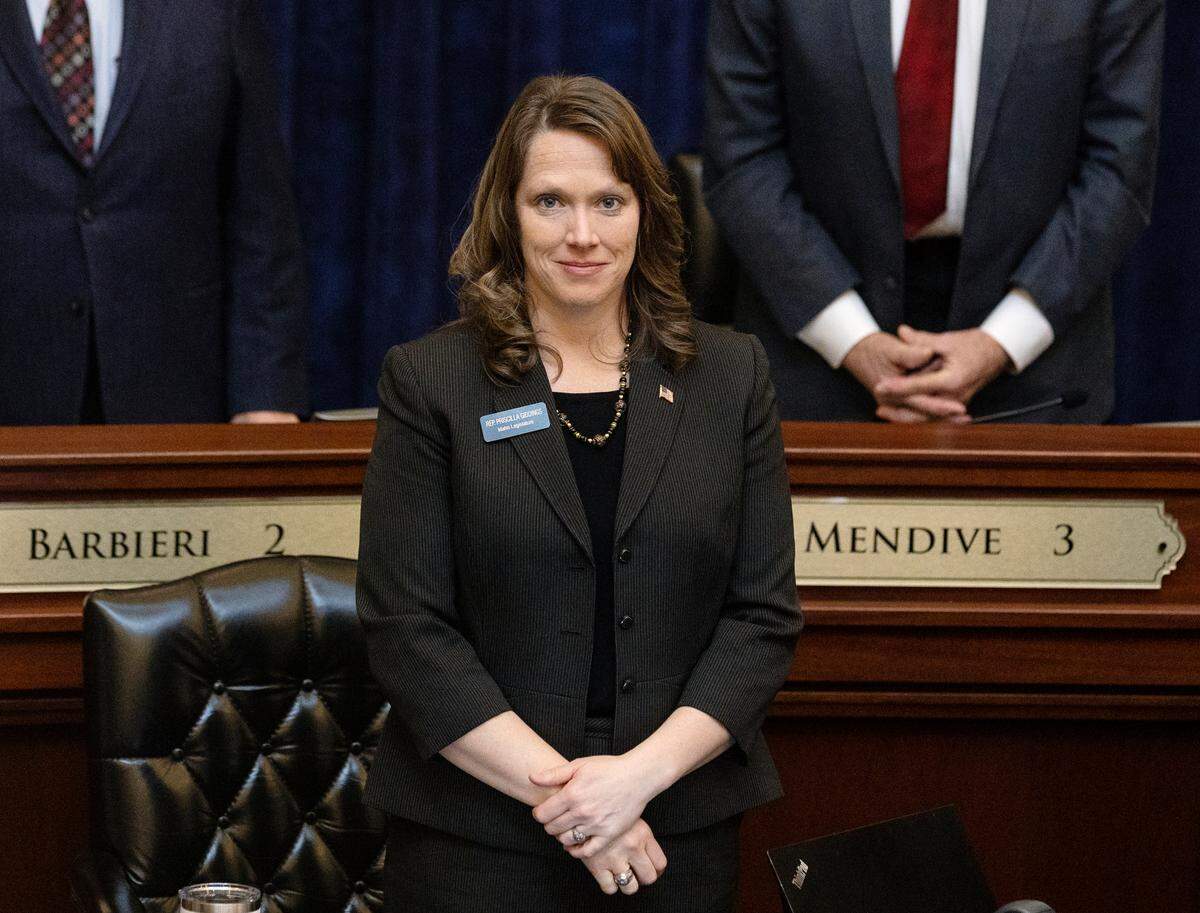
Rep. Priscilla Giddings, R-White Bird, is also running in the Republican primary campaign for lieutenant governor. Her campaign did not respond to an interview request for this story.
Boise attorney Terri Pickens Manweiler is running unopposed in the Democratic primary.
Lieutenant governor ‘ambassador’ for Idaho
In 2015, former President Barack Obama visited Idaho, and then-Lt. Gov. Little greeted him on behalf of the state.
“That was a really proud kind of opportunity,” Wilson said. “No matter what your party is, the president coming was great. And that was kind of a conspicuous example of ... Little representing the state of Idaho.”
Bedke — who referred to the potential move from speaker to lieutenant governor as a “step sideways” — said the lieutenant governor is an “ambassador for the state.”
Bedke said if he wins the lieutenant governor seat, and Little is reelected, he would likely be delegated water rights issues — one of his focuses amid nine terms in the Legislature.
“The lieutenant governor needs to extend the reach of the governor,” he said. “The lieutenant governor needs to be in the places that the governor can’t be.”