
More Boise-area drivers run red lights, but ticketing lags behind. What cops say
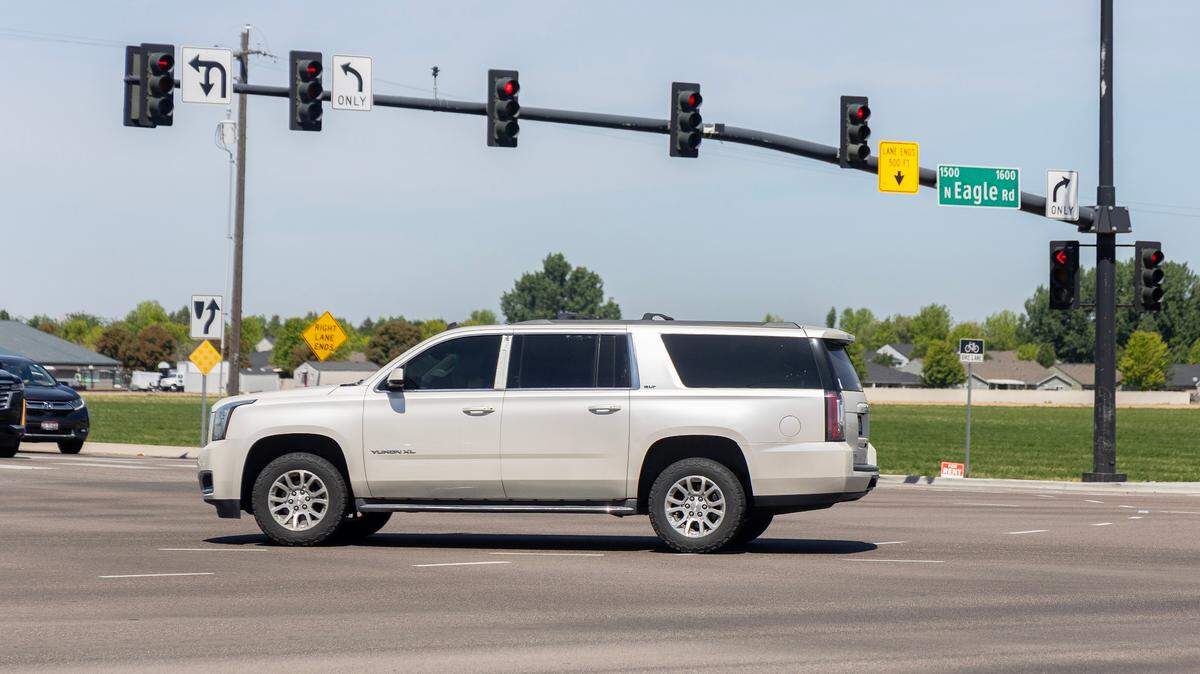
Authorities say the running of red lights has worsened in the Treasure Valley, risking accidents and injuries. But checks with city governments turn up little evidence of stepped-up enforcement.
As Ada and Canyon counties’ populations have grown, municipalities have considered the implementation of red-light camera pilot programs to help mitigate the running of red lights. But growing concerns about privacy prompted the Legislature in 2025 to pass a bill blocking these efforts.
The bill, which restricted the use of traffic enforcement cameras, went into effect on July 1 after being signed into law by Gov. Brad Little. It says red-light cameras can only be used to aid felony, misdemeanor or traffic-accident investigations, and missing-person searches.
Running a red light is only an infraction in Idaho, so the law bars traffic-enforcement agencies from using the cameras to catch red-light runners, except for those instances that result in an accident.
Furthermore, running a red light is defined by more than simply driving through the intersection while the light is red. According to Idaho law, if any part of a car passes the limit line — or a crosswalk in the absence of a marked white stopping line — then no law was broken.
Any officer enforcing red-light laws has to be able to see both the stoplight and the limit line simultaneously, making the law “difficult to enforce,” said Matthew Biagi, a corporal on the Strategic Traffic Enforcement Program Team at the Garden City Police Department.
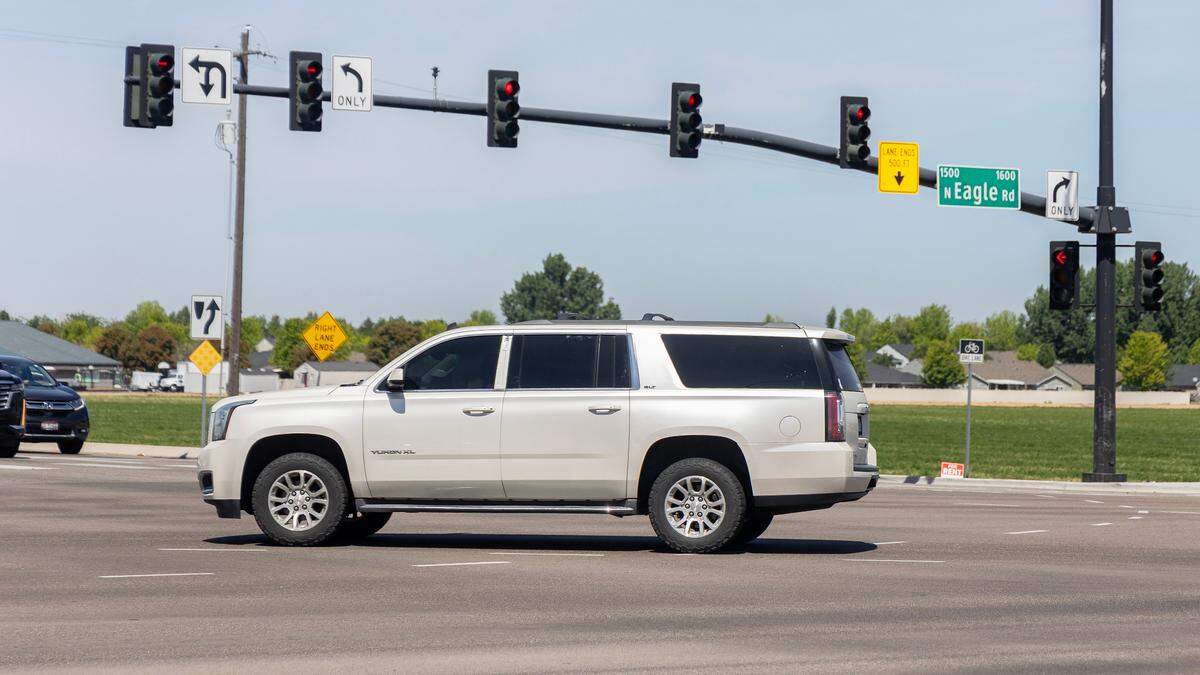
Here’s a detailed look at what five Treasure Valley cities say about running red lights:
Boise: Citations fell in 2024
Boise is Idaho’s biggest city, with a population of about 235,000. The city has grown by 46.6% since 2000, according to City-Facts.
“We’ve seen an increase in all traffic violations in the city,” said Kyle Wills, corporal of the motorcycle unit within the Boise Police Department. “I’ve been with the police department for 23 years and I can tell you, it has changed absolutely since I started here to now.”
But police citations don’t always reflect that increase. In 2023, 571 people in Boise were cited for running a red light. The next year, just 483 were, a decrease of 88. In the first half of this year, police issued 311 citations, putting Boise on track for more than 600 in 2025.
Wills says red-light violations are most prevalent at “those intersections that are extra heavy at peak commute time.” That’s also where crashes are most common, he said.
According to Wills, the intersections along Myrtle Street and Front Street are monitored closely by the Boise Police Department, as people tend to run more red lights on these roadways.
Wills says that police pay extra attention to these areas to discourage violators.
Wills asks Boise drivers to rush less and be more patient.
“If you’re driving down the road and that light cycles to yellow, your first thought should be to apply the brakes,” Wills said. “I think sometimes our first thought is to step on the gas. If we kind of shift our mindset … that can help us.”
Meridian: Citations tell only part of story
According to the Meridian Police Department, from 2021 to 2024, officers issued at least 700 citations a year for failure to obey traffic-control devices.
The most such tickets, 796, were written in 2021. In 2024, 720 people were cited. In the first half of this year, Meridian police wrote 320 of these tickets.
Lt. Brandon Frasier said more people are running red lights than the citations account for.
“It’s easy for us to track the data regarding how many tickets we write for it, because we have that,” Frasier said. “How many people are actually running a red light is not something we specifically track.”
Frasier said places where drivers run red lights most frequently include intersections along Eagle and Overland roads, at Ustick and McMillan roads, and along Meridian Road from Franklin Road to Lake Hazel Road.
“Wherever there are a lot of people trying to get somewhere as fast as possible, you’re going to see it the most,” Frasier said.
According to Frasier, most people run red lights at rush hour. But the worst cases occur when the roads are clearer and a driver is distracted.
“During rush hours, it’s common for people to run a red light, like sneak through it with half a second to a second,” Frasier said. “The ones that run it by a long shot — they’re not just sneaking through. That tends to happen when it is not rush hour.”
Garden City: Officer hasn’t noticed an increase
In 2024, the Garden City Police Department pulled 141 people over for failure to obey traffic signals, although only 66 of these cases resulted in citations. The number pulled over was up by 49 drivers from 2023. In the first five months of 2025, 60 people were pulled over.
Biagi said that he hasn’t “really noticed an increase” in people running red lights.
Biagi said his department has ways to mitigate the difficulty of enforcement, such as by stationing motorcycle officers on the sidewalk where they can better see both the light and the limit line.
“A car is a lot harder to enforce red lights in … A motorcycle is much more equipped to be able to find that stuff, because we can kind of hide into little crevices and stuff that a car can’t fit into,” Biagi said.
Chinden Boulevard is where most red-light violations occur, especially at the intersection of Chinden and 50th Street, according to police data.
Nampa: Mayor cites ‘serious concern’
Nampa’s population has grown 108.6% since 2000, to over 114,000, according to Biggestuscities.com.
The Nampa Police Department has steadily cited more people with red light violations each year since 2020. The number peaked in 2024 with 237 citations, including 41 involving a vehicle crash.
Mayor Debbie Kling said the increasing number of people running red lights is a “serious concern for Nampa.”
“Running red lights is not only against the law, but it is also incredibly dangerous for other drivers and potentially pedestrians …” Kling told the Idaho Statesman by email. “Let us all commit to making our roads safer by obeying traffic laws and stopping at red lights.”
Police Sgt. Doug Harward said he isn’t happy about the increase.
“I would like to tell you I’m all rainbows and sunshine about it, but unfortunately, red lights are happening,” Harward said.
“We can only catch so many that happen right in front of us,” Harward told the Idaho Statesman by phone. “Unfortunately, a lot of them happen when we are not there, and those are the most frustrating.”
“Ultimately, we believe that Idaho drivers have the ability to police themselves and do what’s right,” Harward said. “And (we) just ask that they do the right thing.”
Caldwell: Red-light running up, citations down
Alone among cities that provided data to the Statesman, Caldwell has cited steadily fewer people for red-light running since 2019. Police wrote 181 citations for the failure to obey a traffic control signal in 2019 and only 82 in 2024, a 55% decrease.
Caldwell Police Officer Tom Defur said he has seen more red-light running in recent years.
“We did have an influx in population in the last five years … So with that, we are going to have more traffic accidents, and we do have an increase in red light runners,” Defur said.
Defur said Caldwell’s approach is to have an officer present at intersections of high interest to deter violators.
“Our most effective way that we handle the red-light running is looking at the data, the complaints, and then assigning the traffic team or a couple patrol units to do direct patrols,” Defur told the Idaho Statesman by phone.
He said police know that once they leave an intersection, drivers will resume their bad habits.
“The red-light running will go down for a little bit, then we will go to another area, and that red-light running will come back,” he said.
This story was originally published July 25, 2025 at 4:00 AM.