Nez Perce Tribe lawsuit to halt Central Idaho gold mine clouds federal approval
AI-generated summary reviewed by our newsroom.
- The Nez Perce Tribe sued the U.S. Forest Service over treaty and NEPA violations.
- Perpetua Resources plans to mine gold and antimony at the Stibnite site by 2029.
- Federal lawsuits challenge the mine, but construction is still scheduled to proceed.
A Native American tribe with historical treaty rights to federal lands in Central Idaho sued the U.S. Forest Service to stop an expansive gold and antimony mine that would restrict access and pose environmental contamination risks to the region’s sensitive headwaters.
The Nez Perce Tribe filed its case in Idaho’s U.S. District Court, citing treaties with the U.S. government that go back generations and predate Idaho statehood by decades. The tribe’s most recent binding pact from 1863, which preexists the federal law that regulates mining of public lands, guarantees its members exclusive use of the area to fish, hunt, gather and graze animals.
The mine’s approval, the tribe argued in the lawsuit, also ignored the National Environmental Policy Act, known as NEPA, as well as environmental protection requirements in the forest plans for the Payette and Boise National Forests, where operations for the Stibnite Gold Project are set to take place. Mining is expected to begin by 2029.
“Our treaty-reserved rights are the supreme law of the land and fundamental to the culture, identity, economy, and sovereignty of the Nez Perce people,” Shannon Wheeler, the Nez Perce’s tribal chair, said in a statement. “For nearly a decade, the tribe has consistently and exhaustively voiced our deep concerns to the Forest Service about the mine’s threats to our treaty rights upon which our culture and way of life depend.”
The tribe’s lawsuit also names the U.S. Department of Agriculture, which oversees the U.S. Forest Service, and Secretary of Agriculture Brooke Rollins under President Donald Trump. Earlier this year, a coalition of conservation groups included the same federal agencies in a separate U.S. District Court lawsuit over similar environmental damage concerns alleged from the mine project.
U.S. District Judge Amanda Brailsford is assigned to both cases. Perpetua Resources, the Canadian mining firm behind the federally approved project, has filed to intervene as a defendant in both lawsuits.
Contested mining project awaits federal financing decision
Perpetua, which relocated its headquarters to Boise, plans to extract billions of dollars worth of gold while simultaneously mining the critical mineral antimony from the proposed site.
Billionaire hedge fund manager John Paulson is the company’s controlling shareholder. He’s also an investor in several other gold mining enterprises, and a major donor to the Republican Party, with close ties to Trump.
To mine the site, Perpetua would operate across three open pits and use cyanide for processing next to the East Fork South Fork Salmon River. During 20 years of projected operations, the company would excavate the largest known U.S. reserve of antimony, which is important to national defense and advancement of clean-energy technologies.
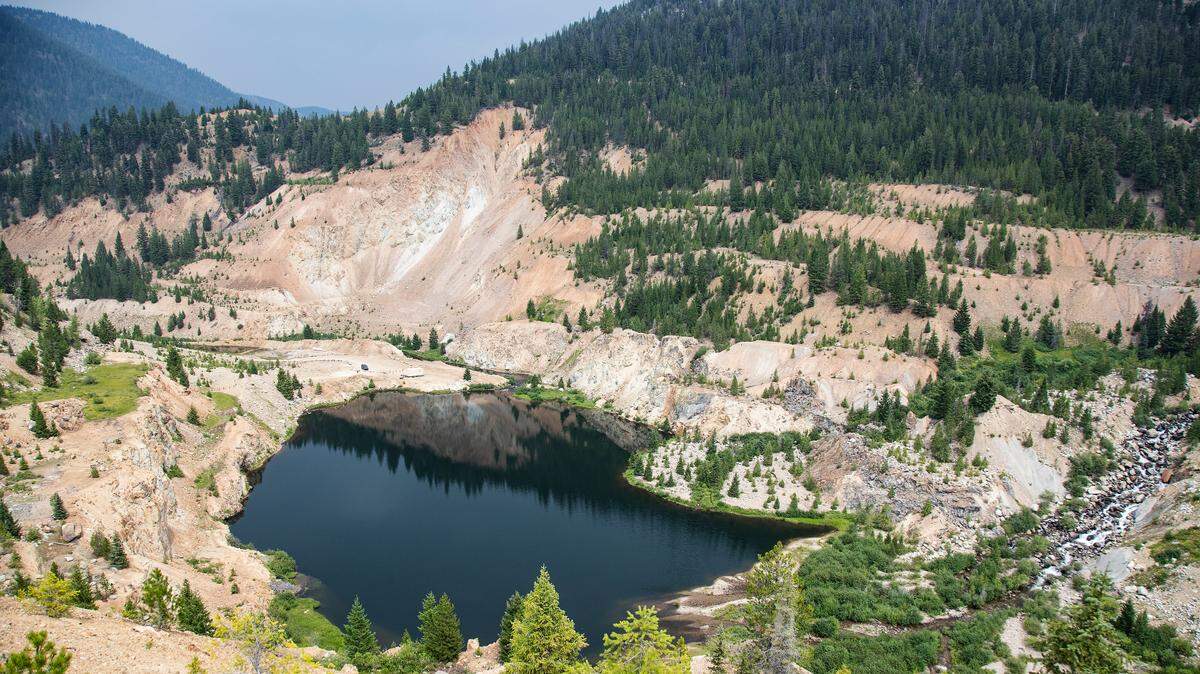
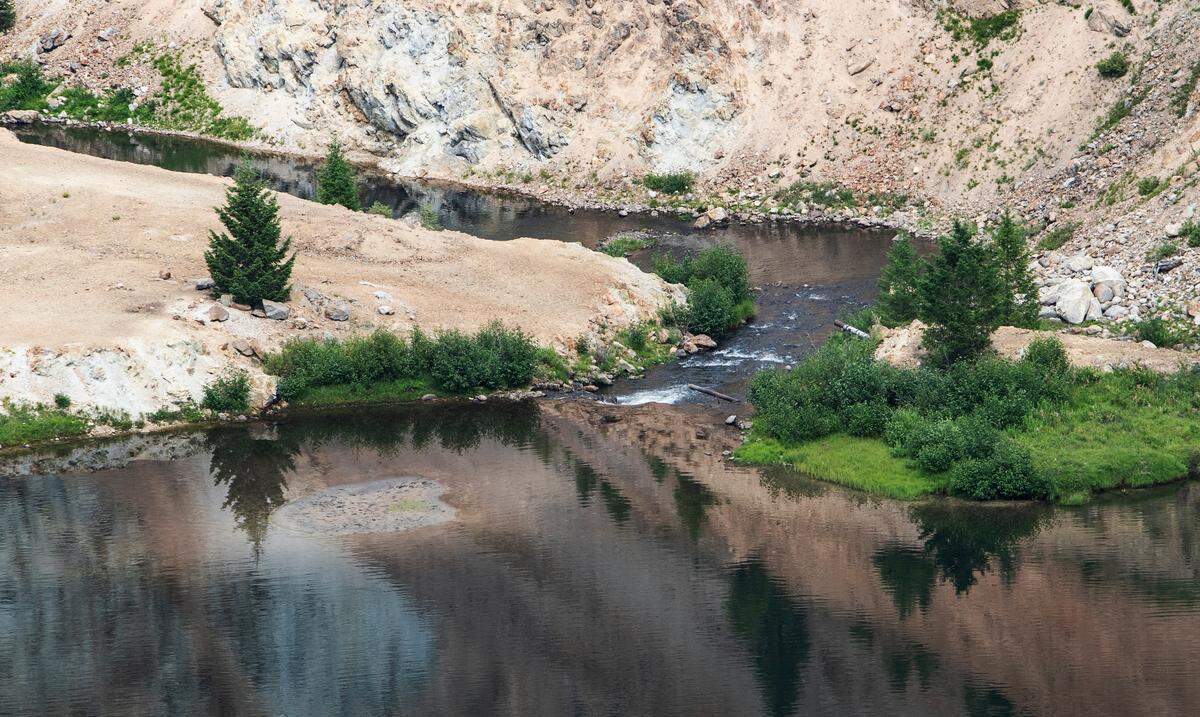
Once mining is complete, Perpetua also has pledged to clean up and restore the site, and to reconnect habitat that endangered salmon populations have traditionally used for spawning. Decades of past mining in the area near the community of Yellow Pine left it degraded with legacy mine waste to the extent it was previously under Environmental Protection Agency consideration as a federal superfund site.
Perpetua incorporated feedback, including from the Nez Perce Tribe, into its final project design at the abandoned mine site, which the U.S. Forest Service approved after extensive environmental review that lasted eight years, company spokesperson Marty Boughton said in a statement to the Idaho Statesman.
“The Stibnite Gold Project is critical to our national security and is poised to reconnect fish to their native spawning grounds, clean up legacy contamination, restore habitat, establish the only domestically mined source of antimony, and provide hundreds of family-wage jobs,” the statement said. “These benefits are too important to be unnecessarily delayed after lengthy environmental review.”
The mine holds the support of Idaho’s four Republican federal lawmakers.
The U.S. Department of Defense has dedicated nearly $82 million in grants to the project to supply high-grade antimony to the government for munitions, including missiles, and other military equipment. Antimony also is used in solar panels, liquid-metal batteries and flame retardants.
The mine was estimated to cost $1.3 billion in 2020. More recently, Perpetua’s application for $2 billion in debt financing to fund the project is under review by the Export-Import Bank of the U.S., an independent executive branch agency. Perpetua expects its loan application to receive final bank review by spring 2026, the company said.
Once financing is in place, and final state permits in hand, Perpetua aims to start building infrastructure at the site toward mining operations. That construction is estimated at three years, according to a company project timeline.
Despite the pair of federal lawsuits, Perpetua has no intention of slowing down. Construction is slated for before the end of 2025, and the legal fights are not expected to affect the company’s plans to begin operations, Boughton said.
“While legal challenges to mining projects are unfortunately commonplace, we are hopeful this challenge will be resolved quickly and amicably, so all of Idaho may benefit from the responsible domestic mineral production and environmental rehabilitation the project will bring,” she said.