Idaho gold mine wins federal approval despite Nez Perce objection over standing US treaty
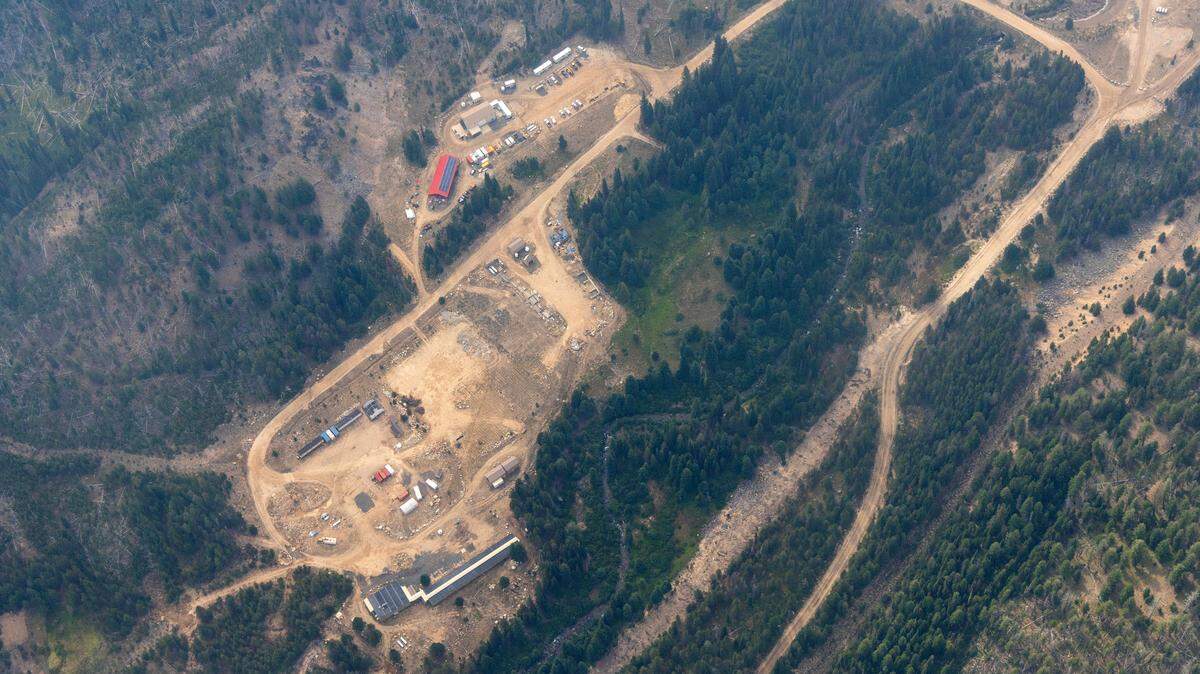
A contested mine in Central Idaho that will produce gold and antimony earned the U.S. Forest Service’s final approval following a lengthy environmental review and objections from the Nez Perce Tribe, which will lose access for decades to federal lands guaranteed by a U.S. treaty.
Perpetua Resources, the Canadian company behind the proposal, expects to start mining at the remote site near Yellow Pine by 2028 after three years of construction, according to Perpetua’s project timeline. With the requirements of the National Environmental Policy Act, or NEPA, now met, the company still needs to obtain a discharge permit from the U.S. Army Corps of Engineers and several state permits before mining operations may begin.
While extracting a considerable gold deposit valued at $13 billion from the open-pit mine over an estimated 20 years, Perpetua also will dig up one of the largest known reserves of antimony in the U.S. — and outside of Chinese control. The critical mineral is used in clean-energy technology, flame retardants and military weaponry, and has generated interest from the U.S. government for national defense.
Perpetua has promoted what it calls the Stibnite Gold Project as a way to not only haul out the prized materials, but also clean up longstanding environmental damage to the area from decades of previous mining. Through restoration work, the company says it aims to improve water quality and help endangered salmon reach miles of spawning habitat that have been blocked for years.
“This approval elevates the Stibnite Gold Project to an elite class of projects in America that have cleared NEPA,” Jon Cherry, Pepetua’s president and CEO, said in a statement. “The Stibnite Gold Project can deliver decisive wins for our communities, the environment, the economy, and our national security.”
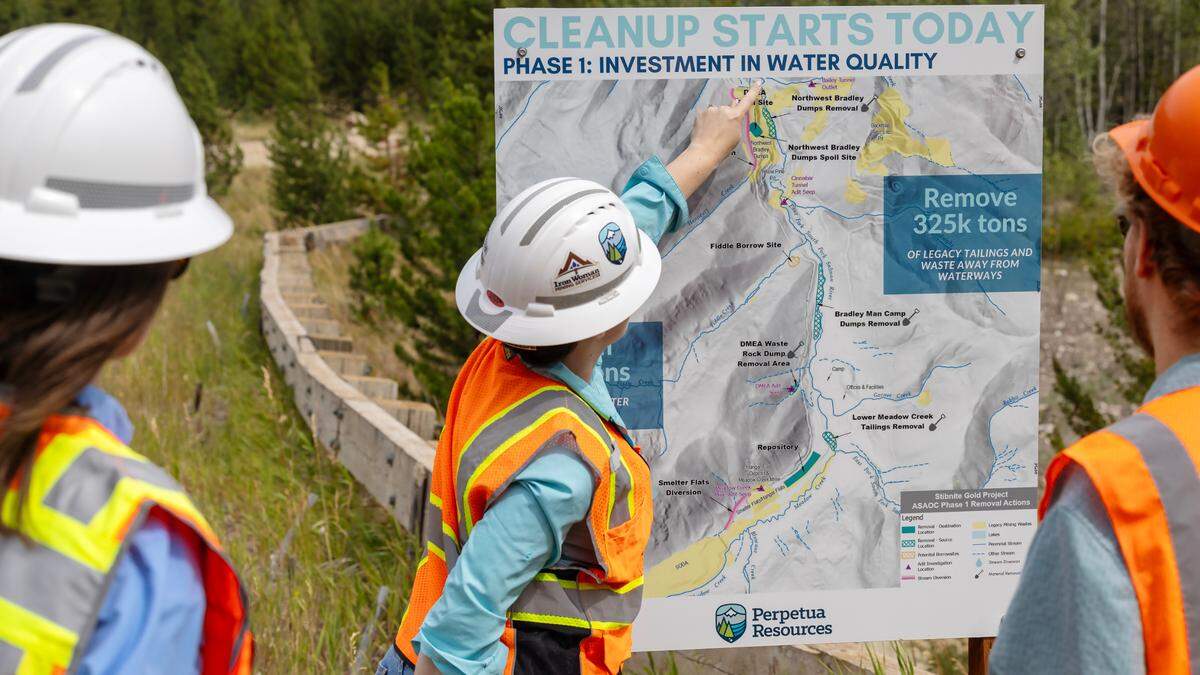
Perpetua reported that it has already spent more than $17 million on initial cleanup of some of the site’s mine tailings in a deal brokered with the Environmental Protection Agency to offset risk of those materials further degrading water quality. The Nez Perce Tribe earlier sued Perpetua over alleged Clean Water Act violations, which resulted in a settlement: The company agreed to pay $5 million into a tribe-managed fund for water quality improvements to the Salmon River’s South Fork watershed.
The tribe, which holds fishing and hunting rights in perpetuity to the area, has criticized the overarching project, as well as the Forest Service for a lack of proper environmental review in its recorded decision. Tribal members and environmentalists are worried about further water contamination, which would hamper ongoing efforts to improve salmon populations in the Salmon River.
“The selected alternative minimizes adverse environmental impacts on National Forest (lands) where feasible, consistent with the requirements … while providing sufficient access to allow mining operations to proceed,” Payette National Forest Supervisor Matthew Davis wrote in the mining permit approval that posted late Friday.
In a statement, Shannon Wheeler, the Nez Perce’s tribal chair, described the approval as a breach of the promise made to his people 170 years ago, when the U.S. signed a treaty in 1855 — preceding by 17 years the Mining Law of 1872, which governs mineral rights in the U.S.
The tribe is “extremely disappointed” in the Forest Service’s decision, Wheeler said, and called on the Army Corps of Engineers to honor its treaty rights. “The tribe’s treaties with the United States are the supreme law of the land and remain binding,” he said.
The Idaho Conservation League, an environmental group that frequently analyzes mine sites in the state, opposes the project because it said the portrait of environmental stewardship painted by the company is not reflected in the mine’s blueprints. The group’s public lands director labeled Perpetua’s mining plan the “equivalent of high-risk open-heart surgery” for the watershed after the Forest Service dismissed ICL’s suggestions to address “significant flaws in the project.”
“Even the Forest Service’s own analysis states that doing nothing is better for the environment than building the Stibnite Gold Project,” John Robison, ICL’s public lands and wildlife director, said in a statement. “The Stibnite Gold Project is an unfortunate reminder of why we need to reform the Mining Law of 1872 so we can protect public interests instead of undermining them.”
Mining officials: ‘We trust the end product’
The long-awaited mining permit came after eight years of federal review, and had the backing of Idaho’s four federal lawmakers, all Republicans.
“For too long, we have let China hold the cards when it comes to critical mineral production. This Record of Decision is a vital first step in advancing the production of American antimony and strengthening our national defense,” the four lawmakers said in a statement released Monday. “Still, we must significantly reform the permitting processes to effectively compete with China and fully leverage the resources in our backyard.”
On Monday, Idaho Republican Gov. Brad Little also offered his support for the proposed project. The Gem State has a variety of rare earth minerals that are important to national security, and the process of obtaining them should be less onerous, he told the Statesman at a press conference.
“This country desperately needs strategic minerals,” Little said. “There’s no question that, at a minimum, we need to smooth the regulatory hurdles for them to get through. We still want to protect our water quality, our wildlife and our air quality, but we can do both.”
The Democratic administration of President Joe Biden, which is set to exit the White House on Jan. 20, has not responded to repeat requests from the Idaho Statesman for its position on the mine for more than three weeks, including again on Monday. But the project’s approval came under Biden’s watch.
In April, the Export-Import Bank of the U.S., an independent executive branch agency that provides loans when private lenders aren’t willing, sent Perpetua a letter of interest that the company qualifies for up to $1.8 billion in project debt financing. As of 2020, the project was estimated to cost $1.3 billion to mine, according to Perpetua officials.
Over the past two years, the Department of Defense also has awarded $75 million in federal grants to Perpetua toward the mine, most of it through the Defense Production Act authorized by the president. The federal windfall is intended to spur on the Canadian company to show it can deliver high-grade antimony for use in munitions and to prove a fully domestic American supply chain.
Billionaire hedge fund manager John Paulson, who is a major Republican donor and maintains close ties to President-elect Donald Trump, is Perpetua’s leading shareholder. Paulson & Co. also has considerable investments in seven other gold mining companies, all but one based in Canada.
The bulk of the revenues from the Idaho mine — at least 93% — will still come from gold. Perpetua officials have noted that the project doesn’t pencil out without the value brought by gold at the site, which they said pays for the restoration work, as well as insulates the project from having to shutter if commodity prices or the market for antimony flounder.
“Let’s be clear: This is a taxpayer-financed gold mine,” the ICL’s Robison said. “Perpetua never offered and the Forest Service never analyzed a targeted antimony mining proposal that would entail much less surface disturbance, mine waste, and overall impact. What’s more, having a small percent of antimony in a gold project should not give anyone a pass for a project that could end up doing immeasurable harm.”
Now that the federal permit has been issued, Perpetua is prepared for more lawsuits should they materialize, company spokesperson Mckinsey Lyon told a committee of state lawmakers last year. Perpetua will continue with mine construction plans in the interim to avoid any more delays, she said.
“Unfortunately, it seems like litigation is the final phase of any mining project these days, so we anticipate it,” Lyon said. “Over eight years … all voices have been heard and the work has been done, and, on the merits, we trust the end product.”
Wheeler said the Nez Perce Tribe is “evaluating next steps.”
“Since it first arrived in the tribe’s homeland, gold mining has only served to dispossess the Nez Perce people,” his statement read. “By every indication, this mine will be no different.”
This story was originally published January 7, 2025 at 4:00 AM.
CORRECTION: This story was updated to remove an incorrect reference to the Department of the Interior. The Department of Agriculture oversees the U.S. Forest Service.