Climate change takes an unexpected toll on Ada County road maintenance. This is how
If you’ve crossed a street midday during a Boise summer, you know the heat simmering off the asphalt is no joke. If it’s 100 degrees outside, the pavement can hit 140 degrees, said Lloyd Carnegie, the maintenance manager for the Ada County Highway District.
He would know. This summer, there were nearly 20 days of temperatures over 100 degrees, which meant that road crews working on chip sealing — the process of covering a road with liquid asphalt and a layer of crushed rocks to keep out water and extend the road’s lifespan — repeatedly had to stop work for safety reasons.
Crews also had to stop work for seven days this summer because of poor air quality, Rachel Bjornestad, a spokesperson for ACHD, told the Idaho Statesman.
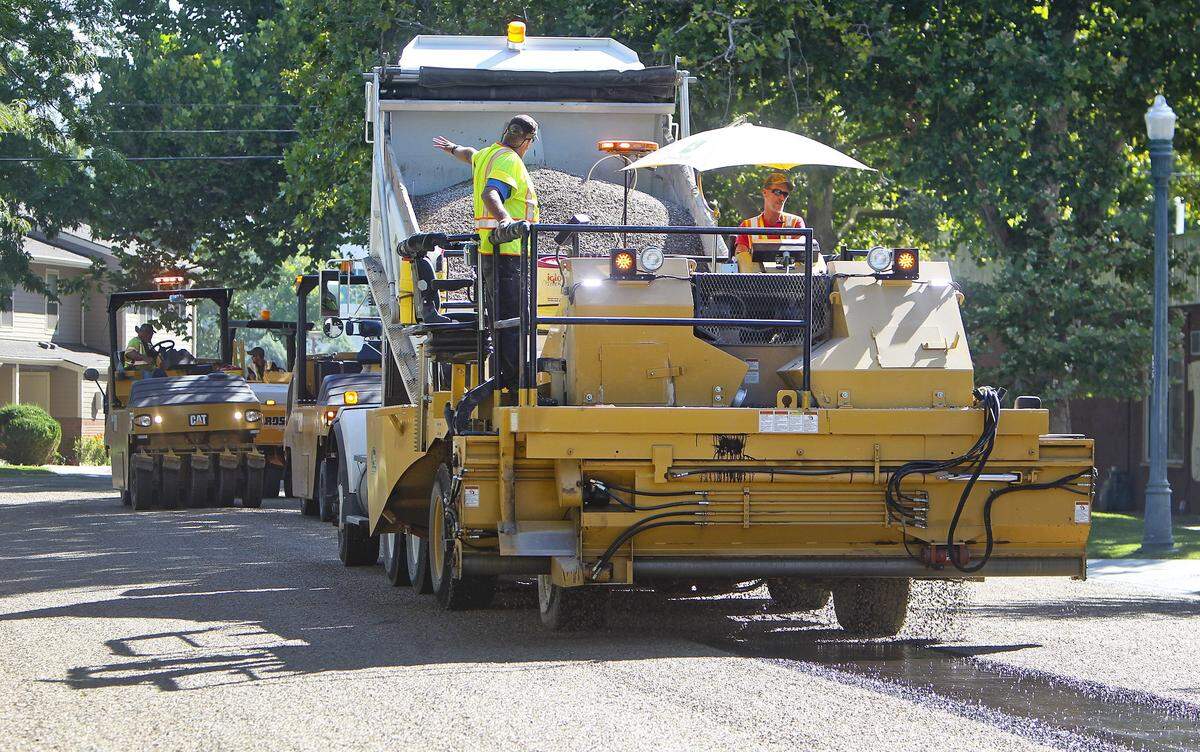
The result? Road crews were able to complete only about 300 lane miles out of their planned 439, according to an October ACHD news release.
This year’s heat and smoke were “abnormal,” Carnegie said. Last year, there were zero days with poor air quality during chip seal operations, and only about 10 days above 100 degrees, Bjornestad said in an email.
But in a meeting Monday of ACHD’s board and Boise’s City Council, ACHD Director Ryan Head said the smoke and heat are part of a longer-term trend. The highway district is evaluating its approach to preventative maintenance, he told Mayor Lauren McLean, “while recognizing the realities that we do face as time changes.”
Several studies have shown that climate change, or global warming, leads to warmer, drier conditions that cause longer and more active wildfire seasons in the Western U.S., according to the Nature Conservancy.
ACHD crews rotate annually among seven zones to conduct chip sealing. This year, they were working in Zone 5, which includes Boise’s North and East ends. Next summer, they’re supposed to move on to Zone 6, which covers Star, Eagle and northern Meridian.
But what about the unfinished work in Boise? ACHD is still sorting that out, Carnegie said, weighing strategies to get it done — or deciding if some of that work can wait another seven years.