A campfire became Idaho’s largest wildfire this year. Are human-caused blazes surging?
Despite record-high temperatures in the Treasure Valley in August and scorching summer heat across Idaho, the state saw fewer wildfires and fewer acres burned so far this summer compared with the annual average of the previous decade.
Data showed 937 wildfires have burned 369,163 acres of federally managed land in Idaho so far this year, with about one week left in the typical wildfire season. According to figures from the Boise-based National Interagency Fire Center, Idaho has had an average 1,172 fires annually in the last decade, with an average of about 600,000 acres burned each year.
It’s the latest in several years of relatively mild fire seasons in Idaho after a record 1.7 million acres burned in 2012, and more than 600,000 acres burned in 2017 and 2018. But human-caused fires had a significant impact this year. The state’s largest fire, which has killed multiple firefighters, accounted for more than one-third of the total acreage burned in 2022.
Human-caused fires burned the most acres
Jessica Gardetto, spokesperson for the National Interagency Fire Center, told the Idaho Statesman in a phone interview that this season has been pretty average, likely due to a lack of dry lightning storms that tend to spark many of the state’s blazes.
“Idaho’s fire year could have been worse,” Gardetto said.
Josh Harvey, fire management chief at the Idaho Department of Lands, said his agency also saw fewer fires and acres burned on state and private land. By Wednesday of last week, the department had responded to 263 fires that burned 4,053 acres. In contrast, the agency’s 20-year average is 279 fires per year, with 24,679 acres burned, Harvey said.
The state spent about $20 million on firefighting, about $7 million of which went toward assisting other states and federal partners and will be reimbursed, Harvey said. The $20 million price tag is just one-quarter of what the state spent on firefighting efforts last year, when it spent a record $74.6 million. The Department of Lands reported just over 25,000 acres of state and private land burned last year.
This year, just over half of Idaho fires on federal land were caused by humans, but those blazes accounted for 63% of the acreage burned. On state and private land, 44% of fires were human-caused. They burned 89% of the total acreage covered by the Idaho Department of Lands.
“It needs to be a constant reminder to the public that it’s their responsibility to be extra vigilant and careful with fire,” Harvey said. “Looking at our numbers, those fires that were human-caused were the greatest contributor to a large number of our costs, and those costs are carried by the Idaho taxpayers.”
Idaho’s largest fire this year, the Moose Fire near Salmon, was determined to be human-caused. In a news release Monday, U.S. Forest Service officials said the fire was caused by an unattended campfire that investigators believe was left smoldering in a rock fire ring at a dispersed camping area near the small town of North Fork.
The Moose Fire has burned more than 130,000 acres — more than one-third of the state’s total acreage burned this year — and is 51% contained.
Three firefighters have died while working on the fire. Pilots Thomas Hayes, 41, of Post Falls, and Jared Bird, 36, of Anchorage, Alaska, were killed July 21 when their helicopter crashed into the Salmon River. Crew boss Gerardo Rincon died Sept. 20 after suffering a medical emergency, according to officials with the Salmon-Challis National Forest.
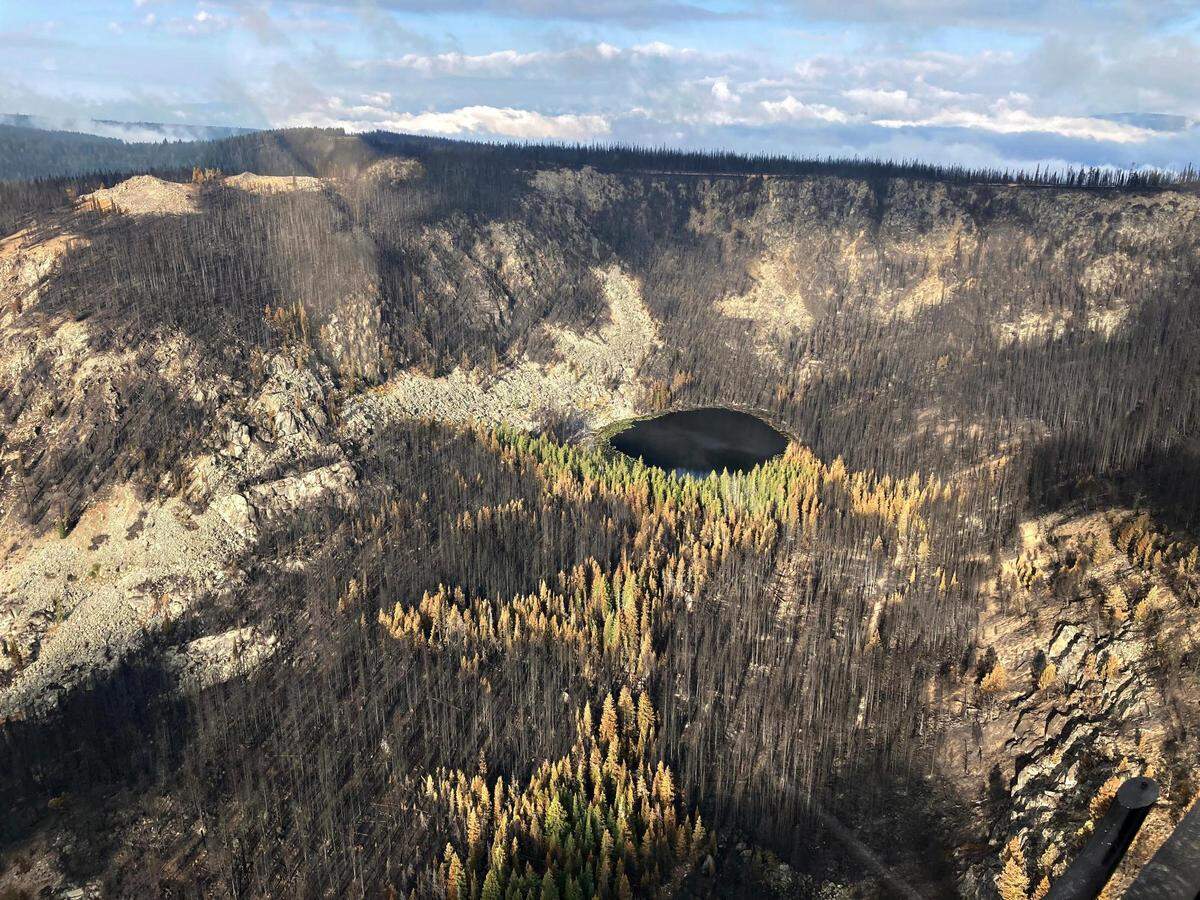
“We’ve seen the trend that human-caused fires are (becoming) a very large contributing factor, whereas historically lightning was our No. 1 cause of fire,” Harvey said. “It’s a very frightening trend.”
Gardetto said it’s not uncommon for the number of human-caused fires to increase as populations grow. She said she hasn’t seen the increase in human-caused fires that she would expect, which she attributed to firefighters taking an aggressive approach to catch fires early.
Crews contained most fires early on
Harvey said Department of Lands added additional firefighting positions this year and has a budget request submitted to add more firefighters and fire engines next year. The boost in resources meant crews were able to attack fires much faster this year, resulting in a drastic decrease in the number of acres burned, Harvey said.
“All of those resources are targeted to cut down on our response time and targeted to our desire to catch every fire at 10 acres or less,” he said.
Harvey said firefighters in the Hells Canyon area were able to contain fires that “should’ve been multi-million dollar incidents.
“They caught them all within a few hundred acres,” Harvey said. “That, to me, is very impressive.”
The Department of Lands plans to staff an office near Idaho Falls to add additional firefighting support in eastern Idaho.
“We’re anticipating seeing another increase in the number of (small acreage fire) catches that we have,” Harvey said.
This story was originally published September 26, 2022 at 12:27 PM.