2020’s wildfire season has been delayed. What should you expect as summer heat arrives?
The outcome of the fire season heavily depends on the weather during the spring months. This year’s wet and cool spring has delayed the onset of the fire season, which usually starts in June. But that doesn’t mean we will see low fire activity during the rest of the season.
According to the National Interagency Fire Center, the weather from July to September will likely be warmer and drier than average, which “suggests an above-normal fire season despite its slow start.”
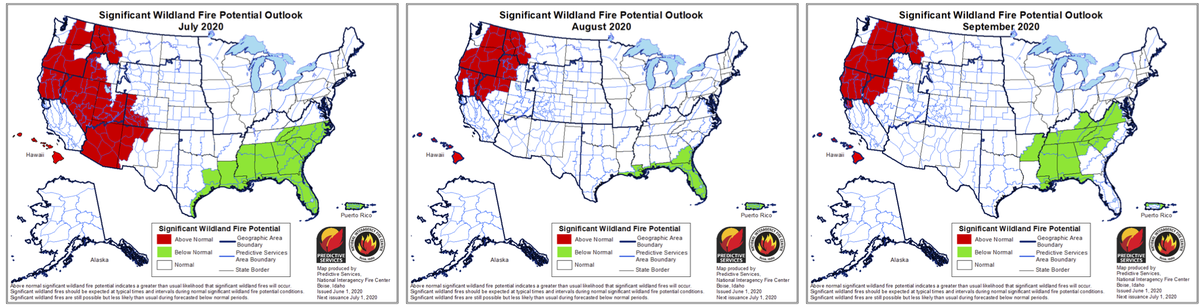
But what does this mean and how do experts reach these conclusions?
“There’s no way to truly predict how many wildfires you’ll get,” during a season, said Jared Jablonski, fire information officer for the Bureau of Land Management Boise District. The fire forecast evaluates the potential “to have more fires … as well as the potential for those fires to behave more aggressively and grow very quickly”.
To produce an outlook for the fire season in an area, researchers have to analyze the weather during spring and the probability of having large droughts and lightning storms over the summer. Spring weather can affect the probability of wildfires by defining the moisture levels at the beginning of summer, which determines the timing of the start of wildfires.
In general, a dry spring may signal an early start for the fire season whereas a wet spring may delay it. However, an unusually wet spring can boost the growth of plants that end up becoming fuel when conditions get drier.
Things are more complicated in Idaho. The most common plants growing in lower elevations across the Snake River Plain are grasses, which benefit from lots of rainfall and can grow very fast over the spring. However, regardless of how moist they are during spring, grasses dry quickly when the weather turns drier and become fuel that can easily catch and spread fire around.
Grasses are less important at middle to high elevations in the mountains, so a wet spring can have different consequences there. Forest trees also grow more with more spring rainfall, but soil and tree bark remain moist further into the dry season. It would take a severe drought following a wet spring to increase the likelihood of getting big fires in the forests.
As of Sunday, Boise had received 2.92 inches of rain this month, threatening the record of 3.41 inches in 1941.
Still, even when conditions are ripe for lots of wildfires to happen during the season, the final number of fires is determined by how many actually get started either by lightning or human causes, Jablonski said.
Managing fires
Fires can threaten people’s property and health. Only in the Boise district, last year’s fire season saw 89 fires that burned more than 8,000 acres of land. But fires also “provide many ecosystem services that we value,” said Dr. Penny Morgan, a retired professor in history and ecology of forest fires at the University of Idaho.
“At the very least, they consume fuels. They often rejuvenate vegetation and therefore (the) habitat for many plants and animals we care about. They release soil nutrients, they provide landscape diversity,” said Morgan, who has been studying wildfires for 40 years.
Fire management requires balancing its benefits for the ecosystem with its possible negative effects on people. If fires happen in remote areas, they are usually left alone so they can play their natural role. When fires threaten people’s lives or property, they are actively suppressed or controlled by the firefighters working with the BLM.
Jablonski said that it is important for people to be careful when recreating outside, and to be aware of the restrictions and regulations that are in place to lessen the likelihood of someone starting a fire by accident. Last year, about 70% of the fires in the area were started by human causes.
Morgan also recommends that people limit the number of shrubs under small trees that can facilitate the fires climbing from the ground to the top of trees, and that they consider keeping “clumps of vegetation separated from one another” when landscaping.
This story was originally published June 22, 2020 at 4:00 AM.