Boise State launched its Esports team in 2017. Where does it rank among the nation’s best?
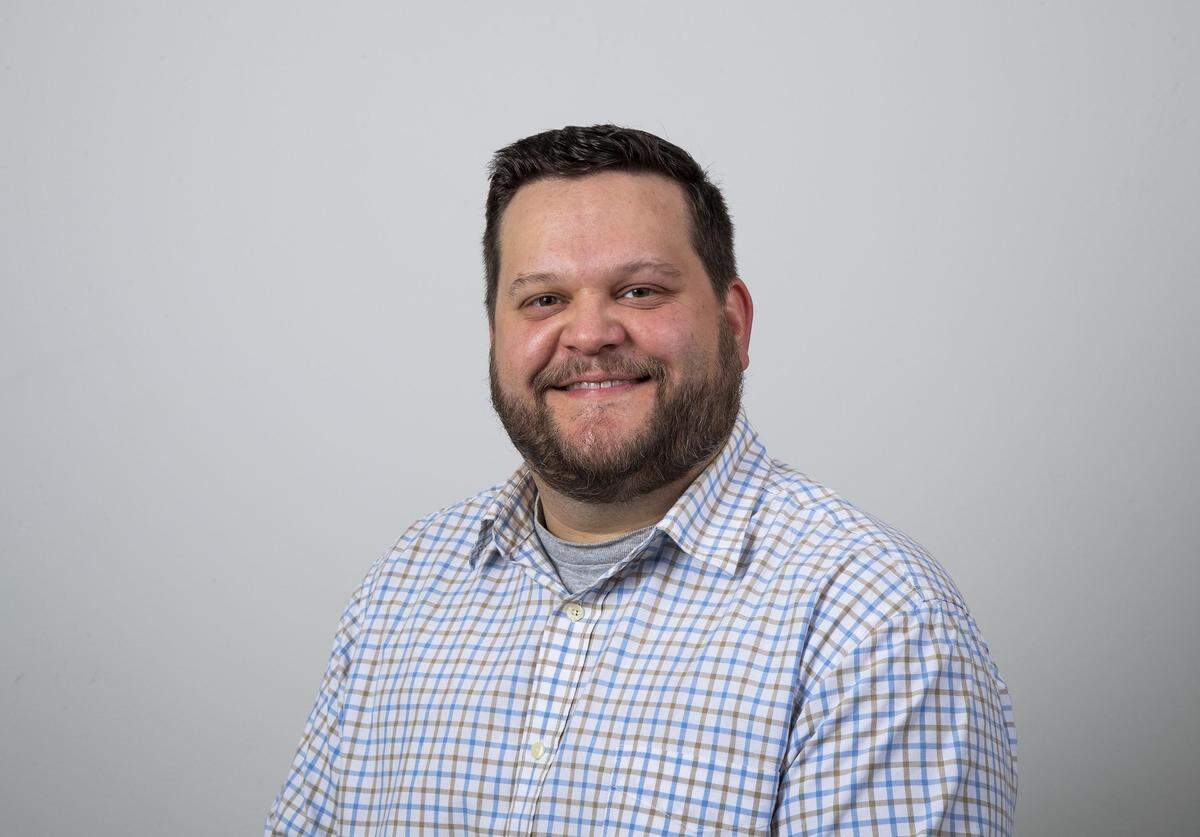
Chris Haskell specialized in video game-based learning long before he pioneered Boise State’s Esports program, which has risen to the ranks of the nation’s elite in less than five years.
Haskell will begin his 15th year as a member of the university’s Education Technology department this fall, but he picked up the skills necessary to mentor some of the top video game players in the country long before he ever commanded a lecture hall.
Before he dreamed of coaching a collegiate Esports program, Haskell was a high school band director. The professions have more in common than one may think, he said.
“I’m preparing the kids for a performance that I don’t play a single note in,” Haskell told the Idaho Statesman. “They’re all experts on their instrument. They just need someone to coordinate and take a little volume off here and add a little there. Someone to put some art into it.”
Boise State launched its Esports program in 2017. Almost five years and 543 wins later, the Broncos are routinely mentioned among the top five programs in the country.
The Broncos have won national championships. They’ve won Mountain West championships. They’ve earned national awards and used their robust broadcasting capabilities to create a platform that has played a pivotal role in the explosive growth of collegiate Esports across the country.
Video games were once hailed by parents as a waste of time. Nothing is further from the truth, especially at Boise State, Haskell said.
“Video games are math and probabilities,” he said. “The future of Esports is massive. We want to find student-athletes with the right intangibles to fit our program, and we’re going to find ways to support them like a top-10 program.”
Esports explosion
In 2016, there were six varsity college Esports teams in the country. Now, there are more than 300, and Haskell said he gets a new email every couple of days from schools that are looking into adding a program.
Boise State was the 24th college in the country to field a varsity team. The Broncos were the first Mountain West university to establish a sanctioned program, followed closely by UNLV. These days, every school in the Mountain West has a team, and Haskell said Boise State has reaped the rewards of being first.
“We had a gold-rush mentality,” he said. “We wanted to get in early because by the time it really caught on, we wanted to have already learned from our mistakes.”
Esports aren’t currently regulated by the NCAA. The National Association of Collegiate Esports is the closest thing to a governing body in that it has produced a set of bylaws, but it has no power to enforce them.
Haskell said his program does abide by many NCAA rules, including requiring a minimum GPA to participate, limiting organized team activities to 20 hours a week and making sure players have days off. His staff also adheres to many of the NCAA’s rules on recruiting, such as not communicating with a potential transfer until they’ve notified their university.
The Alabama of Esports
When Haskell took his idea for the program to former Boise State President Bob Kustra, the response was that Kustra wanted the Broncos to become the Alabama of the Esports world — referring to the dominance the Crimson Tide’s football team has experienced over the past decade-plus.
The Broncos are well on their way to doing just that.
Boise State’s 543 wins are the most of any program in the country, and there aren’t many college teams in any sport that crown a national champion less than five years after their inception. The Broncos have won three national titles, and Haskell was named the 2020 NACE Coach of the Year.
“Coach Haskell has thrown himself into the world of Esports,” said Boise State graduate student Artemis Rainn, who captained the Broncos’ Overwatch team this year. “He didn’t have a script to work from. He built this thing from the ground up, and he works tirelessly.”
Boise State routinely appears on lists of the top Esports programs in the country, but unlike many of the other institutions on the list, Haskell knows his team has to compete for attention with the lore of the blue turf in Albertsons Stadium and the football team that helped make it iconic.
Maryville University — a small, private school in St. Louis that is widely considered the top destination in the country for Esports players — doesn’t get much competition from its athletic department, aside from the occasional berth in the NCAA basketball tournament. The same can be said for other top programs, such as Robert Morris and UC Irvine.
“This is blue turf nation,” Haskell said. “If we’re not facing off with Oklahoma and taking down the Goliaths of the world, we’re not doing our job.”
Meet the national champs
Boise State actively recruits for five games: Overwatch, League of Legends, Rocket League, Madden football and Valorant, which was just added this year.
Overwatch is a first-person fantasy combat game, featuring teams of six. League of Legends is similar, but it’s a multiplayer online battle arena game, featuring teams of five. Rocket League is a game where cars play soccer. Valorant is also a first-person, tactical game, similar to Halo.
Boise State is home to one of the top Madden players in the country in Wacey Williams, who won two titles this spring — one in a tournament open to all college players and one sponsored by the NACE, which only featured players on varsity programs.
After finally getting past UNLV to win the Mountain West, the Broncos also claimed an Overwatch national championship, which was sponsored by PlayVs — a company that hosts youth and college Esports tournaments.
Williams has been a gamer most of his life, but he just started entering high-level tournaments the past two years, and that’s how he was discovered by Boise State. He wasn’t on the team until this winter. He doesn’t have the best internet connection back home in Glenns Ferry, so Williams asked Haskell earlier this year if he could use the Broncos’ facilities for a tournament.
He placed in the top 20, and Haskell saw a star in the making.
“I knew if we could get this kid on scholarship, he was going to win a national championship,” Haskell said. “He is unbelievably analytical and invests a lot of time into his craft.”
Williams — a junior majoring in psychology — plays Madden on his own six days a week for four or five hours a day, but he spends even more time studying many of the top players in the country. It’s all about being prepared for any situation, he said.
“You have to manage the game and stay in the game mentally,” Williams said. “A lot of different things get thrown at you, and you have to be prepared to handle any situation.”
Rainn got in on the ground floor of Boise State’s Esports program.
She was a student of Haskell’s before there was an Esports program. One day in 2016, he ended class by asking how many students would be interested in joining an Esports team. Rainn was a competitive gamer when she was younger, and her brother is a professional Halo player, so naturally she was curious.
She didn’t know much about Overwatch, but she spent that summer familiarizing herself with it, and now the native of Spokane is one of the most experienced members of the top team in the country. She is joined by Michael Jenks (Meridian), Kellen McGurkin (Sandpoint), Brian Krahn (Star), Jordan Whyte (Boise), Joey Paci (Hawaii) and Mason Francsak (California).
“You have to have complete trust in your team,” said Rainn, who is specializing in education technology and came to Boise State on a color guard scholarship. “You all have a job to do. You have to communicate with your team and trust each other to be accountable.”
Almost as rewarding as winning a national title was finally beating UNLV to win a Mountain West championship, Rainn said. Boise State and UNLV have played for the Overwatch title in each of the past four years, and this was finally the year the Broncos unseated the team she referred to as a Goliath in the game.
“That was a feeling we’ll never forget,” she said. “We knew we were close, but to finally get over the hump and win it was amazing.”
Boise State also won the Mountain West championship the past two years in Rocket League — a game that combines automobile racing and soccer.
How is it funded?
Boise State’s Esports program isn’t funded through the athletic department, and it doesn’t get any money from the university’s general fund.
The program generated about $320,000 during the 2020 fiscal year, and Haskell expects it to eclipse $400,000 in 2021. After not offering scholarships the first few years, the program gave out about $98,000 in scholarships in 2020, and that number will grow to about $150,000 in 2021.
Players aren’t on a full scholarship the same way many athletes are, but between academic scholarships and funds raised by the program, many are receiving something close to a full ride. Boise State’s roster includes anywhere from 50 to 60 players, depending on which games are in season, and about 30 are on partial scholarships.
Much of the funding for scholarships and facilities is made possible by Boise State’s broadcast team, which airs more than 400 events a year on platforms like Twitch and YouTube.
Boise State broadcasts more than 100 hours of original content on its Twitch channel every month. Last February alone, more than 350,000 viewers tuned in to record 1.7 million minutes watched on the channel. In 2020, viewers logged more than 300,000 hours watched on the Broncos’ Twitch channel. Twitch is an online service that allows players to stream themselves playing video games live.
More than 3 million unique households tuned into the Broncos’ Twitch channel last year. During the school year (September-May), fans logged 14.7 million minutes watched, according to Haskell.
Reaching such a large audience has allowed Boise State to sign long-term sponsorship deals with companies like the Idaho National Guard and part of how the program has raised nearly $2 million since its inception.
Haskell knew when he originally pitched the Esports idea that broadcasting live events would help set Boise State apart. He just didn’t know how big it would be.
“It’s what put us on the map and made us self-sustainable,” Haskell said. “We discovered early on that when we’re the storytellers, we have control over ways we can bring in money.”
Boise State’s Gamepants Esports Arena at the intersection of Capital Boulevard and Front Street has seating for up to 60 fans and a fully functional broadcast booth, with a full crew of play-by-play analysts, color commentators, producers and camera operators — many of whom are on scholarships similar to the players. The Broncos also have a 24-seat training center on the second floor of the College of Innovation and Design.
The broadcast crew doesn’t just air Boise State events. They cover the 140 varsity events Boise State competes in each year and air events for outside organizations, from amateur tournaments for Esports Tower — a youth program similar to AAU — to showcases for professional players.
The program isn’t just using the broadcast booth to raise funds, though. It’s also giving students interested in a career in broadcasting valuable experience at a university that doesn’t offer a specific broadcasting degree.
Students are paired with professional broadcasters, such as Michael Fisher, who lost his job as a producer at the KTIK radio station during the coronavirus pandemic but is now devoting all his time to broadcasting Esports events. He specializes in League of Legends, but can offer play-by-play and color on just about any game.
“I’m kind of a mentor to the students,” said Fisher, who graduated from Boise State in 2016 with a degree in communications. “Covering an event is basically three hours of nonstop action, so I go back and watch the broadcasts on my own and offer whatever tips I can.”
Whether its winning championships, honing professional skills or playing on blue turf, which covers the stage in the arena, Haskell is committed to giving his players the full Boise State experience.
“We understand the power of our brand and the importance of being first,” Haskell said. “We want to be the blue bloods of college Esports for years to come.”