Caldwell School District to close down an elementary school, expects $5 million shortfall
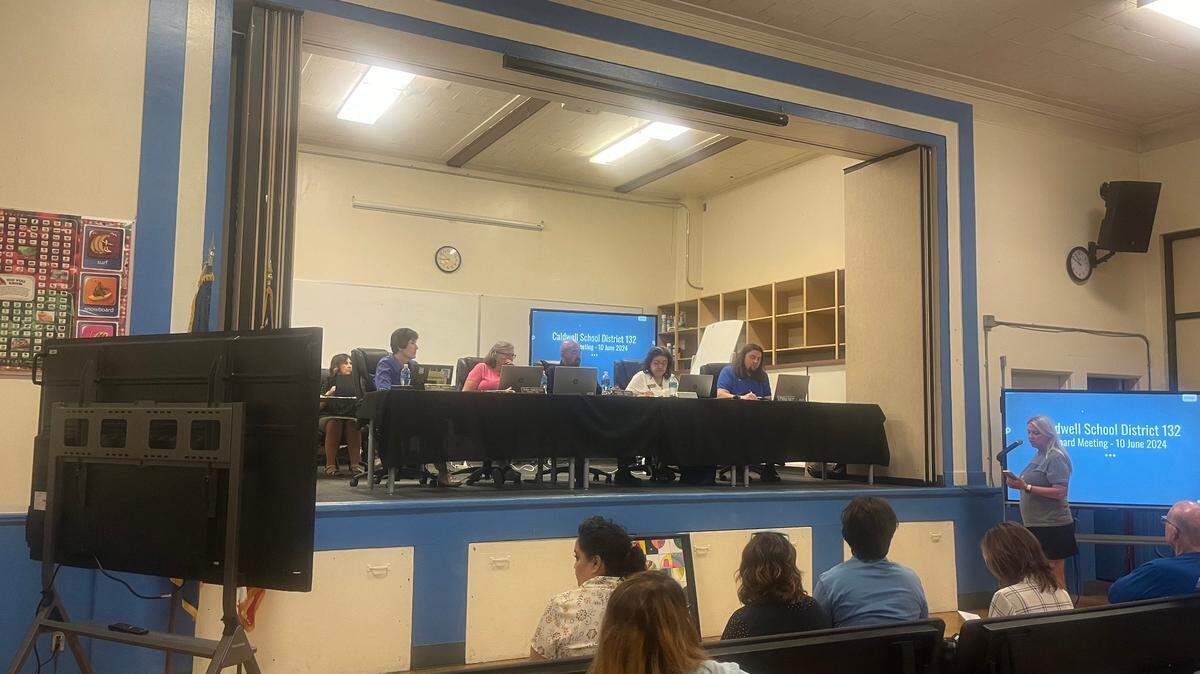
The Caldwell School District will close an elementary school and make staff reductions ahead of the upcoming school year.
The Caldwell school board voted Monday night to approve its budget for the 2024-2025 school year with significant cuts after voters rejected the district’s supplemental levy in the May primary election. The levy, which the district has relied on for years, would have brought in $4.1 million per year and helped fund staff members, transportation and school resource officers.
Without it, and with an expected reduction in state funding because of a shift in how the state allocates money to schools, the district expects to have a funding shortfall of over $5 million.
District administrators said they tried to make cuts that will have the least impact on students and learning, but it was a challenge.
“We as a board really don’t take this lightly,” Trustee Andrew Butler said during the meeting. “None of us want to see budget cuts. None of us want to see staff cuts. ... This is just the hand that we’ve been dealt, and we’re trying to do the best that we can with it.”
Budget cuts include staff positions, safety officers
The budget for next school year includes a reduction of 64 teachers and staff members, along with an administrator and a district director. Much of the reduction in staff will come from attrition and reorganization, Chief Financial Officer Cheryl Sanderson said.
The district will close Lincoln Elementary, which has about 300 students, according to the State Department of Education. Superintendent N. Shalene French said administrators made the decision to close the school on Grant Street after the failed levy in part because of declining enrollment.
Built in 1941, the school is also one of the oldest in the district. Most of the teachers and staff members at Lincoln will be incorporated into positions, Sanderson said. But French said the school closure was never in the district’s long-term plan.
“The plan was never to close Lincoln,” she said. “But we did believe that there would be a point where we would need to build a new elementary, a new Lincoln elementary.”
The district expects the closure to save about $2 million per year. The board also approved updated boundaries, which would route students at Lincoln to other elementary schools in the district. The district’s goal was to keep neighbors together, said Paul Webster, the district’s community schools and family engagement coordinator.
As part of the reorganization of its schools, the district will reconfigure its middle schools and move fifth and sixth graders to Jefferson Middle School and seventh and eighth graders to Syringa Middle School. Both of those schools previously served students in grades 6-8.
The district will also cut its school resource officers; the district had four this past school year, and administrators expect those cuts to save about $300,000. The district will still use safe school aids, who help monitor safety and security at the school and assist teachers and staff with behavioral interventions.
During the meeting, parents and community members raised concerns about the loss of school resource officers in the buildings, and asked how the district would make sure students were safe in their schools. Administrators said the district is working with the city to write a grant to cover the officers.
The district will also make cuts to coaching stipends and transportation costs for athletics.
‘This has been really hard’
Board members at the meeting said they had no other options but to make those cuts.The supplemental levy the district ran in May received 48.4% support, just short of the simple majority it needed to pass. Most school districts across Idaho rely on supplemental levies for operational costs.
Idaho school districts can only run bonds and levies in November and May. Districts used to have four times per year that it could ask local taxpayers for funding, but new laws approved by the Idaho Legislature in the past few year eliminated the March and August elections. The clauses were part of bills that allocated more money to facilities and gave districts funds to pay off their bonds and levies — but school districts have said they still rely on the election measures to keep their schools open and fund major capital projects.
The Caldwell school board can re-run its supplemental levy in November, but even if it passes at that time, the district wouldn’t get funds until the following school year, administrators said.
“This has been really hard, not being able to pass the supplemental levy, and it was a levy that was renewed every year,” school board chair Marisela Pesina said. “We have a lot of teachers that are leaving the state, leaving the district because they can get better salaries.”
The district has considered all options to cut its budget, trustees and administrators said. Many school districts across Idaho have moved to four-day instructional weeks over the past several years, in part to save money and attract teachers. But French said research has shown that shift could have negative impacts on students from low-income families and students of color. Nearly two-thirds of students in Caldwell are Hispanic or Latino, and most come from low-income families, according to State Department of Education data.
“We have looked at everything, and just please don’t think that the integrity of our kids’ education is at stake,” Pesina said. “We make sure that we are teaching our kids — and that’s No. 1 one, the education.”
This story was originally published June 11, 2024 at 9:18 AM.