West Ada schools had a COVID-19 quarantine policy. Did it violate disability rights?
As COVID-19 cases surged in Idaho, West Ada School District board members struggled with decisions on pandemic protocols for the upcoming school year.
They landed on a controversial quarantine policy: Students who were potentially exposed to COVID-19 while wearing a mask could stay in school. Those who didn’t wear a mask needed to stay home.
Now, the district is facing a complaint alleging it violated the rights of students with disabilities.
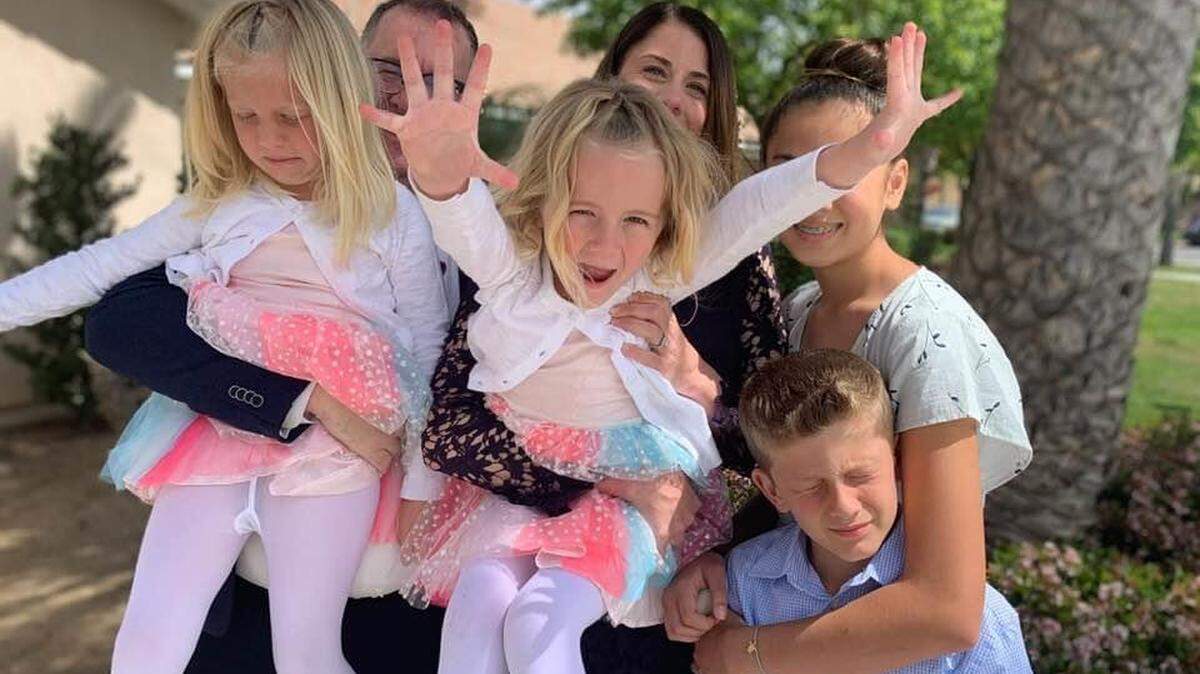
Ashley Brittain Aven — a parent of five kids, three with autism and various degrees of sensory processing disorder — said the school district unfairly targeted students with disabilities with its quarantine policy. Aven’s complaint, filed with the U.S. Department of Education’s Office for Civil Rights in September, alleged that the district applied different standards to students who were disabled and to those who weren’t. OCR is investigating the allegations, according to a Nov. 1 email.
“There (were) two different quarantine policies,” Aven said in a phone interview with the Idaho Statesman. “One for kids who are disabled and one for kids who are not.”
And while the board approved a change to West Ada’s policy at its Nov. 15 meeting, Aven still wants remedies — an acknowledgment of how the district’s policy impacted kids with disabilities and a guarantee it won’t return.
The district’s board voted in October to stop contact tracing, so students are not required to quarantine now after potential exposures. On Nov. 15, the board also voted to make masks optional once students return from Thanksgiving break, and to continue its no-quarantine policy for students without symptoms.
“I did want the policy revised, and it appears to be fairly applied as it stands now,” Aven said in an email. “However, WASD is doing this for their own convenience, not because it’s the right thing to do.”
The Boise School District, which follows guidance from Central District Health, has a similar quarantine policy. It allows students exposed to someone with COVID-19 to stay in the classroom if both the infected and exposed individuals were masked, as long as the person exposed had no symptoms. That exception applies only to exposures in instructional settings. Most other districts in Idaho have no mask or quarantine policies.
The West Ada School District declined to comment for this story. But in a recent board meeting, the superintendent acknowledged the quarantine policy was “not successful in our schools.”
Civil rights complaint alleges West Ada violated disability laws
The complaint alleged that the West Ada School District violated federal and state laws regarding children with disabilities and denied kids a free appropriate public education, as mandated under the Individuals with Disabilities Education Act (IDEA). The complaint names the school district, Superintendent Derek Bub, board Chairperson Amy Johnson, the board of trustees and the district’s director of special education.
The school district, according to the complaint, has also “engaged in a systematic course of retaliation against students with disabilities.”
Three of Aven’s four children in the school district, between the ages of 6 and 15, have autism and qualified for medical exemptions to the district’s mask mandate, she said. One of her children has significant anxiety, depression and a migraine syndrome, and has also qualified.
Aven said her kids with autism can’t tolerate the feeling of having a mask on their faces. Their sensory issues are too great, she said. She added that children with autism “aren’t intuitive in identifying emotion” and her kids learned to identify emotions based on facial expressions.
According to the Southeast ADA Center, which provides information, guidance and training on the Americans with Disabilities Act, people with autism can be “sensitive to touch and texture.”
“Covering the nose and mouth with fabric can cause sensory overload, feelings of panic and extreme anxiety,” it said on its website.
According to the Centers for Disease Control and Prevention, masks shouldn’t be worn by people with disabilities who can’t wear the face coverings safely because of those disabilities.
The CDC does recommend universal masking in schools as a way to slow the spread of the virus and officials in the district have said the policies they put into place were an effort to keep students and staff safe. But guidance from the CDC also says educators should be mindful of their responsibilities under federal disability law and should “consider adjusting strategies as needed.”
CDC guidance also specifies that in K-12 classrooms, the definition of a close contact — which would trigger quarantine requirements — does not include students who were between 3 to 6 feet of an infected student if both students were masked properly the whole time. According to CDH guidance, when a student is exposed to the virus in an instructional setting, they can continue coming to school while masked as long as both the person infected and the close contact were masked at the time of the exposure. School districts have said because of that, universal masking prevents more kids from having to be out of school due to mandatory quarantine periods.
Weeks before filing the complaint, Aven reached out to several officials with the West Ada School District, including the board of trustees and the superintendent to talk about the “discriminatory effect of the current quarantine policy,” the complaint said.
Aven also got into contact with Ramona Lee, the district’s special education director. Aven recommended the district amend its quarantine policy to allow children with medical exemptions to the mask mandate to stay in school if they are potentially exposed to COVID-19 as long as they don’t have symptoms. This is now the policy for all students.
Kids do not always show symptoms of the virus, but can still spread it if they are not symptomatic. Aven emphasized the importance of in-person learning for kids with disabilities, who she said are the most at risk of falling behind in school.
In response to her Sept. 15 email, Lee told Aven the district “was in compliance with state law concerning their quarantine policy,” according to the complaint. Lee said in the email, provided to the Statesman, she had discussed the concerns with the district’s legal counsel and the State Department of Education.
Aven felt district officials were unresponsive to her concerns. A few weeks after the conversations with district officials started, Aven filed the complaint with OCR.
“This right (to a free appropriate public education) cannot be removed if a child, due to their disability, is unable to comply with arbitrary requirements,” the complaint said. “WASD needs to immediately revise their policy so all students are free to access the same education.”
OCR is investigating the complaint as two issues: a specific issue regarding Aven’s children and a systemic issue “as it relates to all children with disabilities” or medical mask exemptions, Aven said.
Quarantine policy ‘was not successful,’ superintendent says
Char Jackson, spokesperson for the district, said she could not comment after the Statesman provided the district with a copy of the complaint because the district hasn’t “formally received a complaint.”
Bub said during the Nov. 15 board meeting the district didn’t want to return to a policy where those who were masked had different requirements than those who were unmasked.
“We recognize that that was not successful in our schools,” Bub said. He said after meeting with administrators, nurses and teachers, the district learned it was problematic to figure out who was wearing masks and who wasn’t. The policy was difficult to enforce, he said.
According to a document from the Idaho State Department of Education, trustees can adopt quarantine requirements and change those depending on spread within the community and guidance from local health departments.
The guidance said it’s important districts follow school board requirements, adding that the health and safety of students is the most important priority. It also said districts could require that students with disabilities quarantine, and that the Individualized Distance Learning Plan could be used to help determine how instruction is provided to students with disabilities when they are quarantined.
Kristin Rodine, a spokesperson from the Department of Education, in an email to the Statesman reiterated that policies on COVID-19 are determined by the individual districts, but said those policies impacting students with disabilities are guided by federal law.
School districts must follow federal laws, honor disability rights
School districts are still obligated to abide by federal laws, including IDEA, the Americans with Disabilities Act and Section 504 of the Rehabilitation Act. These protections have never been waived during the COVID-19 pandemic, said Courtney Holthus, the director of legal and advocacy services at DisAbility Rights Idaho.
Under federal laws, public entities are required to make reasonable modifications to policies, practices and procedures where necessary, she said. So if a child has a disability and needs an accommodation, schools are obligated to provide reasonable accommodations.
There are exceptions, including if an accommodation could cause an undue burden or a direct threat to the health and safety of others, she said.
Under federal law, policies also can’t treat students with disabilities differently than their peers without disabilities, she said.
“Whenever you’re covered by the ADA, and you’ve got a policy that treats individuals with disabilities unequally from those without disabilities, you’re going to run into a problem,” she said. “You run the risk of being discriminatory.”
Earlier this year, OCR opened an investigation into several states that had statewide bans on mask mandates, which also applied to schools. The department is investigating whether those bans violated the rights of students with disabilities, who could be more vulnerable to the virus, by preventing them from getting a safe, in-person education. That investigation similarly deals with COVID-19 protocols, but focuses on the impacts of school districts not being able to require masks.
Other states have also dealt with complaints or investigations into their mask mandates, a topic that has triggered tense debate among parents across the country.
Aven said she has been and will continue to fight for her children and other kids with disabilities.
“It’s my full-time job,” she said. “All I do is try to tell everyone across the state that they need to do the right thing for these kids.”