Idaho college is state’s first Hispanic-serving institution. This is what that means
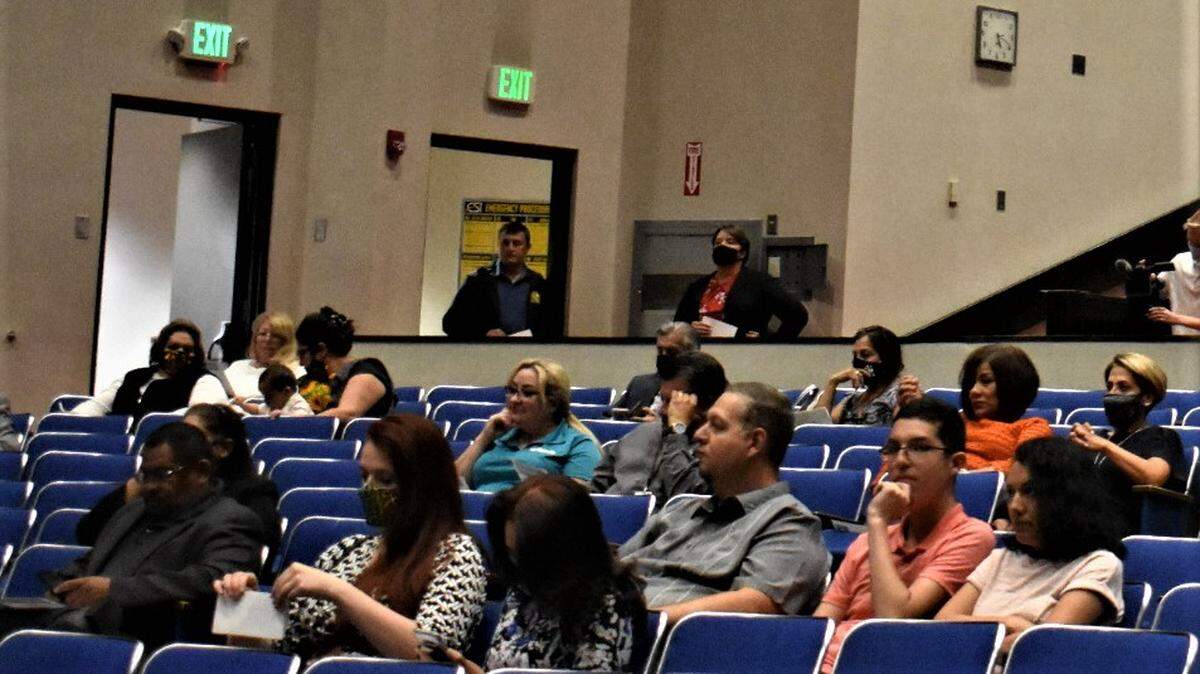
The College of Southern Idaho just marked becoming Idaho’s first Hispanic-serving institution with speeches, mariachi, panels and the annual Hispanic Youth Leadership Summit. Now that the community college surpassed the threshold of having a student body made up of at least 25% Hispanic students, the real work begins.
The designation of Hispanic-serving comes from the U.S. Department of Education. It means the community college is eligible for additional grant money from the federal government. But the important thing is that the college retains and graduates Latino students, community leaders say.
The college in Twin Falls serves much of south-central Idaho, an area where Latinos made up 25% of the population in 2019, according to the Idaho Commission on Hispanic Affairs. It’s the most heavily Latino of Idaho’s six designated regions.
Enrollment keeps pace with surrounding Latino population
The 2020 census found the Magic Valley had a Latino population of 24.7%, though Latinos are historically under-counted in the decennial census.
Margie Gonzalez, executive director of the Idaho Commission on Hispanic Affairs, said the college used marketing strategies and outreach to the Latino community in the Magic Valley, but she said more could be done to attract the Magic Valley’s growing Latino population.
This spring, President Dean Fisher said the college had reached an enrollment of 26% Hispanic in the student body.
Chris Bragg, dean of institutional effectiveness and communication, said the number of Hispanic students at the college is slightly outpacing the growth of the Hispanic population in the Magic Valley.
“If we do this right, in 10 years I suspect the college will be sitting at 50% Hispanic enrollment,” Fisher said in a speech on Monday to celebrate the college’s designation. “I can look at high schools and middle schools and look at the pipeline. We want to do this right. It is the right thing to do.”
College hopes to better serve Latino students
Though Fisher was happy to celebrate the designation, he admitted that the college could improve in serving all students.

“We are a strong, successful and vibrant organization, but we can be better, because we as imperfect creatures can be better,” Fisher said. “Let’s dedicate ourselves this week to finding those ways of being better. Our students will benefit, our growing Hispanic population will benefit, and most importantly all of our students will benefit as we get better. “
Juan Andrade, president of the U.S. Hispanic Leadership Institute, a nonprofit organization that works to support Latino students and others in education, said that after receiving the Hispanic-serving designation, a college has to determine how it happened. Was it because the local Latino population is high and students have nowhere else to go but that college? Or is it because of ways the college has attracted Latino students?
“A college needs to have a plan that shows it is the intention of that school to attract Hispanic students,” Andrade said in an interview at the college. “What drawing power do you have? Is it faculty? Is it programs? Degrees? Staff? Resources? The tuition here is $4,000, what financial assistance is there?”
Andrade said if the reason the college became Hispanic-serving is because of the region, that is not enough to retain and graduate Latino students, which is what matters.
“Enrolling will get you there, but not serving intentionally, and not graduating, is not going to keep them there,” he said.
One of the reasons for holding a week of events at the College of Southern Idaho around the Hispanic-serving designation was to visit with experts and staff about how the college can increase retention and completion rates.
“Our data show that Hispanic students are one of the groups that we are most likely to retain, but they lag somewhat in timely graduation rates compared to other groups,” Bragg said in an email. “As part of being a Hispanic-serving institution, we have been digging into that deeper in an effort to discover how we can offer students the support they need in order to be successful.”
Partnering with local businesses and individuals to develop scholarships for Latino students is one way Andrade said a college can work to retain Latino students. Other ways he suggests are creating cultural support systems like clubs and community organizations so students feel like they belong there.
Hiring faculty and staff who look like the students they serve is important, too, Gonzalez said.
“My hope — and I have had these conversations with President Fisher — is to see their faculty mirror their student population in the next two to three years,” she said.
The faculty at the College of Southern Idaho is 4% Hispanic, and the staff is about 12% Hispanic.
“Like most Hispanic-serving institutions, this is a challenge for us, and is also something that we are digging into this week,” Bragg said.
Rachel Spacek covers western Ada and eastern Canyon counties. Have a story suggestion or a question? Email Spacek at rspacek@idahostatesman.com.
This story was originally published October 9, 2021 at 4:00 AM.