Wheels of justice turn against Ammon Bundy again in Idaho Supreme Court ruling
Nearly five years ago, Idaho state troopers wheeled far-right activist Ammon Bundy out of the Statehouse in a rolling office chair, and an infamous Idaho joke was born.
The incident led to Halloween costumes, re-enactments, memes and even sticker sales.
However, so much has happened since 2020 — the year that a pandemic paralyzed the country — that Idahoans could be forgiven if their memories of the event are a little hazy.
For those needing a refresher, Bundy and others were protesting COVID-19-related public health measures in August 2020 during a special legislative session when they refused to move out of reserved seats in the Lincoln Auditorium at the Statehouse in Boise, according to previous Idaho Statesman reporting.
Following arguments between officials and protesters, the lawmakers moved to a different room, and police ordered everyone to clear the auditorium.
Idaho State Police Sgt. Blake Higley testified that Bundy “made himself dead weight,” which required multiple troopers to pick him up and place him “in a roller desk chair to get him out of the Capitol, because he wouldn’t walk,” according to court records.
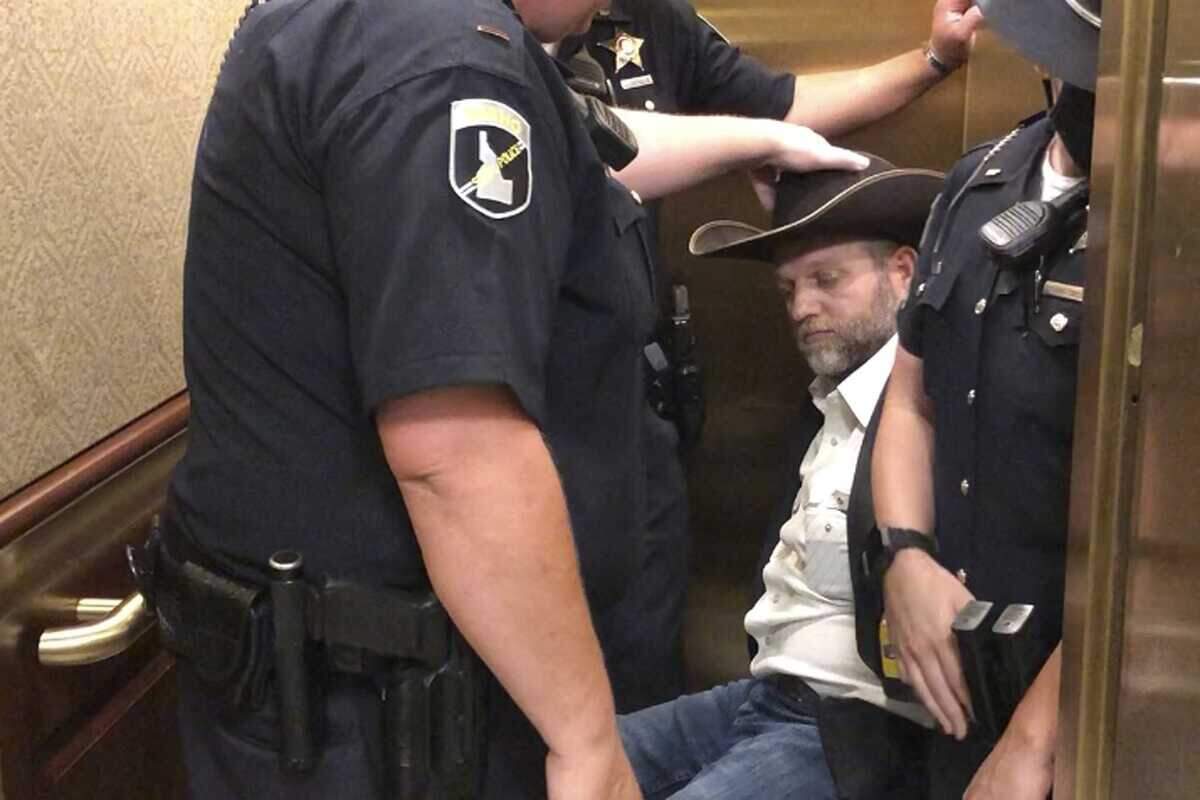
Bundy then spent nearly five years spinning his wheels in court to try to fight charges stemming from the incident.
A jury initially found Bundy guilty of two misdemeanors, for trespassing and resisting arrest, in 2021. Bundy quickly filed a motion asking Ada County Magistrate Judge David Manweiler to acquit him, but the judge denied it.
Manweiler sentenced Bundy to three days in jail, though he was given credit for time served, so he did not need to serve additional time. The judge also ordered Bundy to serve 40 hours of community service and pay a $1,089 fine.
Bundy then appealed his conviction to District Court, which a judge rejected, leading him to appeal to the Idaho Supreme Court.
“The problem, as it applies in the statute, is that he could be chased by political enemies throughout the Capitol, closing and opening the areas based on their own discretion, and there is no way that we can inquire why (or) whether the basis of closing an area is lawful or not,” Seth Diviney, an attorney with Idaho Injury Law Group, argued on behalf of Bundy at the Idaho Supreme Court in January.
Bundy did not respond to the Statesman’s request for comment.
The justices put a definitive stop to Bundy’s legal fight on April 1, with the state Supreme Court rejecting his appeal by issuing the following conclusions in its opinion:
Yes, Bundy did trespass when he refused to leave the Lincoln Auditorium.
No, Idaho’s criminal trespass statute is not unconstitutionally vague or unconstitutionally overbroad when applied to Bundy’s conduct.
Yes, the trespass statute does apply to public property.
No, the Idaho statutes concerning control of different parts of the Capitol grounds do not violate the separation of powers doctrine.
In the end, there were no real surprises in the decision. It affirmed all previous rulings made in District Court.
“We are not persuaded by Bundy’s overly complicated interpretation of the statute or his argument that he was free to ignore lawful requests to leave because he was complying with lawful conditions imposed on access,” Justice Cynthia Meyer wrote in the opinion, to which all four other justices concurred. “Idaho’s criminal trespass statute provided adequate notice to Bundy that he was prohibited from staying in the Lincoln Auditorium after being asked to leave and that the exceptions to trespass do not apply to him.”
This story was originally published April 7, 2025 at 6:52 PM.