Bryan Kohberger has autism. His attorneys say the diagnosis should remove death penalty
In Bryan Kohberger’s latest attempt to avoid the death penalty, his attorneys confirmed in a new court filing that the 30-year-old has autism — which they argued “exposes him to the unacceptable risk” that he’ll be wrongfully convicted of murder and sentenced to death.
In a 28-page motion unsealed late Tuesday, lead attorney Anne Taylor argued that sentencing Kohberger — charged with four counts of first-degree murder — to death if he is found guilty would violate his Eighth Amendment right to be free from excessive punishment because of his autism spectrum disorder diagnosis.
He also faces one count of felony burglary.
“In this case, where jurors will be forced to determine whether Mr. Kohberger will live or die, Mr. Kohberger himself is essentially a piece of evidence to be examined and evaluated; every movement and expression is subject to analysis,” Taylor wrote in the filing.
Kohberger, who was studying criminology at Washington State University, is expected to stand trial this summer, and the prosecution intends to seek the death penalty if he’s convicted of murder.
In November 2022, four University of Idaho students were found stabbed to death in an off-campus home in Moscow, roughly nine miles away from Pullman, where Kohberger was enrolled. The students were: Madison Mogen, 21, of Coeur d’Alene; Kaylee Goncalves, 21, of Rathdrum; Xana Kernodle, 20, of Post Falls; and Ethan Chapin, 20, of Mount Vernon, Washington.
Kohbeger’s attorneys have tried — and failed — to get the death penalty off the table on the grounds that it’s unconstitutional, breaks with evolving standards of decency and is arbitrarily applied. This is now their most recent attempt to eliminate capital punishment as an option.
“Mr. Kohberger’s autism spectrum disorder prevents him from being sentenced to death in a manner that accords with the constitutional requirements of proportionality and reliability,” Taylor wrote.
Kohbeger evaluated by neuropsychologist
Kohberger’s disorder has a “significant impact” on his life, according to a comprehensive neurological evaluation conducted by Rachel Orr, a New Hampshire-based neuropsychologist.
Autism spectrum disorder is a developmental disability that is caused by differences in the brain, according to the Centers for Disease Control and Prevention. People with autism tend to have problems with social communication and interaction, and restricted or repetitive behaviors.
The filing said that Kohberger exhibits “all the core diagnostic features” of autism, such as lifelong issues interacting with people. This includes a diminished ability to understand people’s reactions and difficulty identifying the emotional or mental state of others or how to respond appropriately.
While autism isn’t an intellectual disability — though some people have both — Taylor argued that the disabilities share similarities, especially in regards to prior court findings over the elimination of the death penalty.
In 2002, the U.S. Supreme Court ruled that executing people with intellectual disabilities violates the Eighth Amendment. That hasn’t included neurological disabilities such as autism, but Taylor argued that it should — and that sentencing people with autism spectrum disorder to death is also a violation of constitutional rights.
Taylor added that sentencing people with intellectual disabilities creates an “unacceptable risk of wrongful execution” because the defendants aren’t as able to help in the mitigation part of their case.
Specifically, the courts found that defendants couldn’t meaningfully assist their attorneys, their demeanor might give the unwarranted impression that they lack remorse, and they are typically poor witnesses.
Regarding Kohberger, Taylor said he displays “extremely” rigid thinking, lingers on specific topics, processes information on a “piece-meal basis,” and struggles to plan ahead, which affects their attorney-client relationship and ability to prepare for trial.
He also “demonstrates little insight into his own behaviors and emotions,” she added.
“No matter how helpful Mr. Kohberger may wish to be, it is simply not possible for him to aid counsel in a way that someone without the deficits accompanying autism spectrum disorder would be able to,” Taylor wrote.
Kohberger’s speech is “awkward,” Taylor said. Orr said that his tone and cadence are abnormal, his interactions lack fluidity, and “his language is often overinclusive, disorganized, highly repetitive, and oddly formal,” according to the filing.
He’s easily distracted by sounds or activity, often needs questions repeated and uses abrupt matter-of-fact phrases that could be considered rude, the filings said. He also has exhibited compulsions around hand-washing and other cleaning behaviors since childhood.
“These symptoms of Mr. Kohberger’s autism spectrum disorder will alienate him from the jury and significantly hamper his ability to make a persuasive showing of innocence or of mitigation,” Taylor said.
The filing also pointed to two states — Ohio and Kentucky — that bar people with serious mental illnesses from being sentenced to death. But autism isn’t a mental illness, and neither Ohio’s nor Kentucky’s laws apply to people with autism, instead listing diagnoses of schizophrenia, schizoaffective disorder, bipolar disorder and delusional disorder as possible exemptions.
‘Highly prejudicial media reports’ have already demonized Kohberger, attorney argues
Taylor is concerned that there is “substantial risk” that Kohberger’s demeanor, because of his autism diagnosis, will create an unwarranted impression of a lack of remorse. People with autism often engage in repetitive self-stimulating behavior such as hand-flapping, finger-snapping and body rocking, the filing said.
“A juror seeing the defendant engage in any one of these behaviors, while sitting at counsel table during a murder trial, would perceive the defendant as strange, out-of-control, and even disrespectful of such a solemn proceeding,” Taylor wrote.
She added that subtler indicators of autism could be “just as damning for capital defendants, if not more so.” Inability to make eye contact could be interpreted as guilt or shame, while facial expressions contrary to the tone of the proceedings could be seen as cold or lacking remorse.
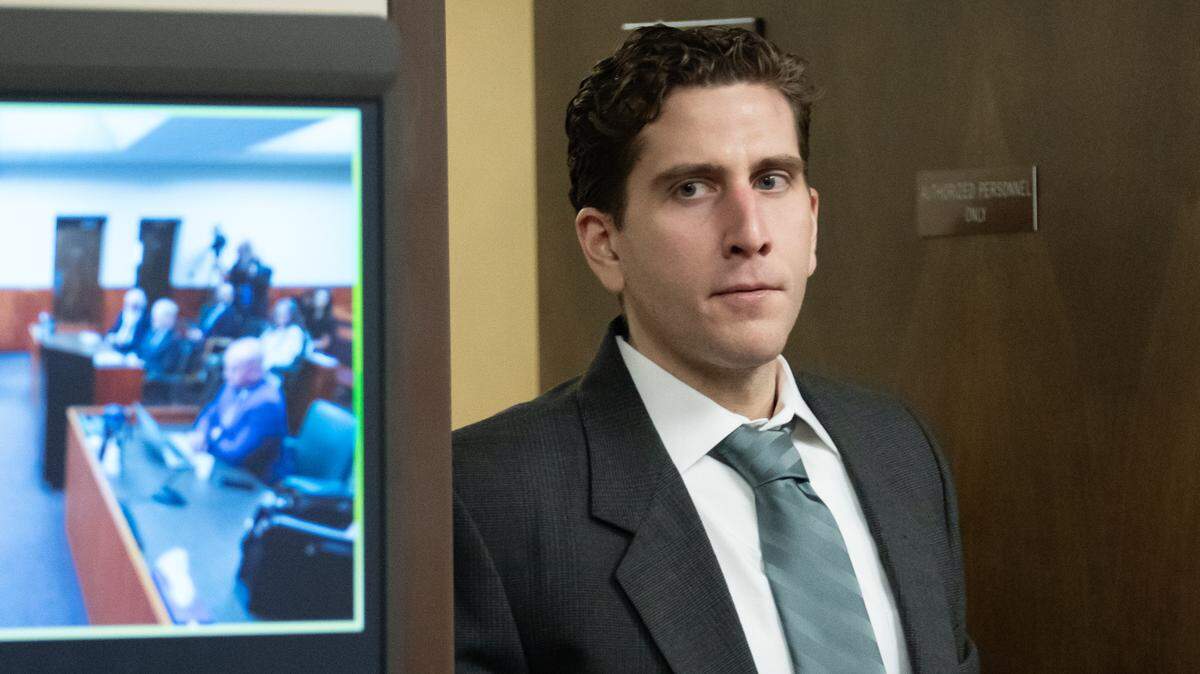
Kohberger specifically subtly rocks his upper torso when listening to someone, has limited facial expressions and exhibits “atypical eye contact,” such as an intense gaze, Orr observed during her evaluation, according to the filing.
While a lack of facial expression or abnormal eye contact are indicative of autism, Taylor said that to hundreds of thousands of online commentators — who “developed a cottage industry” devoted to analyzing her client’s every movement — these symptoms are “sure signs of his guilt.”
“These widely viewed and highly prejudicial media reports, draped in the language of ‘expertise’ and ‘analysis,’ demonize Mr. Kohberger for his disability,” she wrote in the court filing.
“In an environment so tainted by rampant and vitriolic conjecture, it is impossible for Mr. Kohberger to receive the individualized sentencing determination — including full and careful consideration of mitigation evidence — that the constitution demands whenever the state seeks to extinguish a human life.”
Kohberger can’t conduct himself in a manner that aligns with “societal expectations of normalcy,” Taylor said, adding that there is an “unconscionable risk” he’ll be executed because of his disability rather than his culpability.
And, Taylor added, Kohberger’s facial expressions have already been given a “sinister meaning.”
In the decision to transfer Kohberger’s case to Ada County, 2nd Judicial Judge John Judge “acknowledged the extraordinary media attention,” the filing said. Most of that attention focuses on Kohberger’s disability, Taylor argued.
She pointed to various national news articles that reported on allegations that Kohberger made “creepy” comments to staff at a brewery in Pennsylvania, made female students at Washington State University feel uncomfortable and lost his job as a teaching assistant for failing to meet normal professional behavior.
Given Kohberger’s difficulty interpreting social cues, these allegations could be explained by his autism diagnosis, Taylor argued, adding that it was “no surprise” he came across as “socially awkward” or struggled to adapt to professional norms. She called his behavior “hallmarks of his disability.”
“There is no need to speculate about what impact Mr. Kohberger’s autism spectrum disorder might have on his ability to present a meaningful defense; the prejudice is already clear,” Taylor said.
This story was originally published March 4, 2025 at 6:03 PM.