Idaho prosecution seeks to limit murder suspect Kohberger’s alibi, alternative evidence
Prosecutors in the case against Idaho murder suspect Bryan Kohberger have sought to restrict his ability to present an alibi defense, evidence of any mental health conditions and the possibility of other suspects in the quadruple homicide.
The defense countered with efforts to have the judge limit a witness from describing a male suspect with “bushy eyebrows,” the make and model of the suspect’s vehicle and expert testimony over the type of DNA found at the crime scene that police allege matches Kohberger. His public defense team also will try to narrow the conditions for Kohberger to receive the death penalty if he is convicted of the November 2022 Moscow homicides, according to the latest court filings.
In earlier filings, Kohberger’s defense acknowledged he was out driving alone, as had become a habit late at night, but elsewhere at the time of the early morning attack at a home near the University of Idaho. His attorneys later clarified that he was often near southeastern Washington’s Wawawai County Park, about 30 miles southwest of the college campus in Moscow, to watch the stars and the moon.
The assertion that Kohberger was elsewhere when the four U of I students were fatally stabbed, including without witness corroboration, does not meet legal requirements in the state for an alibi, prosecutors have argued. The prior judge in the case also initially labeled Kohberger’s submission of his claimed whereabouts a “so-called alibi, not really an alibi.”
Led by Latah County Prosecutor Bill Thompson, the prosecution asked Ada County Judge Steve Hippler to limit any alibi claims at trial to Kohberger testifying to it himself. Even so, Thompson wrote in a legal brief released Tuesday, the defense had still yet to specify where the defendant was at the time of the crime, or identify anyone else who can help confirm his whereabouts.
“It has now been over two years since the homicides occurred (and since the defendant was charged) and it would be unrealistic at this late date to expect the state to effectively investigate and respond to any new or additional alibi-related disclosures,” Thompson said.
Kohberger, 30, is a former Washington State University graduate student of criminal justice and criminology and lived just over the Idaho-Washington state line in Pullman, about 10 miles west of the crime scene. He is charged with four counts of first-degree murder and a count of felony burglary, and the state intends to seek a death sentence if he is found guilty.
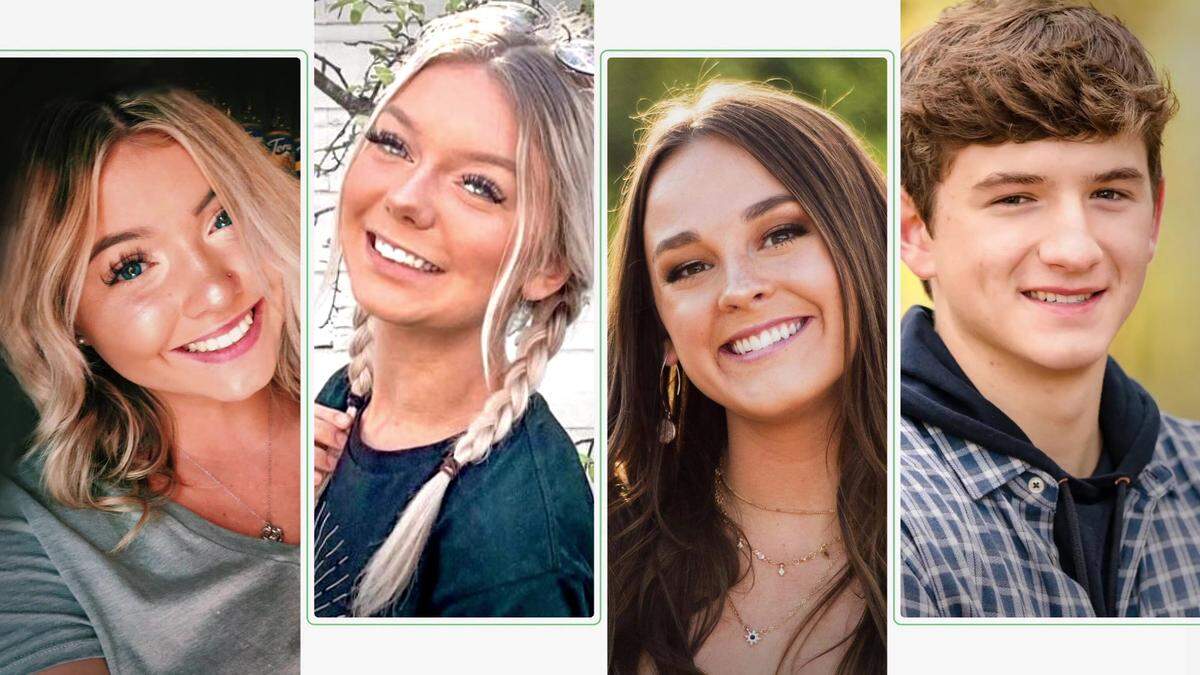
The four victims were U of I students Kaylee Goncalves, 21, of Rathdrum; Madison Mogen, 21, of Coeur d’Alene; Xana Kernodle, 20, of Post Falls; and Ethan Chapin, 20, of Mount Vernon, Washington. The three women lived in the Moscow home with two other young women who went physically unharmed; Chapin was Kernodle’s boyfriend and stayed over for the night.
The defense has repeatedly said Kohberger has no connection to the four stabbing victims and is innocent. But police and prosecutors have said they found a single source of male DNA on a knife sheath located next to one of the victims, which was later confirmed to be a statistical match to Kohberger.
Defense wants to limit vehicle ID, witness testimony
One of the surviving roommates told police she saw an “athletically built” man, about 5 feet, 10 inches or taller and wearing black clothing and a mask that covered his mouth and nose, inside their three-story rental home. She recalled he had “bushy eyebrows,” police wrote in a probable cause affidavit for Kohberger’s arrest.
The defense aims to have that information in testimony from the roommate withheld from the jury, according to court filings not yet released to the public, but disclosed in an online case summary. Anne Taylor, Kohberger’s lead attorney, questioned the credibility of the eyewitness at a hearing last month, citing statements she gave to police about “not remembering” details of the night and “being drunk.”
Hippler, in a ruling last week against the defense, instead found the roommate’s accounts “remarkably consistent” over several interviews with police. Her statements “that her memories were fuzzy and dream-like and may have been affected by being tired or under the influence of alcohol do not call into question her reliability” based on how investigators disclosed the information, he wrote.
Separately, the defense has filed to have the make and model of the homicide suspect’s vehicle restricted at trial. Police requested the public report all white 2011-2013 Hyundai Elantras, based on a vehicle they allege was near the crime scene at the time of the homicides. Kohberger drove a 2015 white Elantra, and a vehicle expert with the FBI later revised his identification of the suspect vehicle to 2011-2016, but police never told the public ahead of Kohberger’s arrest in late December 2022.
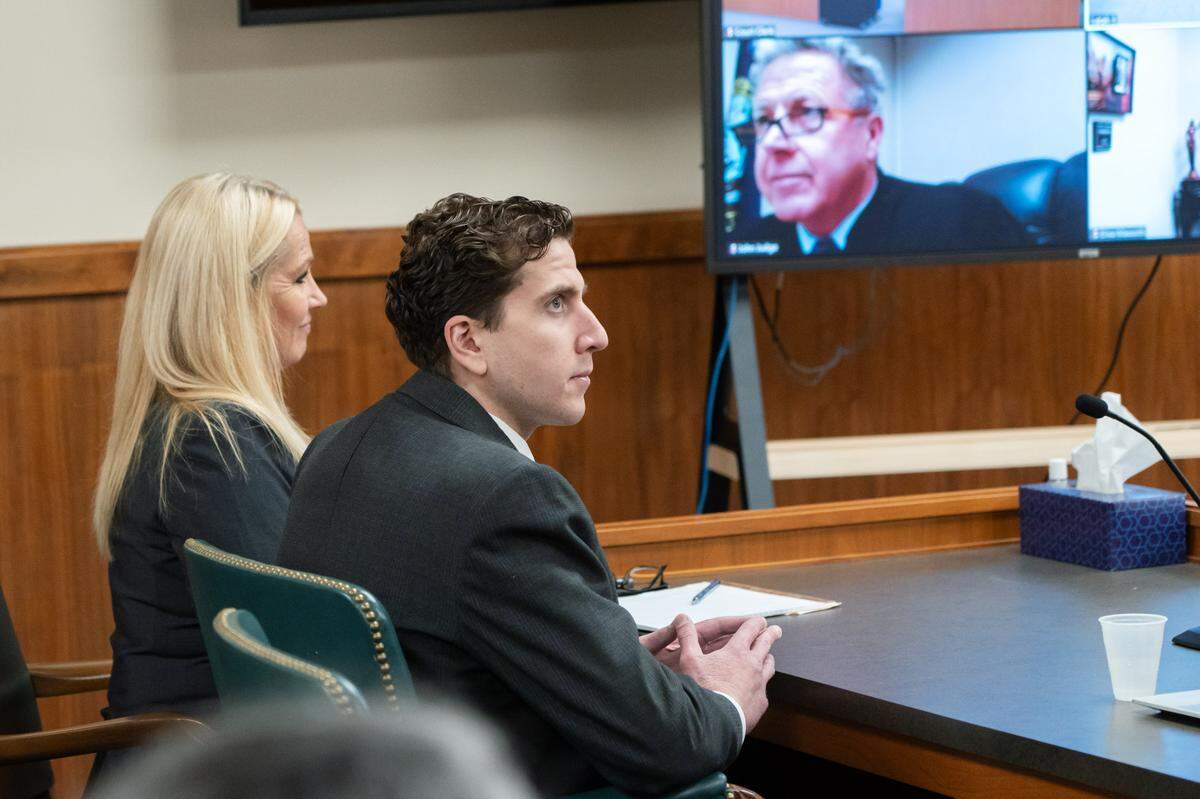
Kohberger’s defense team also filed to limit the aggravating circumstances that must be met to sentence him to death if he is found guilty at trial — part of his attorneys’ continued effort to remove the death penalty as a sentencing option. Pursuing a similar strategy as in Lori Vallow Daybell’s Idaho murder case, where she was convicted and given life in prison, Kohberger’s attorneys asked Hippler to drop a possible sentence over repeat state evidence disclosure violations, the case summary showed.
In addition, Kohberger’s defense file to limit the expert testimony of Rylene Nowlin, a lab manager at the Idaho State Police crime lab, in reference to “touch” and “contact” DNA. Nowlin testified at a closed hearing last month — for which a court transcript has since been released — about touch DNA, which she described as “skin cells that are sloughed off on our hands when items are handled.”
To initially settle on Kohberger as the suspect, the FBI used an advanced policing technique, known as investigative genetic genealogy, or IGG, where crime-scene DNA is submitted to public ancestry websites to narrow the list of possible perpetrators. The technique was not disclosed in the affidavit, and also not by prosecutors until seven months after Kohberger’s arrest, which launched a year-long battle over whether its use violated hid constitutional rights. Hippler ruled it did not, despite the FBI breaking the terms of service with two ancestry websites.
Now, the prosecution and defense separately filed to have reference to the use of IGG in the case limited at trial, court records showed.
Unknown blood DNA could create doubt, legal expert says
Prosecutors also want to prevent Kohberger’s attorneys from raising arguments at trial about possible alternative perpetrators, another court filing read. Police received thousands of tips about possible suspects during the homicide investigation, which garnered national interest, Thompson wrote. From those, only information regarding Kohberger was substantiated, he added.
“The state submits that any attempt by the defendant to offer or argue an alternative perpetrator theory without evidence specifically connecting person(s) other than the defendant to the homicides would do nothing more than mislead and confuse the jury and would also result in undue delay, waste of time, would be a needless presentation of cumulative evidence, and unfairly prejudice the state,” the filing read.
Kohberger’s defense already raised questions about two sources of still-unknown male blood DNA police found at the crime scene. One sample was found on a glove located outside of the home, while another was a “blood spot” discovered on a handrail inside between the first and second floors, according to testimony from the lead police detective at last month’s closed hearing.
Boise criminal defense attorney Edwina Elcox was skeptical that prosecutors would succeed in trying to prevent Kohberger’s defense from offering alternative theories and evidence about other suspects at trial. The crime-scene blood could go toward creating reasonable doubt with a jury at trial, she said.
“The state doesn’t get to dictate how the defense presents their case,” Elcox said in a phone interview with the Idaho Statesman. “Of everything that’s public, there’s other blood that is not identified. It doesn’t really undercut that his DNA is there, but if you have somebody else’s blood there, that’s enough to say, ‘Look over here.’ ”
The prosecution also asked Hippler to strike the planned testimony of two unnamed expert witnesses for the defense, who will “testify about state of mind.” But Idaho restricts criminal defendants from noting mental health conditions as a defense. Kohberger suffered from a neurological condition known as visual snow. An account believed to be his on an online forum called Tapatalk posted about the affliction between 2009 and 2012, and a high school friend of Kohberger’s also confirmed his condition, the Statesman previously reported.
Hippler is very likely to grant wide latitude to Kohberger’s attorneys to put up a vigorous defense, Elcox said. But arguing a mental health condition in efforts to explain potential criminal behavior, namely murder, is a nonstarter in Idaho, she said.
“I do not know how you can say that you have an alibi, and then also say there’s a mental health defense as well,” Elcox said. “It’ll be interesting to see what those arguments are, because … to get there, you’re going to have to admit some sort of culpability, otherwise it doesn’t matter if he just wasn’t there.”
Kohberger’s trial is scheduled for this summer in Boise, starting with jury selection on July 30.
This story was originally published February 25, 2025 at 12:30 PM.